


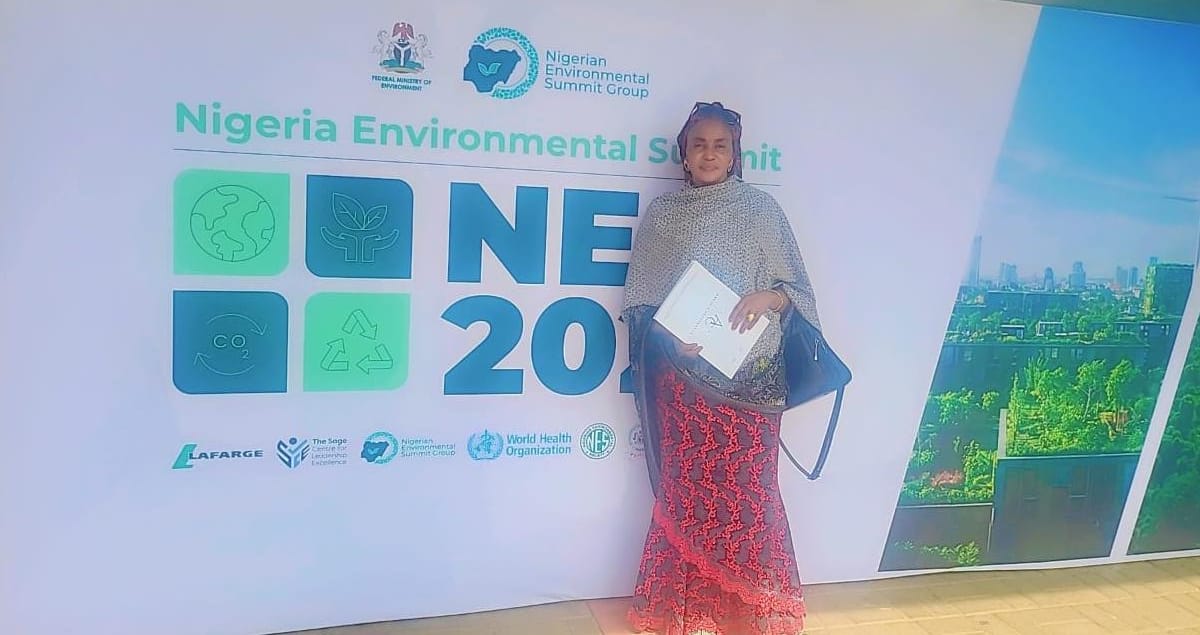

By: Abdullahi Inuwa
The Founder and Chairperson of Next Frontiers Nigeria (NFN), Ambassador Dr. Fatima Usman Nazir, has called on Nigerians from all walks of life to actively support government efforts aimed at building environmentally sustainable cities and rural communities across the country.


Dr. Fatima made the call while addressing journalists on the sidelines of the Nigerian Environmental Sustainability Summit (NESt) 2026, held at the Abuja Continental Hotel. The summit attracted policymakers, environmental experts, innovators, youth leaders, and development stakeholders committed to advancing climate action and environmental governance in Nigeria.
Speaking passionately on the urgent need for collective responsibility, Dr. Fatima stressed that environmental sustainability can only be achieved through the combined efforts of government institutions, the private sector, civil society organizations, communities, and individual citizens.
According to her, the growing threats posed by climate change, environmental degradation, and unsustainable waste disposal require immediate and coordinated action from all sectors of society.
“The future of our nation depends on the decisions we make today. Environmental protection is not the responsibility of government alone; it is a shared duty that requires the commitment of every Nigerian,” she said.
The summit, themed “Unlocking Nigeria’s Green Economy: Driving Climate Action and Environmental Governance,” focused on practical solutions for addressing environmental challenges while creating economic opportunities through sustainable development.
Among the key issues discussed were sustainable waste management strategies, circular economy opportunities, green investments and innovation, climate action initiatives, and strengthening environmental governance frameworks.
Dr. Fatima described the summit as a valuable platform for exchanging ideas, sharing experiences, and developing practical strategies that will help position Nigeria as a leader in environmental sustainability and green economic development.
She noted that discussions during the summit moved beyond theoretical conversations and concentrated on actionable solutions capable of delivering measurable results.
One of the highlights of the event, according to her, was the remarkable participation of young Nigerians who demonstrated strong commitment, knowledge, and enthusiasm in promoting environmental sustainability and climate peace.
She commended the youth delegates for their innovative ideas and active engagement, describing them as critical partners in shaping a cleaner and greener future for the country.
“The energy and dedication displayed by young people at this summit give us hope that Nigeria’s environmental future is in capable hands,” she stated.
Dr. Fatima also acknowledged the contributions of prominent policymakers and environmental advocates whose presentations underscored the importance of collaboration in achieving sustainable development goals.
She specifically praised the insights shared by the Nasarawa State Commissioner for Environment and Natural Resources, Hon. Princess Margaret Elayo, and environmental expert Dr. Murtala Adogi Mohammed, whose contributions emphasized stronger partnerships between government institutions and youth-driven initiatives.
According to her, their interventions reinforced the need for inclusive policies and innovative approaches to environmental management.
She maintained that climate action can no longer be delayed, warning that failure to act decisively could have serious consequences for future generations.
“Environmental sustainability is not an option but a necessity. We must act now to protect our natural resources, strengthen environmental governance, and create opportunities within the green economy,” she said.
Dr. Fatima further urged stakeholders to translate summit resolutions into concrete actions capable of improving environmental conditions across the country.
She expressed optimism that recommendations emerging from the summit would contribute significantly to national efforts aimed at achieving sustainable development and climate resilience.
As deliberations continued, participants agreed that effective environmental governance, innovation, accountability, and community participation remain essential pillars for achieving a sustainable future.
Summing up the spirit of the gathering, Dr. Fatima declared: “Together, we are not just discussing solutions; we are shaping the future of environmental sustainability in Nigeria.”
The summit is expected to produce policy recommendations and strategic partnerships that will accelerate Nigeria’s transition toward a cleaner, greener, and more climate-resilient economy.
About The Author
