



By: Abdullahi Inuwa
……..A casual roadside conversation became a powerful lesson on dignity, intelligence and why opportunity—not circumstance—should define a child’s future.


It began with a joke.
On an ordinary afternoon, as Barrister Nazeer Achilafia relaxed outside his shop, a young cattle herder wandered past with his herd. The boy paused, gazing intently at the shop. There was no rush in his eyes—only curiosity. It was a brief moment that would soon unfold into a conversation carrying a much deeper message about Nigeria, its children and the untapped potential hidden in plain sight.
Trying to lighten the moment, Achilafia smiled and jokingly asked, “Can you give me one of your cows for free?”
The boy’s answer came without hesitation.
“What would you even do with a cow?” he asked. “You already have a shop.”
It was a response that was both innocent and profound.
The lawyer laughed. Then, hoping to continue the banter, he made another offer.
“Then let’s exchange. Give me all your cows, and I’ll give you my shop.”
The young herder smiled and shook his head firmly.
“No way.”
That simple refusal carried a lesson many adults often overlook. To the boy, his cattle were not just animals wandering across dusty roads. They were assets, responsibilities and a livelihood. He understood value. He understood ownership. He understood that wealth takes different forms.
Society often measures success through buildings, cars, offices and bank accounts. Yet this young herder measured it through the herd under his care. His confidence suggested he did not see himself as less fortunate; he simply lived a different reality.
Achilafia invited him inside the shop to cool off under the ceiling fan. The boy stepped in quietly, taking in an environment that contrasted sharply with the blazing sun he spent most of his day beneath.
After a few moments, he looked at the lawyer and smiled.
“You wouldn’t last a day as a herder.”
Again, laughter filled the room.
The remark was playful, but truthful. Herding cattle demands patience, endurance, alertness and resilience. It requires navigating long distances, unpredictable weather and constant responsibility. While many urban professionals may excel behind office desks, surviving a single day in the life of a young herder could prove an entirely different challenge.
The exchange subtly dismantled assumptions. Too often, Nigerians judge people solely by their appearance or occupation. A child carrying a school bag is considered promising; a child following cattle is too easily dismissed.
Yet intelligence does not wear a uniform.
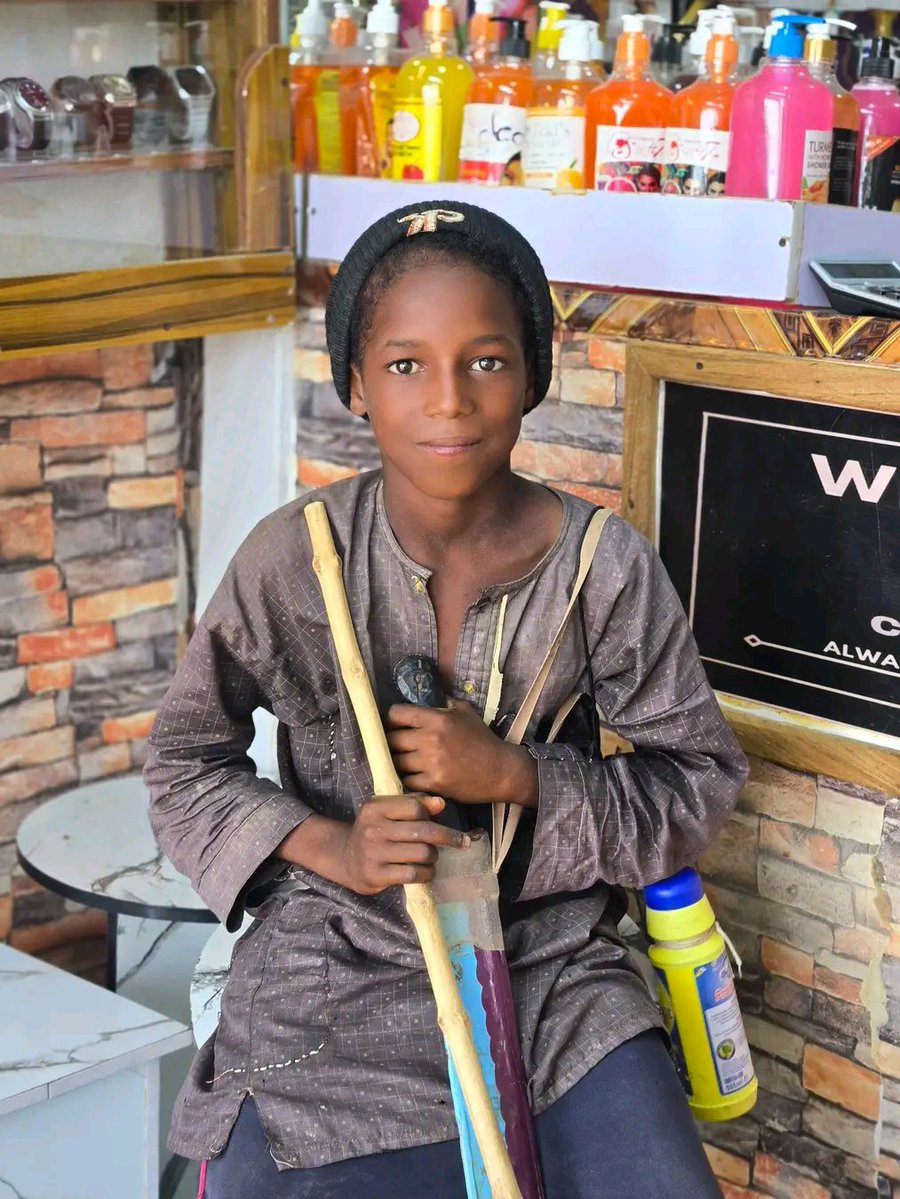
Curious to preserve the memorable encounter, Achilafia took out his phone and snapped a photograph of the boy. He then showed him the image on the screen.
The reaction was priceless.
The young herder burst into uncontrollable laughter as he admired his own picture. His joy was pure, infectious and unfiltered. For a few moments, lawyer and herder laughed together—not as strangers separated by class or circumstance, but simply as two human beings sharing a happy moment.
Then, as quickly as the meeting had begun, it ended.
The boy gathered his cattle, waved goodbye and continued down the dusty road, disappearing into the horizon.
But he left behind something far more valuable than footprints.
He left behind a question.
How many children like him pass us every day without anyone noticing the brilliance hidden beneath their difficult circumstances?
Across Nigeria, millions of children grow up outside the spotlight. Some herd livestock. Others work on farms, hawk goods on busy streets or help support family businesses. Many never enjoy the educational opportunities available to children in cities.
Yet opportunity and intelligence are not the same thing.
The young herder demonstrated confidence, negotiation skills, humour, emotional intelligence and critical thinking within minutes of conversation. Those qualities cannot be taught overnight; they are foundations upon which education can build extraordinary futures.
Imagine what such children could become if they also had consistent access to quality schools, technology, mentorship and modern skills.
The story is therefore not really about cattle.
Neither is it about a shop.
It is about perspective.
It reminds Nigerians that talent exists everywhere—in villages, grazing fields, markets and remote communities. The nation’s greatest resource is not crude oil or mineral deposits. It is its children.
Unfortunately, too many young people remain trapped by circumstances they did not create. Poverty, insecurity, poor educational infrastructure and social prejudice continue to deny countless children the chance to discover their full potential.
When society sees only a cattle herder, it risks overlooking a future engineer.
When it sees only a street trader, it may miss tomorrow’s entrepreneur.
When it sees only a child in worn-out clothes, it could be ignoring the next lawyer, doctor, scientist or president.
Barrister Achilafia’s chance meeting serves as a quiet reminder that respect costs nothing. Sometimes, all a child needs is someone willing to listen instead of judge.
The encounter also challenges policymakers to invest more deliberately in inclusive education, especially for children in rural and nomadic communities. Education should not erase identity or culture; it should expand possibilities while preserving dignity.
As the boy walked away with his herd, he unknowingly left behind a lesson many adults spend a lifetime trying to learn—that every child carries dreams, every child deserves opportunity, and every child has a future worth investing in.
Perhaps the greatest tragedy is not that some children herd cattle.
It is that society often fails to see the extraordinary potential walking beside the herd.
Abdullahi Inuwa Social Commentator ainuwa303@gmail.com
About The Author
