



By Dr. Sabiu Adamu FPCPharm
Beyond celebration, Nigeria must ask what it will take to fully utilise its pharmacists for better healthcare


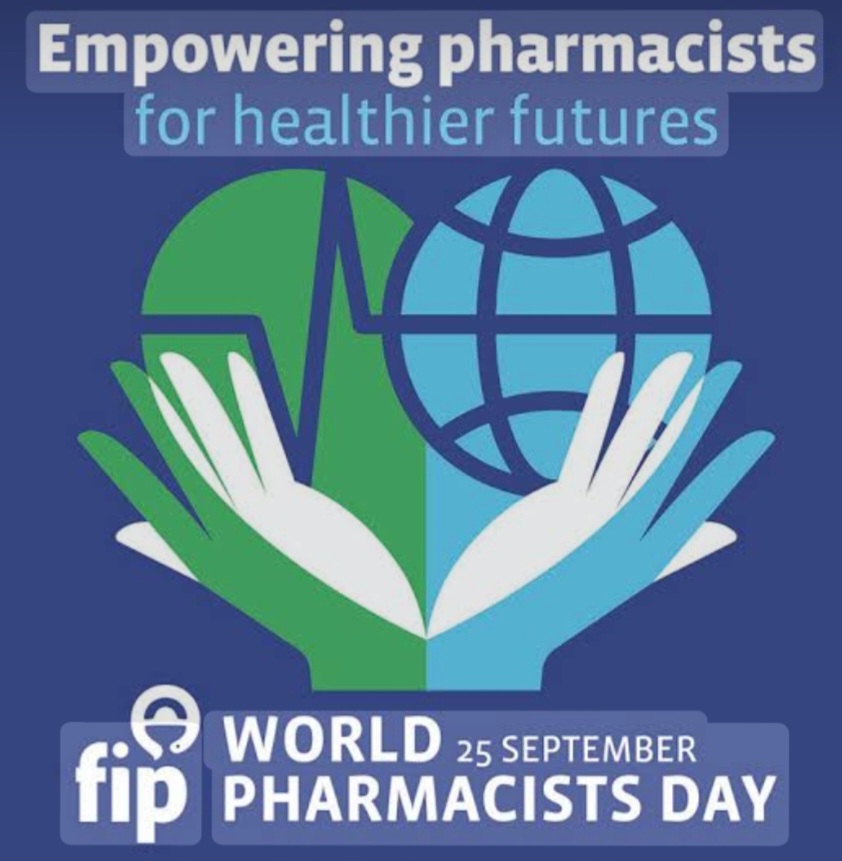
On 25 September 2026, pharmacists across Nigeria will join their colleagues around the world to celebrate World Pharmacists Day. The occasion provides an opportunity to recognise the contribution of pharmacists to the health and wellbeing of individuals, families and communities. It is also an opportunity to reflect on the changing responsibilities of the profession and the expectations that society places on pharmacists in a rapidly changing healthcare environment. The theme for this year’s celebration, “Empowering pharmacists for healthier futures,” is particularly relevant to Nigeria because the country needs to make better use of every available health professional. The theme calls attention to not only to what pharmacists can do, but also to the support, recognition, education and working environment required for them to contribute fully to healthcare.
World Pharmacists Day is more than another date on the professional calendar. The celebration was established by the International Pharmaceutical Federation (FIP) and is observed every year on 25 September, the anniversary of FIP’s establishment in 1912. The FIP Council adopted the annual World Pharmacists Day campaign in 2009, and the first celebration took place in 2010. Since then, the occasion has provided pharmacists across the world with an opportunity to demonstrate the importance of their profession to public health. In Nigeria, however, the celebration should also encourage us to look critically at how effectively our health system is using the knowledge, skills and experience of pharmacists.
For many Nigerians, the word “pharmacist” still immediately brings to mind the person behind the counter who receives a prescription and supplies medicines. That image is understandable because dispensing medicines remains an important component of pharmacy practice. However, it represents only one part of a much broader profession that has evolved considerably over the years. Modern pharmacists are involved in clinical pharmacy, pharmaceutical care, pharmacovigilance, medication safety, antimicrobial stewardship, public health, research, medicine information, regulatory affairs, industry, academia and health policy. The pharmacist today is therefore not simply a supplier of medicines but a healthcare professional whose knowledge can influence whether medicines are used safely, effectively and rationally.
This distinction is particularly important in Nigeria, where medicine-related problems can have serious consequences for patients and families. A medicine may be correctly manufactured and properly prescribed but still fail to produce the desired outcome if it is taken incorrectly, poorly adhered to or used together with another medicine that creates a problem. Patients may also discontinue treatment because of adverse effects, cost, misunderstanding or the belief that they no longer need their medicines after their symptoms improve. Pharmacists are trained to identify many of these challenges and to work with patients and other healthcare professionals to address them. Pharmaceutical care therefore gives the pharmacist an important opportunity to move beyond the traditional transaction of supplying medicines and become more directly involved in achieving desired health outcomes.
This role becomes even more important as Nigeria faces a growing burden of chronic diseases. Diabetes, hypertension, cardiovascular diseases and other non-communicable diseases increasingly require patients to use medicines over long periods, sometimes throughout their lives. Such patients need more than prescriptions because successful long-term treatment depends heavily on understanding, adherence, lifestyle modification, monitoring and regular interaction with healthcare professionals. The pharmacist can help patients understand why their medicines are necessary, how they should be taken, what adverse effects to watch for and when they should seek further medical attention. In this way, pharmaceutical care can help bridge the gap between what is prescribed in the clinic and what actually happens when the patient returns home.
Pharmacists also have an important responsibility in protecting Nigerians from medicine-related harm. Pharmacovigilance involves the detection, assessment, understanding and prevention of adverse effects and other problems associated with medicines. A medicine does not cease to require monitoring simply because it has been approved for use or dispensed to a patient. Pharmacists can contribute by recognising suspected adverse drug reactions, educating patients, documenting medicine-related problems and ensuring that relevant information reaches appropriate reporting systems. In a country where the safe and rational use of medicines remains a major public-health concern, strengthening pharmacovigilance should remain an important professional and national priority.
The challenge of antimicrobial resistance further demonstrates why pharmacists must be fully integrated into healthcare. Antimicrobial medicines have transformed modern medicine, but their inappropriate use can contribute to the development and spread of resistant organisms. Nigeria, like other countries, therefore needs effective antimicrobial stewardship involving physicians, pharmacists, nurses, microbiologists and other healthcare professionals. Pharmacists can contribute through appropriate medicine selection, dose optimisation, duration review, monitoring, medicine information and patient education. Their contribution becomes particularly important in hospitals, where the appropriate use of antimicrobial medicines can protect both individual patients and the wider community.
Yet, while discussing what pharmacists should do, Nigeria must also discuss what it should do for pharmacists. The country cannot continually expect healthcare professionals to assume additional responsibilities without creating the conditions necessary for them to perform effectively. Professional development, appropriate staffing, supportive working environments, access to modern technology, research opportunities and fair career progression are all important elements of professional empowerment. The issue is therefore not simply whether pharmacists are willing to contribute more, but whether the health system is prepared to provide the structures through which their contribution can be fully realised. This is precisely why the 2026 FIP theme places the word “empowering” at the centre of the discussion.
Nigeria also has to confront the reality of health-professional migration. FIP’s recent analysis of pharmacist migration, using data supplied by the Pharmacy Council of Nigeria, reported that the number of pharmacists migrating from Nigeria increased from 124 in 2013 to 702 in 2024, although the annual figures varied across the period. Such movement has implications for a country that invests substantial resources in educating health professionals. Migration is influenced by many factors, including professional opportunities, working conditions, remuneration, career development and the attractiveness of destination countries. The figures therefore deserve to be viewed not simply as a matter of individual choice but also as a reason for Nigeria to examine how it can retain and effectively utilise the skilled professionals it trains.
Creating a better environment for pharmacists does not mean preventing professionals from seeking opportunities elsewhere. Rather, it means creating conditions in which talented pharmacists can see meaningful opportunities for professional fulfilment within Nigeria. A pharmacist should be able to pursue specialist practice, postgraduate education, research, academia, leadership, regulatory affairs, industry or advanced clinical practice without necessarily having to leave the country to realise those ambitions. Nigeria has universities, hospitals, pharmaceutical industries, regulatory institutions and research organisations capable of providing such opportunities if they are properly supported. Retaining professional talent is therefore not merely a question of salaries but also a question of creating an environment in which competence, innovation and professional ambition are valued.
The regulatory framework for pharmacy in Nigeria has also evolved. The Pharmacy Council of Nigeria Act 2022 established the current statutory framework for the Pharmacy Council of Nigeria and gives the Council responsibility for regulating pharmacy education, training and practice in the country. The Council’s responsibilities include registration and licensing, professional standards, regulation of pharmacy premises and disciplinary processes, among other functions. Strong regulation is essential because the public deserves pharmaceutical services that meet appropriate standards of quality, safety and professional conduct. At the same time, regulation should continue to evolve alongside advances in pharmacy practice, technology, education and the changing needs of Nigerian patients.
The future of Nigerian pharmacy will also be strongly influenced by technology. Electronic health records, electronic prescriptions, telepharmacy, digital medicine information systems, artificial intelligence and data-driven healthcare are changing the way healthcare services are delivered around the world. Nigerian pharmacists cannot afford to remain outside this transformation because technology will increasingly influence how medicines are prescribed, dispensed, monitored and evaluated. At the same time, technology must be used responsibly because patient confidentiality, professional judgement, data protection and medicine safety cannot be sacrificed for convenience. The pharmacist of the future will therefore need not only pharmaceutical knowledge but also digital competence and the ability to interpret and apply new technologies appropriately.
Education must consequently remain at the heart of pharmacy empowerment. Pharmacy education cannot end with graduation because medicines, diseases, technologies and therapeutic guidelines continue to change. Pharmacists must continually update their knowledge through continuing professional development, postgraduate education, professional training, research and interaction with other healthcare disciplines. The Pharmacy Council of Nigeria itself identifies continuing professional development and practice standards among its regulatory responsibilities, reflecting the importance of maintaining professional competence throughout a pharmacist’s career. A strong culture of lifelong learning will help Nigerian pharmacists remain relevant as the healthcare environment becomes increasingly complex.
There is also a responsibility on pharmacists themselves. Empowerment cannot be achieved entirely through government policies, professional associations or regulatory institutions because the profession must also continually examine its own standards and practices. Nigerian pharmacists must remain committed to competence, ethical conduct, patient-centred care, evidence-based practice and professional integrity. They must also be willing to embrace new areas of practice and demonstrate through their work that pharmacy can make a measurable difference to health outcomes. Professional recognition is most sustainable when it is supported by visible competence, meaningful service and the trust of patients and other healthcare professionals.
The public has an important role in this relationship as well. Nigerians should be encouraged to regard pharmacists as accessible healthcare professionals who can provide reliable information about medicines and help prevent medication-related problems. This is particularly important in an era when social media has made it possible for health information, misinformation and commercial claims to reach millions of people within minutes. Patients may encounter advice about medicines from sources that have no professional qualification or accountability, and some of that advice can be harmful. Pharmacists can help Nigerians navigate this information environment by providing understandable, evidence-based and patient-centred guidance.
World Pharmacists Day should therefore not be reduced to a day when pharmacists congratulate one another and exchange goodwill messages. It should provide an opportunity for the profession to examine where it has come from, where it is today and what it needs to become in the future. It should also provide an opportunity for policymakers and healthcare institutions to ask whether pharmacists are being used according to the full extent of their education and professional competence. If pharmacists are expected to contribute to chronic disease management, medicine safety, antimicrobial stewardship, pharmacovigilance and public health, then appropriate structures must exist to enable them to do so. The celebration should therefore combine professional pride with honest reflection and a renewed commitment to service.
On 25 September 2026, we should celebrate the pharmacist in the community pharmacy who patiently explains how a medicine should be used. We should celebrate the hospital pharmacist who identifies a potentially dangerous medication problem, the clinical pharmacist who helps optimise treatment, the industrial pharmacist who contributes to the production of quality medicines, the academic pharmacist who trains future professionals and the researcher who generates evidence for better healthcare. We should also celebrate pharmacists working in regulatory institutions, public health programmes, pharmaceutical supply chains, pharmacovigilance, administration and other areas where their contribution may not always be visible to the general public. Behind each of these roles is a professional responsibility to place knowledge and expertise at the service of patients and society.
For Nigeria, however, celebration must be accompanied by action. If we genuinely want a healthier future, we must empower the professionals who can help build that future. Empowerment should include quality education, continuing professional development, supportive working environments, opportunities for research and innovation, effective regulation, appropriate use of technology and meaningful participation of pharmacists in healthcare decision-making. It should also include deliberate efforts to create professional environments in which skilled pharmacists can develop fulfilling careers and contribute their expertise to the Nigerian health system. In other words, Nigeria should not merely train pharmacists and then ask where they have gone; it should create the conditions that make their expertise indispensable to the health system.
World Pharmacists Day 2026 therefore gives Nigeria an opportunity to look beyond ceremonies and ask a fundamental question: Are we making full use of the knowledge, skills and dedication of our pharmacists? The answer matters because the consequences extend far beyond the pharmacy profession itself. It touches the safety of medicines, the quality of pharmaceutical care, the management of chronic diseases, the fight against antimicrobial resistance, the strength of pharmacovigilance and the overall effectiveness of the health system. If pharmacists are properly empowered and appropriately integrated into healthcare, their contribution can extend from the pharmacy counter to the bedside, the community, the laboratory, the boardroom and the policy arena. That is why the conversation about empowering pharmacists is ultimately a conversation about strengthening healthcare in Nigeria.
On this World Pharmacists Day, therefore, let us celebrate the profession with pride, but let us also reflect on its responsibilities. Let us recognise the pharmacists who serve quietly every day, often without the public fully appreciating the knowledge and responsibility behind their work. Let us encourage our policymakers, health institutions, professional bodies, educators and regulators to create an environment in which pharmacists can contribute fully to the health of the nation. Most importantly, let us remember that pharmacy is not ultimately about medicines as products but about medicines as instruments of human health and wellbeing. Empowering Nigerian pharmacists is therefore not merely an investment in a profession; it is an investment in safer medicines, better healthcare and a healthier future for Nigeria.
Dr. Sabiu Adamu FPCPharm
Consultant Clinical Pharmacist
Fellow of the West African Postgraduate College of Pharmacists
Rtd Director of Pharmaceutical Services, Federal Medical Centre,
Keffi
Email: sabiudm@gmail.com
About The Author
