



By Abdullahi Inuwa
After more than nine months in captivity, American missionary and pilot Kevin Rideout has regained his freedom, but the mysterious circumstances surrounding his release are opening a new chapter in one of the Sahel’s most closely watched hostage cases.


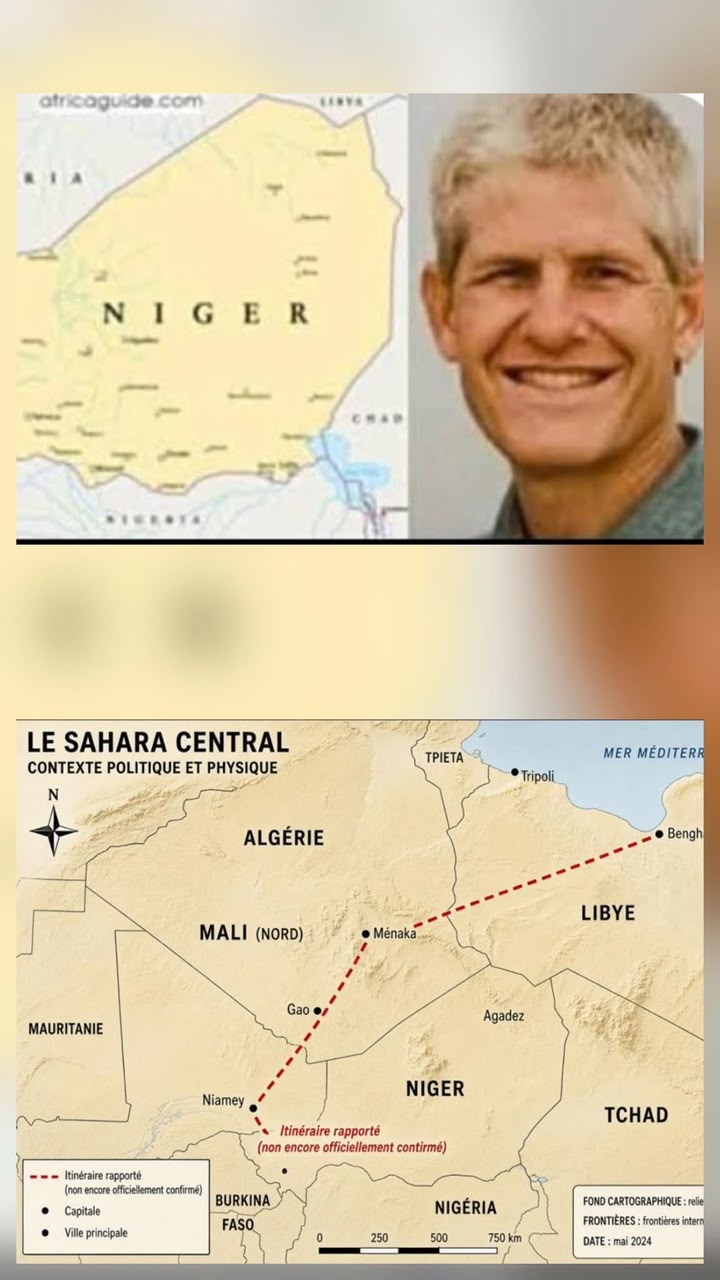
Rideout, who worked with Christian missionary organisation Serving in Mission (SIM) International, was abducted by three armed men in Niger’s capital, Niamey, on October 21, 2025.
SIM International confirmed on August 14, 2026, that Rideout had been released and was in good health and under the care of U.S. authorities. The organisation said he would soon be reunited with his wife, children and extended family.
U.S. President Donald Trump also confirmed Rideout’s return to American custody and welcomed his release.
But while Rideout is finally free, the question of how he was freed remains shrouded in mystery.
Rideout was kidnapped outside his home in Niamey while travelling towards the airport.
The abduction immediately raised concerns because it occurred in Niger’s capital, far from the remote borderlands where jihadist groups have traditionally operated.
No armed group publicly claimed responsibility for the kidnapping.
Initial reports suggested that his captors moved him towards western Niger’s Tillabéri region, an area heavily affected by Islamic State- and al-Qaeda-linked militant activity. Later reports indicated that Rideout may have been transferred across the border into Mali.
For months, his whereabouts remained unknown as American authorities worked to establish his location and secure his release.
Then came the unexpected Libya connection.
According to a Reuters investigation, several sources said authorities aligned with eastern Libyan military commander Khalifa Haftar played a role in securing Rideout’s release and escorting him through Libya.
But accounts of what actually happened differ dramatically.
Four sources reportedly told Reuters that a negotiated agreement was reached, with one source claiming that a ransom was paid.
A senior figure within Haftar’s forces, however, offered an entirely different version.
The official claimed that an elite Libyan National Army unit conducted an operation inside Mali to recover Rideout before flying him to Benghazi.
Reuters said it could not independently verify the military-operation account.
The conflicting accounts leave critical questions unanswered: Was Rideout freed through negotiations, a military operation or a combination of both? Was a ransom paid? And who ultimately negotiated his freedom?
Adding another layer to the mystery is the reported involvement of Malian businessman Cherif Ould Tahar.
Reuters sources reportedly described Tahar as a businessman with connections to armed groups and smuggling networks. Two sources said he played a role in efforts to secure Rideout’s release.
However, details of any agreement remain unclear.
That uncertainty is significant in a region where kidnapping for ransom has become an important source of revenue for armed and criminal networks.
The reported transfer of Rideout through Benghazi could have implications well beyond the hostage case.
Eastern Libya, under Haftar’s influence, has developed extensive security and commercial networks stretching across the Sahara. Those networks connect Libya with parts of Niger, Chad and the wider Sahel.
Haftar has also sought to portray himself as an important security player and regional intermediary while deepening relations with Washington.
If his forces were indeed instrumental in bringing Rideout home, the episode could further enhance Haftar’s credentials as a potential security broker in the volatile Sahel.
But it could also expose the increasingly complicated web linking regional power brokers, armed groups, businessmen, smugglers and foreign governments.
Rideout’s ordeal also highlights the rapidly changing security landscape across West Africa.
His abduction in the heart of Niamey demonstrates that the threat from jihadist and criminal networks is no longer restricted to isolated rural communities and remote border zones.
For American citizens and other foreigners operating in the region, the case could serve as another warning about the growing reach of kidnapping networks.
For now, Rideout is safe and back under U.S. protection.
But the unanswered questions surrounding his journey from captivity to freedom may prove almost as significant as the kidnapping itself.
The biggest mystery remains: who really secured Kevin Rideout’s freedom—and what price was paid to bring him home?
Source:@ZagazolaMakama
About The Author
