


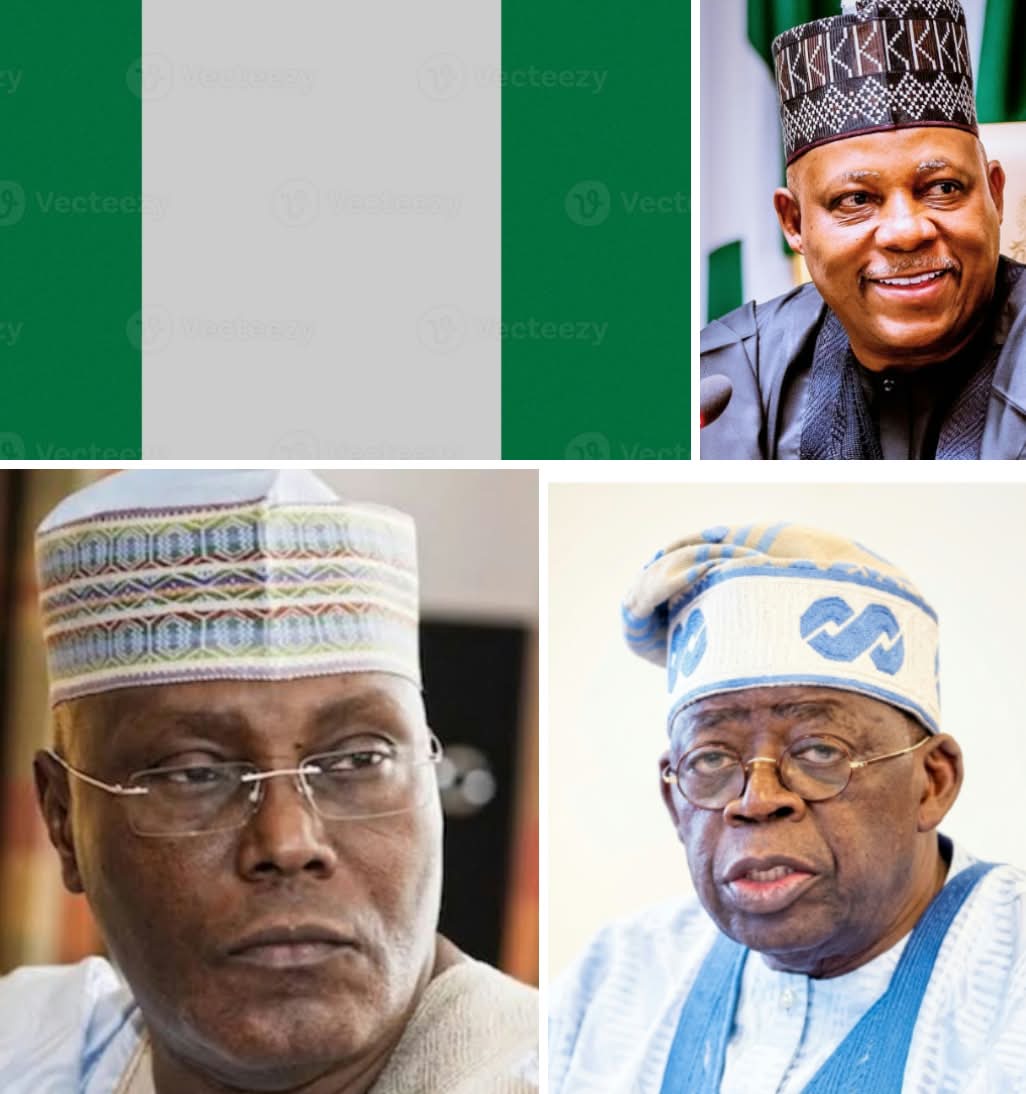

How Shettima Put Leadership, Respect, and Political Responsibility at the Heart of His Message to Atiku
By: Dr. James Bwala


Political competition is an essential feature of democracy. It allows citizens to compare ideas, assess records, and choose leaders according to their interests and convictions. However, political competition loses its democratic value when it becomes a contest in personal ridicule, deliberate misrepresentation, or disrespect for public institutions. In this context, Vice President Kashim Shettima’s response to former Vice President Atiku Abubakar’s repeated reference to President Bola Ahmed Tinubu simply as “Bola” raises an important question: should political disagreement permit the systematic reduction of a sitting president to an informal or supposedly dismissive name?
Shettima’s statement—that “you can call him Bola or Adekunle if you like; the truth is that he is the president and commander in chief of the armed forces of Nigeria”—is persuasive because it shifts attention from personal familiarity to constitutional authority. His broader remarks, however, including his references to Atiku’s political history and comparisons with other figures, reveal the dangers of responding to provocation with further personal attacks. The central principle remains clear: Nigerian political discourse should be based on respect for institutions, honest criticism, and accountability rather than mockery and name-calling.
The title and office of the president are not merely ceremonial. Under Nigeria’s constitutional system, the president is the head of the federal executive branch and commander in chief of the armed forces. Whether citizens admire or oppose the president, the office carries legal authority and national significance. Addressing the occupant of that office with appropriate recognition is therefore not necessarily an expression of personal support. It is an acknowledgment of the institution itself.
This distinction is particularly important in a democracy. A citizen may strongly criticize the president’s economic policies, security record, appointments, or political decisions while still recognizing the constitutional authority of the presidency. Indeed, democratic criticism becomes more effective when it is directed at policies and conduct rather than expressed through personal humiliation. Calling a public official by a familiar name may appear harmless in private conversation, but when used repeatedly in a political campaign to diminish the status of the office, it may contribute to a broader culture of disrespect.
Atiku Abubakar, as a former vice president and a major political figure, has every right to challenge President Tinubu’s administration. He may argue that the government has failed to meet expectations, that its economic reforms have increased hardship, or that its policies require reconsideration. Such arguments should be answered with facts, evidence, and alternative proposals. Reducing the president to a first name, however, does not strengthen the criticism. It risks making political debate appear driven by resentment rather than reason.
Shettima’s response is therefore justified to the extent that it defends the dignity of the presidency. His declaration that he would refer to Atiku as “a former vice president” demonstrates the principle of acknowledging a person’s public status. This is not a demand that Nigerians surrender their freedom of expression. Instead, it is a reminder that responsible political language can preserve disagreement without destroying civility.
Respect is especially important in a country as diverse and politically sensitive as Nigeria. Political leaders speak not only to their immediate supporters but also to millions of citizens who may interpret their words as permission for confrontation. When senior politicians exchange insults, their followers may imitate that conduct in more aggressive forms. Online abuse, threats, tribal stereotyping, and political intolerance can develop from the normalizing of contempt at the highest level.
Leadership therefore imposes a duty of restraint. A person seeking the presidency should demonstrate an ability to disagree without constantly degrading opponents. This is not weakness. On the contrary, restraint signals confidence, maturity, and respect for the electorate. Citizens deserve political leaders who can explain why a policy is wrong, why an election strategy is flawed, or why a government has failed, rather than leaders who rely principally on ridicule.
Nevertheless, Shettima’s own remarks must also be examined critically. In responding to Atiku, he reportedly referred to Atiku’s repeated presidential contests and stated that he was not Abraham Lincoln, while also making a comparison involving Raila Odinga. Although political leaders may use historical comparisons to make rhetorical points, such statements can distract from the stronger constitutional argument. If the purpose is to defend respect for public office, the response should avoid language that appears to ridicule another public figure.
The principle of civility must apply equally to government supporters and opposition figures. It cannot be demanded from one side while being ignored by the other. President Tinubu’s supporters should not condemn disrespect toward the presidency and then engage in personal abuse of opposition leaders. Likewise, opposition politicians should not demand accountability while using language designed only to provoke or delegitimize the government. A healthy political culture requires consistency.
There is also a difference between personal familiarity and institutional disrespect. In some contexts, a politician may use a first name because of a long-standing personal relationship. Such usage is not automatically offensive. However, when the name is used in a public political dispute with the apparent intention of reducing the person’s stature, the meaning changes. Language is shaped by context, tone, and purpose. The question is not merely whether “Bola” is the president’s given name, but whether its use is intended to recognize him as a national leader or to portray him as unworthy of formal respect.
Political leaders should also remember that titles are not substitutes for accountability. Calling President Tinubu “Mr. President” does not mean that citizens must approve of his policies. Similarly, addressing Atiku as “former vice president” does not mean that his criticisms should be ignored. Respectful language and rigorous scrutiny can coexist. In fact, they should coexist. Democracy requires both recognition of authority and the freedom to question how that authority is exercised.
Shettima’s reference to Atiku’s many presidential contests also invites a broader reflection on political ambition. Repeated participation in elections is not, by itself, proof of failure or dishonor. Many democratic leaders contested several times before achieving office, while others remained influential without winning the highest position. The legitimacy of a political career should be judged by ideas, conduct, service, and adherence to democratic rules—not merely by the number of attempts made.
For this reason, personal references to the age, electoral history, or perceived ambitions of opponents should be used cautiously. They may energize a political crowd, but they rarely help citizens understand the real issues before the country. Nigeria faces serious challenges: inflation, unemployment, insecurity, weak public services, corruption, ethnic mistrust, and declining confidence in public institutions. These problems require serious debate. Time spent trading insults is time diverted from discussing practical solutions.
The inauguration of a campaign council is an occasion for mobilization, but it should also be an opportunity to define the character of the campaign. A campaign should tell citizens what a party intends to do, how it will do it, and why its program deserves support. If the campaign becomes primarily a platform for attacking opponents, the electorate may be left with slogans instead of plans. Political communication should persuade citizens through vision and performance, not merely through derision.
Supporters of President Tinubu can make a stronger case by highlighting measurable achievements, explaining difficult reforms, acknowledging genuine hardships, and presenting credible plans for improvement. They do not need to depend on insults directed at Atiku or any other opponent. Similarly, Atiku and his supporters can build a more convincing opposition by presenting detailed alternatives and demonstrating how their proposals would address national problems. Criticism is most powerful when it is specific, factual, and connected to the daily experiences of citizens.
Ultimately, the controversy surrounding the use of “Bola” reflects a larger crisis in Nigerian political communication. Public discourse has increasingly become personal, emotional, and hostile. Political actors often treat every criticism as an attack on their identity, while supporters assume that defending their party requires abusing its opponents. This pattern weakens democratic culture. It makes compromise difficult, encourages misinformation, and shifts attention away from governance.
The appropriate standard should be simple: criticize policies, question decisions, challenge records, and expose wrongdoing—but do not deliberately demean public offices or reduce political disagreement to personal humiliation. The president should be respected as president, even when his administration is opposed. Former leaders and candidates should also be treated with dignity, even when their records are criticized. Respect does not eliminate accountability; it creates the conditions in which accountability can be pursued constructively.
Vice President Shettima is right to insist that President Tinubu’s constitutional position deserves recognition. However, the most persuasive defense of that position would be one expressed with restraint and supported by evidence. The same standard applies to Atiku Abubakar and every other political actor. Nigeria does not need louder insults; it needs better arguments, stronger institutions, and leaders capable of disagreeing without destroying mutual respect.
The future of Nigerian democracy will depend not only on who wins elections but also on how political leaders behave while seeking power. A nation is strengthened when its leaders respect offices, honor legitimate criticism, and place national interest above personal rivalry. The president is more than a first name, and an opposition candidate is more than a target for ridicule. Both represent important parts of a democratic system that must be protected through responsible speech and principled conduct.
James Bwala, PhD, writes from Abuja.
About The Author
