



By Pascal Abengowe
4 November 2026
As Nigeria approaches the January 16, 2027 presidential election, the political Up atmosphere is increasingly defined by shifting alliances, regional calculations, economic hardship and the struggle for electoral dominance.


With President Bola Ahmed Tinubu seeking another mandate and opposition figures positioning themselves for a major challenge, the question is no longer just who wants to govern Nigeria, but who can convince Nigerians that they deserve their votes.
The road to Aso Rock is becoming increasingly competitive as Nigeria prepares for another defining moment in its democratic journey. Across the country’s six geopolitical zones, political parties are strengthening their structures, influential politicians are negotiating alliances, and presidential hopefuls are seeking to consolidate their traditional strongholds while expanding their influence into unfamiliar territories.
With the Independent National Electoral Commission (INEC) fixing January 16, 2027, for the presidential and National Assembly elections, the countdown has intensified political activities nationwide.
At the centre of the contest is President Bola Ahmed Tinubu of the All Progressives Congress (APC), who is seeking re-election after taking office in May 2023. His administration’s economic reforms, particularly fuel subsidy removal and foreign exchange reforms, have become central issues in the political debate.
While the ruling party is expected to campaign on its economic policies, infrastructure investments and institutional reforms, opposition parties are increasingly presenting the election as an opportunity for Nigerians to evaluate the administration’s performance against the realities of everyday life.
The presidential race: Familiar political figures, new calculations
Nigeria’s 2027 presidential contest features a mixture of established political figures and alternative political voices.
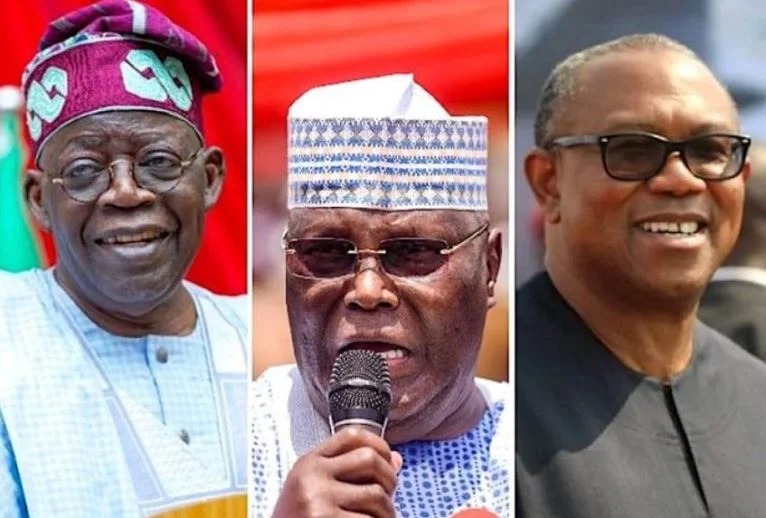
The Independent National Electoral Commission’s earlier published list of presidential candidates identified 18 candidates representing different political parties. Among the prominent names reported by Voice of Nigeria are President Bola Tinubu of the APC, former Vice-President Atiku Abubakar of the African Democratic Congress (ADC), former Anambra State Governor Peter Obi of the Nigeria Democratic Congress (NDC), Oyo State Governor Seyi Makinde of the Allied Peoples Movement (APM), and Omoyele Sowore of the African Action Congress (AAC).
Other candidates identified in the report include Adewole Adebayo of the Social Democratic Party (SDP), Donald Duke of the Peoples Redemption Party (PRP), and Sunday Okereke of the Labour Party (LP).
INEC subsequently published an updated presidential candidates list on October 31, 2026. The updated official publication should be treated as the controlling reference for the final candidates and running mates.
The number of presidential contenders, however, does not necessarily mean that all parties possess the same electoral strength. Nigeria’s presidential elections are often influenced by political structures, regional voting patterns, financial resources, party organisation, campaign visibility and the ability to mobilise voters across the country.
APC and Tinubu: Defending the ruling party’s political advantage
For the APC, the 2027 election is an opportunity to retain the presidency and demonstrate that the administration’s policies deserve another mandate.
Tinubu enters the contest with the advantage of incumbency, access to an established nationwide party structure and political relationships across several states.
The South-West remains an important traditional political base for the president. However, the region is not guaranteed to deliver a uniform voting outcome.
The 2023 presidential election demonstrated this political complexity. According to results reported by The Guardian, Tinubu secured approximately 2.28 million votes across the South-West, while Atiku Abubakar received about 941,000 and Peter Obi approximately
About The Author
