



By Abdullahi Inuwa
The North-West is facing a displacement crisis of staggering proportions, with 737,073 Nigerians forced from their homes, as banditry, kidnapping and climate-related disasters continue to push vulnerable communities to the brink.


The International Organization for Migration (IOM) sounded the alarm during a media briefing on displacement and peacebuilding, warning that the crisis is no longer merely about where people live—it is increasingly about whether they can safely rebuild their lives and remain in their communities.
IOM Chief of Mission in Nigeria, Sharon Dimanche, said the latest assessment paints a troubling picture, particularly in Katsina and Zamfara, where displacement has reached alarming levels.
Katsina alone accounts for nearly 181,000 displaced persons, while Zamfara has recorded more than 261,000.
But behind the statistics are families who have lost homes, farms, businesses, schools and, in many cases, the sense of security that once made their communities home.
The biggest driver remains insecurity.
IOM said almost 620,000 of the 737,073 displaced persons—about 84 per cent—were forced to flee because of armed banditry and kidnapping.
Yet, another threat is quietly worsening the crisis.
In Katsina, more than 138,000 people were displaced between January 2025 and January 2026 following reported incidents.
Nearly 72,000 of those displacements were triggered by floods, heavy rainfall and windstorms, while almost 60,000 were linked to banditry and kidnapping.
The figures expose a dangerous reality: for many families, insecurity and climate disasters are becoming overlapping threats.
Whether fleeing gunmen or floodwaters, victims often face the same painful aftermath—lost livelihoods, disrupted education, destroyed homes and uncertain futures.
There is a glimmer of hope amid the grim statistics.
IOM recorded almost 147,000 returnees across the North-West, including more than 37,000 in Katsina.
Across the North-West and North-Central regions combined, the number of internally displaced people also declined by nearly five per cent between October 2025 and February 2026, while returnees increased by almost five per cent.
But IOM says the numbers should not be mistaken for victory.
For Dimanche, the real test begins after people return.
Can they sleep safely? Can they farm? Can their children return to school? Can families earn a living?
If the answer to these questions remains uncertain, she warned, returning home could simply become another stage in the cycle of displacement.
The organisation is therefore shifting attention from simply responding to displacement to preventing displacement before it happens.
Dimanche said early warning systems and community peacebuilding can help identify tensions before they explode into violence.
According to her, conflicts often come with warning signs, and the critical challenge is ensuring that those signs reach authorities and communities early enough for action to be taken.
A farmer who remains on his land, a dispute settled peacefully and children who continue attending school may not make newspaper headlines—but, she said, those are victories of effective peacebuilding.
Dimanche urged national media to treat the crisis as a matter of national importance.
She warned that prolonged displacement in the North-West could have far-reaching consequences for food production, education, livelihoods, local economies, social cohesion and Nigeria’s broader development.
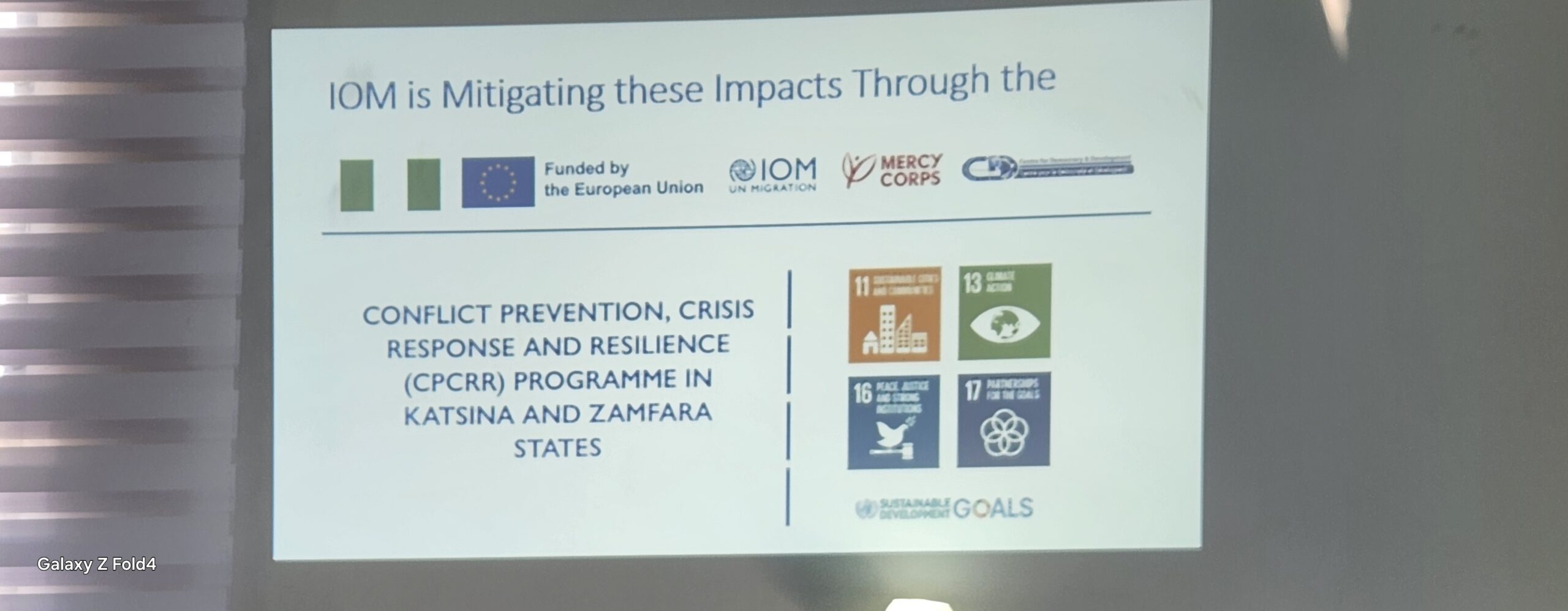
She also highlighted IOM’s partnership with the European Union through the FPI project, which supports peacebuilding, early warning and community resilience efforts in Katsina and Zamfara.
The partnership, she said, is designed to help communities identify threats early and respond before they become full-blown crises.
Perhaps the strongest reminder that the crisis is about people—not just numbers—came through the story of Aisha Lawal, who heads IOM’s Psychosocial Mobile Team in Katsina.
Aisha works with survivors of crisis, helping them cope with the psychological and social wounds left behind by conflict and displacement.
For Dimanche, Aisha represents one side of the battle: helping people recover after disaster strikes.
“If we are serious about reducing displacement,” the IOM chief’s message was, “we cannot only become better at responding after people flee. We have to become better at preventing the conditions that force them to flee in the first place.”
For the North-West, where hundreds of thousands remain displaced and thousands more are attempting to return, the challenge is no longer simply getting people home.
It is making home safe enough for them to stay.
About The Author
