


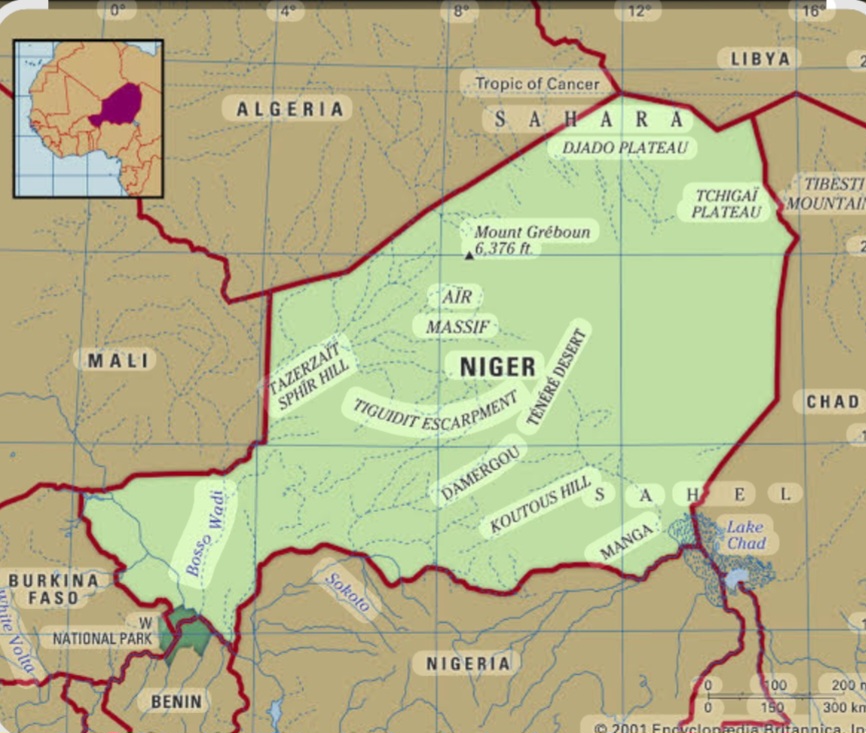

NIAMEY — Security concerns are deepening in Niger as armed attacks have resurfaced in the volatile Tillabéri region, just days after a reported mutiny at a key military facility in the capital, Niamey.
Several communities came under attack on September 2, with Darbani, Diamballa and Namarigoungou reportedly targeted by armed assailants, according to local accounts.


The violence left civilians dead and injured while livestock were also reportedly taken during the attacks, further worsening the hardship faced by communities already grappling with persistent insecurity.
In Diamballa, two young girls were said to have drowned in a pond while trying to escape the attackers. Another resident reportedly suffered gunshot wounds.
Namarigoungou also recorded a fatality, with a man reportedly killed during the assault.
The violence did not end there. On September 3, attackers reportedly struck Zibane in the Anzourou commune, where additional casualties were recorded.
The fresh wave of violence has heightened concerns about Niger’s security situation, coming shortly after an attempted mutiny at Base 101, a strategic military installation near Diori Hamani International Airport in Niamey.
Reports surrounding the incident indicate that some soldiers had expressed frustration over deteriorating security conditions and mounting battlefield losses.
The mutiny was reportedly brought under control after loyalist forces, supported by personnel linked to Russia’s Africa Corps, moved to suppress the unrest.
The confrontation reportedly continued for several hours around the airport and other strategic locations before government forces regained control.
The incident has emerged as one of the most significant internal challenges confronting Niger’s military authorities since they took power in the July 2023 coup.
Beyond the immediate threat posed by the mutiny, the episode has raised fresh questions about the pressure facing Niger’s armed forces as they battle persistent jihadist violence while also dealing with internal discontent.
Tillabéri remains at the centre of the country’s security crisis. The region, which shares borders with Mali and Burkina Faso, has suffered repeated attacks by armed groups, with rural communities frequently bearing the brunt of the violence.
For residents, the consequences extend far beyond loss of life. Repeated attacks have disrupted farming, displaced families, led to livestock losses and deepened an already serious humanitarian crisis.
The latest incidents therefore present a difficult test for Niger’s military authorities, who must contend with armed groups in the countryside while maintaining stability within the security establishment.
Despite the growing concerns, Nigerien authorities have continued to insist that the country’s security situation remains under control.
The government also escalated its political allegations on September 4, accusing France of playing a role in the events surrounding the reported mutiny.
However, authorities did not publicly release detailed evidence to substantiate the allegation.
With violence continuing in Tillabéri and questions lingering over the recent unrest in Niamey, Niger faces renewed pressure to demonstrate that its security apparatus can withstand both external attacks and internal strains.
About The Author
