



By Shuaibu Umaru, Maiduguri.
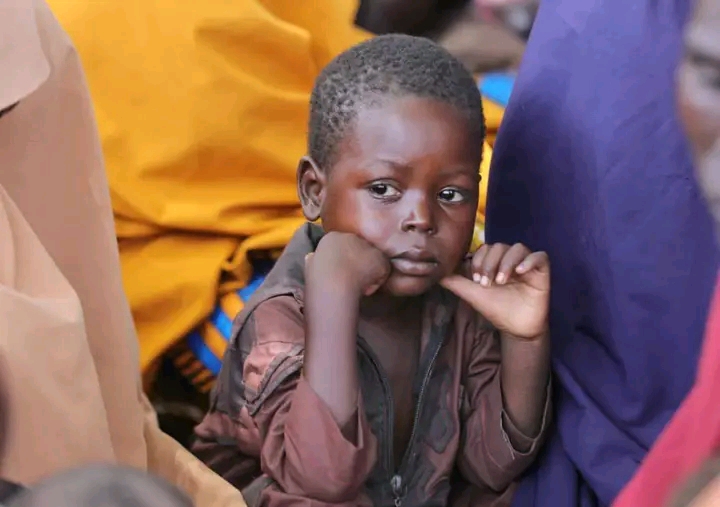
He sits quietly, his tiny hands supporting his face, his eyes fixed on something beyond the crowd around him. There is no smile, no playful expression one would expect from a child his age. Instead, his face carries the weight of experiences no child should ever endure.


This young boy is among hundreds of women and children recently rescued by troops of Operation Hadin Kai from Boko Haram hideouts in the Mandara Mountains of southern Borno State. The military operation led to the freedom of about 360 captives, many of whom had spent months in harsh conditions after being abducted from communities around the Ngoshe axis in Gwoza Local Government Area.
For this child, freedom has come, but healing remains a journey. Behind his silent gaze lies a story of fear, uncertainty, hunger and separation from loved ones. While he has escaped captivity, the emotional scars of conflict may remain long after the guns have fallen silent.
Children caught in armed conflicts often return with invisible wounds. They require not only food and shelter but also psychological support, education and the warmth of family and community acceptance. Experts say trauma among children who have experienced violence can affect their growth, behaviour and ability to reintegrate into society.
The rescue of hundreds of captives represents a significant military success, but it also highlights the humanitarian challenge that follows. Many of those freed need medical care, counselling and support to rebuild their lives.
As Borno State continues its recovery from years of insurgency, the faces of children like this boy serve as a reminder that the consequences of conflict are often carried by the most innocent. Their return from captivity is not the end of the story, it is the beginning of a new struggle for healing, hope and a chance to reclaim a childhood stolen by war.
About The Author
