



By Aliyu Bala Gerengi, Gombe
The Economic Community of West African States (ECOWAS) has moved to strengthen its partnership with Nigerian journalists ahead of the 2027 general elections, stressing the critical role of the media in ensuring peaceful, credible and transparent polls.


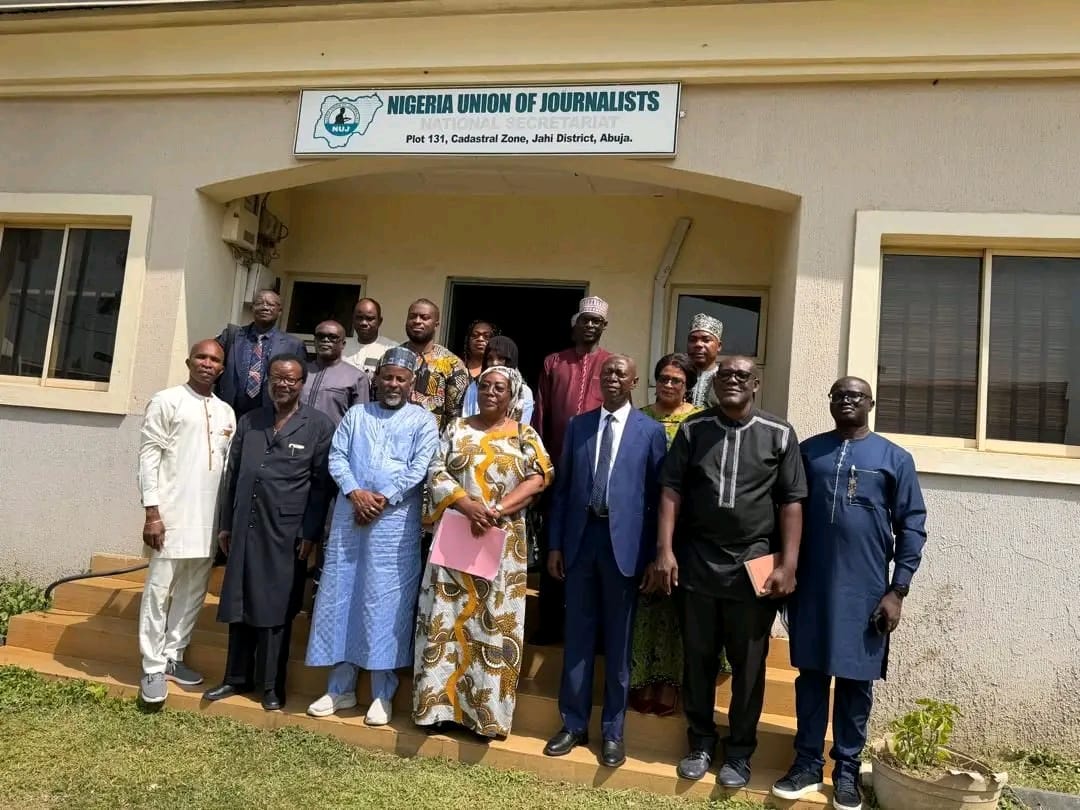
The regional body made the move during a courtesy visit by a 13-member delegation to the national secretariat of the Nigeria Union of Journalists (NUJ) in Abuja on Thursday, as part of its efforts to assess Nigeria’s preparedness for the forthcoming elections.
The engagement, according to the delegation, was in line with ECOWAS’ Protocol on Democracy and Good Governance, which places emphasis on credible elections, democratic accountability and responsible dissemination of information across member states.
The delegation was led by His Excellency Victor Bockarie Foh, former Vice-President of Sierra Leone. Other members included Madam Francess Piagie Alghali, Commissioner for Political Affairs, Peace and Security, and Dr Julius Sandi, Sierra Leone’s High Commissioner, representing the ECOWAS Permanent Representative.
Speaking during the meeting, the delegation leader reaffirmed ECOWAS’ commitment to supporting member states in strengthening democratic institutions and ensuring peaceful, transparent and credible electoral processes.
In his response, NUJ National President, Comrade Alhassan Yahya, welcomed the delegation and acknowledged ECOWAS’ contributions to promoting democracy and good governance across West Africa.
Yahya assured the regional organisation that the NUJ was prepared to mobilise journalists across Nigeria’s 36 states and the Federal Capital Territory to provide comprehensive and professional coverage before, during and after the 2027 elections.
However, he warned that inadequate funding, harassment and attacks on journalists by security personnel and non-state actors, as well as insufficient periodic training in election reporting, remained major obstacles confronting media practitioners during electoral activities.
The NUJ President also raised concerns over the growing spread of misinformation and disinformation, particularly across social media platforms, calling for renewed efforts to strengthen conventional media as a dependable source of accurate, verified and credible information.
He maintained that journalists must uphold professional ethics and remain accountable for their actions, stressing that members found guilty of professional misconduct would face appropriate disciplinary measures.
Nevertheless, he insisted that the Union would not abandon journalists whose rights were violated while carrying out legitimate professional duties.
Yahya further urged media practitioners to place national security and the collective interest of the country above partisan considerations, particularly as political activities begin to gather momentum ahead of 2027.
On electoral reforms, the NUJ President called for further adjustments to Nigeria’s electoral framework, arguing that the country’s evolving political environment required continuous review of existing laws.
He specifically advocated a review of the Electoral Act to ensure that political aspirants know their eligibility status and electoral standing at least eight months before the general elections.
According to him, such an arrangement would minimise uncertainty, reduce political tension and prevent avoidable confrontations among aspirants and their supporters during electioneering.
In his remarks, the head of the ECOWAS delegation commended the NUJ President for highlighting critical challenges affecting journalists and the electoral process.
He encouraged the Union to sustain its commitment to responsible journalism, professional standards and credible election reporting, reaffirming ECOWAS’ readiness to support peaceful democratic transitions across the sub-region.
The meeting underscored the growing importance of media collaboration in safeguarding Nigeria’s democratic process, with both organisations recognising that access to reliable information, professional reporting and public accountability would be crucial to the success of the 2027 general elections.
About The Author
