


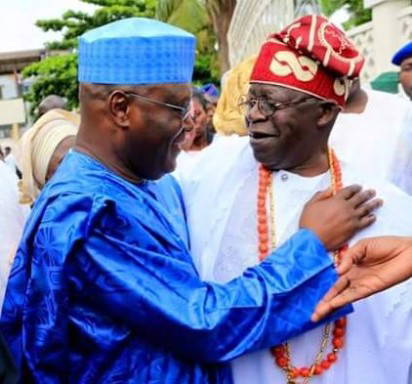

A fierce political clash has erupted between former Vice President Atiku Abubakar and President Bola Ahmed Tinubu, as Atiku fired back with a blistering statement accusing the President of hypocrisy, distortion of history, and political desperation.
In a strongly worded response issued by his aide, Phrank Shaibu, Atiku described Tinubu’s recent remarks as a “reckless tirade,” claiming they reveal “a troubling pattern of hypocrisy and historical amnesia.”


The former Vice President questioned the credibility of the President’s criticisms, arguing that a leader facing scrutiny over his own records should not attempt to discredit others with documented public service.
At the heart of the dispute is Nigeria’s privatisation policy. Atiku’s camp insisted he had long championed the reform of state-owned enterprises, including the restructuring of the Nigerian National Petroleum Corporation, while accusing Tinubu of previously opposing such measures.
The statement further alleged that the current administration is implementing what it described as “privatisation without accountability,” claiming the process lacks transparency and clear valuation.
Defending his legacy, Atiku cited several companies—such as Oando Plc, Conoil Plc, Ardova Plc, Indorama Eleme Petrochemicals, Benue Cement Company, and Transcorp Hilton Abuja—as evidence of successful reforms that revitalised struggling public enterprises.
In a sharp personal jab, the statement accused the President of failing to engage with documented history, referencing accounts of past reforms, including those detailed by Nasir El-Rufai in his book The Accidental Public Servant.
“It is not our fault that the President does not and cannot read,” the statement said pointedly, escalating the already heated exchange.
Atiku’s camp also criticised the tone of Tinubu’s comments, describing them as dismissive and lacking substance, and warning that such rhetoric distracts from pressing national challenges.
The latest verbal duel underscores deepening political tensions at the top, as both camps trade accusations over policy direction, leadership style, and the state of the nation.
Observers say the escalating rhetoric signals a widening divide ahead of future political contests, with Nigerians watching closely as the battle of words intensifies.
About The Author
