


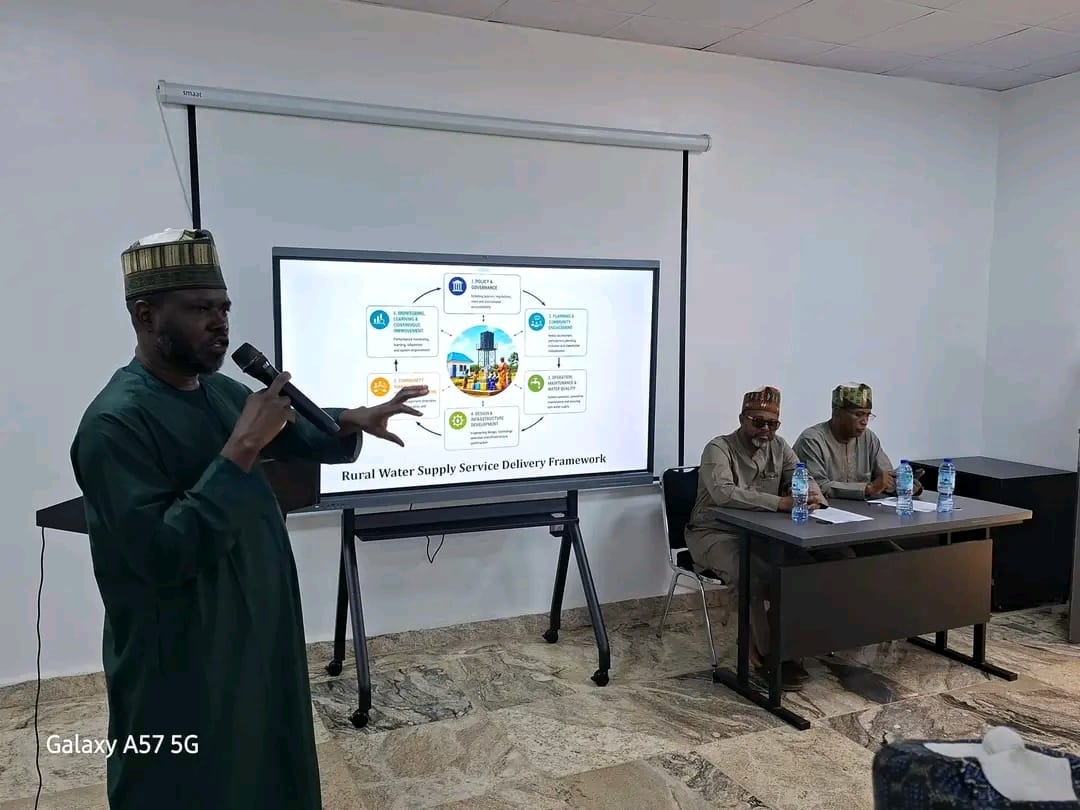
, under the NG-SURWASH Programme, has organised a stakeholders’ validation)
By Aliyu Bala Gerengi, Gombe
The Gombe State Rural Water Supply and Sanitation Agency (RUWASSA), under the NG-SURWASH Programme, has organised a stakeholders’ validation workshop to review and validate three key plans developed by the Agency.


The workshop was designed to provide stakeholders with an opportunity to examine the documents, make observations and contributions, and validate them for adoption as working reference documents for effective programme implementation, particularly in the areas of institutional and human capacity development.
Declaring the workshop open, the General Manager of RUWASSA, Engr. Mohammed Gibrimu Ahmed, appreciated the stakeholders for their continued commitment and support towards the implementation of the NG-SURWASH Programme in the state.
Engr. Gibrimu urged participants to actively participate in the discussions and carefully study the three documents presented for validation.
He explained that their contributions, observations and requests for clarification would help improve the documents and ensure that they reflect the realities and needs of the stakeholders.
The General Manager said the plans would serve as valid and reliable working documents after incorporating stakeholders’ inputs and securing their collective ownership and support.
He identified the three documents as the Standard Operating Procedure (SOP), Human Resource Management Plan, and Operations and Maintenance Plan, noting that they were developed to strengthen institutional capacity and improve the effective implementation and sustainability of the NG-SURWASH Programme.
Also speaking, the NG-SURWASH Programme Coordinator of the Gombe State Project Coordination Unit, Engr. Usman Abubakar Aliyu, congratulated the participants and urged them to renew their commitment towards understanding all components of the programme.
He stressed the importance of stakeholders’ knowledge and active participation in ensuring that the programme achieves its intended objectives and delivers sustainable results to beneficiary communities.
The Executive Secretary of the Gombe State Environmental Protection Agency, GOSEPA, Dr. Auwalu Baba Jada, welcomed participants to the workshop and called on the implementing agencies and other stakeholders to continue working together as a team.
Dr. Jada noted that effective collaboration among the various implementing agencies would promote harmonious and sustainable results, stressing that the agencies were complementary to one another.
He also commended the NG-SURWASH Programme Coordinator for his continued support and guidance to the implementing agencies.
Participants at the workshop included RUWASSA staff, LGA WASH Coordinators, Monitoring and Evaluation Officers from Akko, Balanga, Dukku, Kwami, Kaltungo, Shongom, Nafada and Yamaltu/Deba Local Government Areas, as well as members of Water, Sanitation and Hygiene Committees, WASHCOMs, from the participating LGAs.
The Agency engaged experienced resource persons to facilitate the sessions and guide participants through the contents and practical application of the three plans.
Assoc. Prof. Adamu Jibir, Technical Assistant on Social Safeguards at the SPCU, presented the workshop objectives, expected outcomes and approach.
Dr. Lukman Shiji Sadiq presented the Standard Operating Procedure, while Dr. Musa Abdu of Gombe State University presented the Human Resource Management Plan developed by RUWASSA.
The Operations and Maintenance Plan was presented by Dr. Abubakar Umar Yuguda, Technical Assistant on Environmental Safeguards and Environmental Specialist.
Speaking during the workshop, some participants commended RUWASSA and the NG-SURWASH Programme for organising the validation exercise.
They pledged to actively contribute to the review process, saying the three documents would help strengthen institutional capacity, improve programme implementation and promote sustainability.
The workshop featured interactive sessions, stakeholders’ observations and contributions on the three documents, as well as a group photograph.
About The Author
