


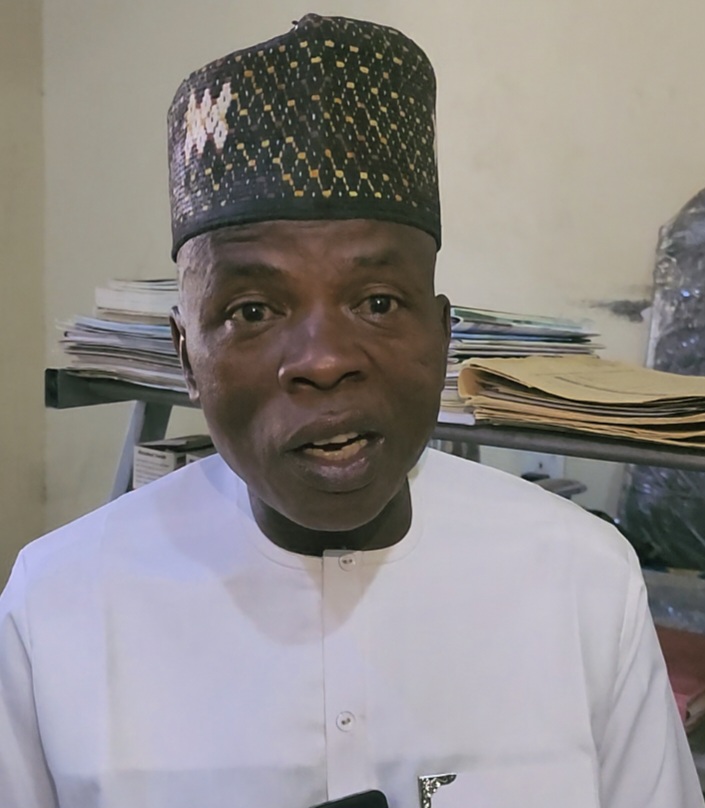

…..Says Hungry, Frustrated Citizens Are Losing Patience; Demands Security Overhaul, Elders’ Committee to Restore Political Peace
By: Abdullahi Inuwa


As political activities gradually gather momentum ahead of the 2027 general elections, political commentator and language expert, Comrade Nasiru Ahmad Adamu Zabarma, has warned that growing economic hardship, insecurity and public frustration are fuelling verbal attacks and hostility against political leaders in Zamfara State.
He cautioned that the increasing trend of political insults, public confrontations and attacks on elected officeholders could worsen political divisions if urgent steps are not taken to address the underlying grievances of citizens.
Zabarma made the observations during an interview with ABC News Nigeria, where he offered an assessment of the political atmosphere in Zamfara, the country’s security challenges and the growing tension between political leaders and their supporters.
He specifically expressed concern over reported verbal attacks against the Zamfara State Deputy Governor, Malam Mani Mummuni, in his constituency, saying the incident had reportedly occurred twice.
He also cited an incident involving Governor Dauda Lawal and members of his entourage following a condolence visit to the Commissioner for Industries, alleging that political elements were responsible for the hostility.
For Zabarma, however, these incidents are symptoms of a much bigger problem: a population struggling under economic pressure and worsening insecurity.
FUEL SUBSIDY REMOVAL, ECONOMIC HARDSHIP FUELLING ANGER
Tracing the roots of public frustration, the political analyst pointed to President Bola Ahmed Tinubu’s announcement of fuel subsidy removal during his inauguration, arguing that the policy’s economic consequences have continued to weigh heavily on ordinary Nigerians.
He maintained that many citizens are yet to feel meaningful relief despite the passage of time, adding that the hardship has heightened public dissatisfaction with political leadership.
He also challenged state governments to demonstrate greater commitment to improving citizens’ welfare and strengthening security, particularly through the effective deployment of available resources.
According to him, the ordinary Nigerian is increasingly confronted with the painful realities of hunger, poverty, insecurity and uncertainty.
He lamented that many people can no longer sleep peacefully, travel freely or pursue their daily economic activities without fear.
‘FARMERS CAN NO LONGER GO TO THEIR FARMS IN PEACE’
Highlighting the devastating impact of insecurity in Zamfara, Zabarma expressed particular concern over communities in Maru and areas around Gusau, where criminal activities have disrupted farming, livestock production and commercial activities.
He recalled the agricultural potential of these communities, lamenting that areas once recognised for their food production were now battling security threats that have affected livelihoods.
He questioned how citizens could be expected to concentrate on political activities when farming, herding and trading, which sustain their families, had become increasingly dangerous.
He argued that the country’s priority should be restoring security and economic confidence rather than allowing political rivalry to dominate public attention.
ZABARMA DEMANDS FRESH SECURITY STRATEGY
The commentator called on security agencies to intensify their operations, insisting that protecting the lives and property of citizens must remain their foremost responsibility.
He urged security personnel to demonstrate greater commitment, professionalism and determination in confronting criminal groups terrorising communities.
He equally called on the Federal Government to review its existing security approach and adopt a more effective strategy capable of addressing the persistent threats facing the country.
Zabarma also raised concerns about individuals allegedly providing intelligence and information to criminal elements, popularly known as informants, insisting that security agencies must identify and dismantle networks that facilitate criminal activities.
He stressed that lasting peace would remain difficult to achieve without addressing the channels through which criminal groups obtain sensitive information.
POLITICAL SUPPORTERS WARNED AGAINST INSULTS, CHARACTER ASSASSINATION
Turning to political conduct, Zabarma appealed to Nigerians, particularly supporters of political parties, to abandon the growing culture of insults, defamation, false accusations and character assassination.
He warned that political disagreements should never degenerate into personal hostility or attacks on individuals holding public office.
He urged citizens to exercise restraint, respect opposing views and embrace constructive criticism rather than spreading unverified claims against political leaders.
He further called on Nigerians to return to God through prayers and righteous conduct, describing spiritual reflection, responsible leadership and collective action as important steps towards overcoming the country’s challenges.
ZAMFARA POLITICS: ‘BRING BACK ELDERS’ COMMITTEE’
In what could offer a pathway towards political reconciliation in Zamfara, Zabarma called on the state’s political leadership and government to revive a committee of respected elders to mediate disputes and strengthen relationships among political stakeholders.
He described the proposed committee as an important instrument for resolving political misunderstandings, preventing unnecessary confrontations and promoting peaceful coexistence within the political class.
Citing Katsina State as an example, he said the involvement of respected elders in resolving political disagreements had helped address sensitive issues and maintain political stability.
He argued that Zamfara could benefit from adopting a similar arrangement by bringing together experienced and respected personalities who could intervene whenever political disagreements threaten peace and unity.
According to him, the committee should serve as a bridge between government officials, party leaders, elected representatives and other stakeholders, providing a credible platform for dialogue, reconciliation and conflict resolution.
He stressed that political differences should not be allowed to destroy relationships or undermine the collective interest of the state.
Zabarma concluded with a call for political tolerance, responsible leadership, reconciliation and greater commitment to the welfare and security of citizens, warning that no political ambition should take precedence over peace, human dignity and the future of Zamfara State as the 2027 elections approach.
About The Author
