


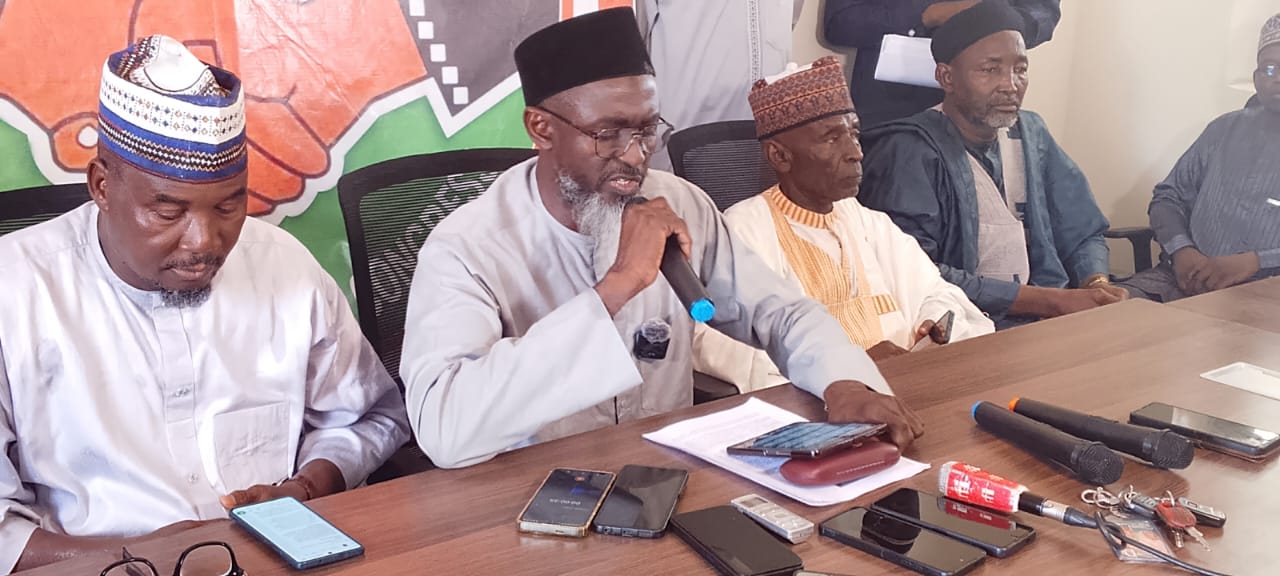

A political storm is brewing in Kebbi State as the African Democratic Congress (ADC) accuses authorities of targeting its members with unlawful arrests and detentions—claims strongly denied by the police.
At a press briefing in Birnin Kebbi, State Secretary Abubakar Bawa Kalgo alleged a pattern of intimidation against opposition figures, accusing state actors of using judicial and security institutions to suppress dissent and weaken democracy.


Kalgo called on key oversight bodies, including the National Judicial Council and the Kebbi State Judicial Service Commission, to intervene and ensure adherence to the rule of law and democratic principles.
At the centre of the controversy is the arrest of the party’s state chairman, Engr. Sufiyanu Bala, who the ADC says was detained following a court warrant riddled with “procedural irregularities.” The party further alleged that attempts to fairly arraign him were frustrated, leading to tensions in court after his lawyer, Barrister A.A. Fingilla, protested alleged bias and walked out of proceedings.
The ADC also cited multiple cases involving its members—including Umar Abubakar (popularly known as Abu Yarima), Husaina Ahamed Jega, Nasiru Garba Hashim, and Umar Yakubu Kamba—claiming they were detained over politically motivated allegations.
In response, the Nigeria Police Force dismissed the accusations, insisting that Bala’s detention strictly follows a valid remand order issued by a magistrate court in Birnin Kebbi.
Police spokesperson SP Bashir Usman stated that the chairman remains in custody in compliance with judicial directives, not as a result of arbitrary action. He added that Bala was granted prompt medical attention upon request and is currently receiving care at a local facility.
As tensions rise, the ADC says it is taking the matter beyond Nigeria—planning petitions to international bodies including Amnesty International and the U.S. Department of Justice.
With both sides standing firm, the unfolding dispute has sparked wider concerns over political freedom, judicial independence, and the state of opposition politics in Kebbi.
About The Author
