



By Abdullahi Alhassan, Kaduna
Kaduna State is changing how public institutions respond to pain, with a new drive to train officials to see trauma before they see procedure.


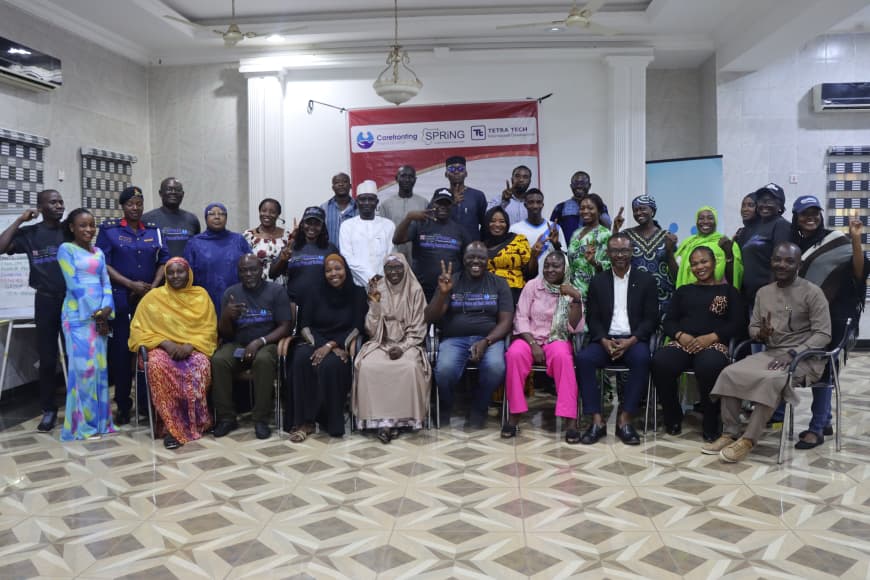
Carefronting Nigeria, under the SPRiNG programme, on Tuesday concluded a 2-day Trauma-Informed Approach training in Kaduna aimed at making service delivery safer and more humane for women, girls and other vulnerable groups.
The training brought together the Nigerian Security and Civil Defence Corps, NSCDC, the Kaduna State Multi-Door Court House, the Ministries of Women Affairs and Youth Development, Civil Society Organizations, and community and traditional leaders.
Facilitators took participants through six practical modules: understanding trauma’s impact on people; recognizing trauma responses; applying trauma-informed principles; creating safe and supportive environments; preventing re-traumatization; and building self-care and community resilience.
Ms. Tessy Gusim, Senior Programme Manager, Carefronting Nigeria, said the training was designed to shift mindsets across government.
“Trauma is not limited to war zones — it permeates our communities, institutions, and daily interactions,” Gusim said. “A woman who walks into a police station or a ministry may be carrying violence, loss, or displacement. If we meet her with indifference, we add to her burden.”
She said the SPRiNG programme wants to build “trauma literacy” in MDAs — changing how staff speak, how offices receive people, and how decisions are made.
Organizers noted that trauma cuts across security, justice, health and social welfare, so the training deliberately mixed participants from different sectors.
An NSCDC officer worked in a group with a court mediator. A ministry director shared case studies with a CSO advocate and a community leader.
“The SPRiNG programme is about one government response,” Gusim explained. “A response built on safety, dignity and recovery.”
A participant from the Ministry of Women Affairs described the training as “timely and necessary,” saying many of their cases involve survivors who need care, not interrogation.
An NSCDC officer said the session would change field engagement. “We now understand that how we approach someone in crisis can determine whether they trust us or shut down,” he said.
Wider Rollout Planned
Carefronting Nigeria said the Kaduna training is the first in a series planned under SPRiNG to institutionalize trauma-informed practices across the state.
“The SPRiNG programme and Carefronting Nigeria remain committed to expanding trauma-informed practices across Kaduna State and beyond,” the organization stated.
Stakeholders said the initiative is expected to improve mental health awareness, strengthen access to justice, and make social protection more compassionate — particularly for women and children most affected by violence and displacement.
Participants agreed on one key shift: move from asking “What is wrong with you?” to asking “What happened to you?”
They said that single change could redefine how Kaduna delivers justice, protection and care.
About The Author
