


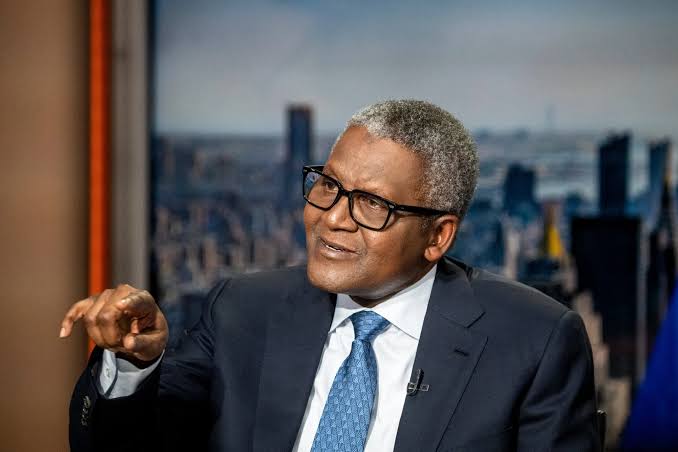

……Billionaire targets 1.4m barrels daily refinery capacity, 10,000MW electricity generation, unveils massive agricultural, healthcare and education investments under Vision 2030
By: Abdullahi Inuwa


Africa’s industrial landscape could be heading for a major transformation as billionaire businessman Aliko Dangote unveils an ambitious $70 billion investment blueprint designed to expand his business empire, strengthen Africa’s energy independence and challenge established players in the global petroleum market.
With plans to increase his refinery’s capacity to 1.4 million barrels per day, expand electricity generation to thousands of megawatts and establish new petroleum distribution networks across the continent, Dangote is preparing for what could become the most ambitious phase of his industrial journey.
The plan, tagged Vision 2030, goes beyond expanding an existing business empire. It represents a broader attempt to reposition Africa as a stronger player in global manufacturing, energy production, agriculture and international trade.
Dangote unveiled the investment roadmap on Thursday during an interactive engagement with media professionals, newspaper editors, journalists, bloggers and creative industry representatives from Northern Nigeria at the Dangote Refinery.
Speaking on the scale of the proposed investment, the industrialist disclosed that the group was considering increasing its original $50 billion investment ambition to approximately $70 billion, depending on business opportunities and prevailing economic conditions.
He explained that the initiative was aligned with Nigeria’s ambition of developing a $1 trillion economy by 2030, noting that Dangote Group initially targeted contributing about 10 per cent towards achieving the national economic aspiration.
For Dangote, however, the ambition is not simply about building bigger factories or increasing production figures. It is about creating an industrial network capable of supplying African markets, competing internationally and reducing the continent’s dependence on imported products.
The global oil market in Dangote’s sights
The most striking component of Vision 2030 is the planned expansion of the Dangote Refinery to 1.4 million barrels per day by 2029.
The proposed expansion would significantly increase the facility’s production capacity and strengthen its ability to supply petroleum products to markets beyond Nigeria.
Dangote expressed confidence that the international market would continue to provide opportunities for refined petroleum products despite the global transition towards renewable energy.
He pointed to rising demand for aviation fuel, particularly in India and the Middle East, as well as limited investments in new refining facilities in several countries.
According to him, the company has identified opportunities in markets where demand for petroleum products remains substantial but domestic refining capacity is insufficient.
Already, the group has commenced strategic investments in pipelines and tank farms in Namibia to facilitate the transportation and distribution of petroleum products to Botswana, South Africa and other African markets.
Dangote specifically highlighted South Africa as an attractive destination, explaining that the country consumes approximately 900,000 barrels of petroleum products daily but has limited functioning refining capacity.
The strategy could open a new commercial corridor for the Nigerian-owned refinery, allowing it to compete for a larger share of Africa’s petroleum market.
It also reflects a shift in ambition from merely satisfying Nigeria’s domestic energy needs to building a continental distribution network with international reach.
Electricity: Another front in the industrial battle
While petroleum remains central to the expansion programme, Dangote is equally looking towards electricity as a critical driver of Africa’s industrial future.
He disclosed that his group currently generates approximately 1,500 megawatts of electricity to support its operations but intends to increase the capacity to between 4,500 and 5,000 megawatts under Vision 2030.
The group’s wider ambition, he added, is to contribute approximately 10,000 megawatts to electricity development across Africa.
The industrialist identified inadequate power supply as one of the greatest obstacles confronting Nigerian manufacturers, warning that businesses cannot compete effectively in the international market while spending heavily on diesel and petrol to operate generators.
He urged the Federal Government to prioritise reliable electricity generation, alongside addressing foreign exchange instability, high production costs and the shortage of skilled technical manpower.
For Dangote, industrial development cannot thrive without dependable energy, affordable production costs and a workforce equipped with the technical knowledge required to operate modern factories.
The business philosophy behind the billionaire’s empire
Beyond the multibillion-dollar investment figures, Dangote also offered insights into the principles that have shaped his business journey.
He attributed his success to discipline, hard work, consistency, focus and the ability to recognise when a business venture is no longer commercially sustainable.
He disclosed that Dangote Group had exited several businesses after discovering that they were not delivering the expected returns, stressing that successful entrepreneurship sometimes requires difficult decisions rather than emotional attachment to investments.
He also identified reinvestment as one of the strongest foundations of the group’s growth.
According to him, the company has consistently channelled earnings into expanding existing businesses and developing new investment opportunities instead of withdrawing profits for personal consumption.
The industrialist cited backward integration as another important strategy, recalling how the group moved into producing commodities such as cement, sugar and flour locally, reducing dependence on imported products.
He maintained that the group’s expansion decisions were subjected to board approval, financial assessments and internal scrutiny, with professional management structures and project monitoring mechanisms guiding implementation.
Northern Nigeria’s agricultural goldmine
One of the major areas Dangote highlighted during the engagement was the enormous economic potential of Northern Nigeria, particularly in agriculture and solid minerals.
He described the region as possessing significant untapped opportunities capable of generating employment, increasing household incomes and strengthening Nigeria’s productive capacity if supported by adequate investment.
On agriculture, he disclosed plans to expand support for farmers through access to farmland, agricultural machinery, fertilisers and guaranteed markets for their produce.
Under the proposed arrangement, farmers could receive agricultural inputs and repay the cost with harvested produce, providing an alternative to conventional borrowing at high interest rates.
He explained that participating farmers would still have the freedom to sell their produce to other buyers offering better prices, provided they fulfilled their obligations to the company.
The arrangement could provide farmers with access to essential production resources while addressing one of the persistent challenges facing agricultural businesses: the absence of reliable markets and affordable financing.
Dangote’s interest in agriculture also reflects the importance of connecting industrial investment with food production, processing and distribution across the continent.
N1trn education plan, Kano hospital near completion
While the billionaire’s commercial ambitions dominate Vision 2030, education and healthcare also featured prominently in his engagement with the media.
He disclosed that the Dangote Foundation had introduced a N1 trillion education intervention programme, with N100 billion earmarked annually for educational development.
He also announced that a major hospital project in Kano was nearing completion and was expected to be commissioned in the first quarter of 2027.
The facility is designed to feature 12 operating theatres, MRI equipment and other modern medical facilities to improve access to specialised healthcare and reduce Nigerians’ dependence on overseas medical treatment.
In another human capital development initiative, Dangote revealed that his group was working with the Kano State Government to transform a vocational training centre into a world-class institution under a 20-year management agreement.
He stressed that Nigeria’s industrial ambitions would remain difficult to achieve without developing the technical skills required to operate factories, construct infrastructure and manage modern production facilities.
A challenge to Northern entrepreneurs and young Nigerians
Dangote also used the opportunity to challenge entrepreneurs in Northern Nigeria to build businesses around professional management, transparency and strong corporate governance.
He encouraged business owners to consider listing their companies on the stock exchange, explaining that public ownership could strengthen accountability, protect minority shareholders and reduce the possibility of family disagreements undermining business continuity.
He urged successful entrepreneurs to create opportunities for emerging businesspeople rather than allowing their achievements to end with their individual success.
For young Nigerians, particularly members of Generation Z, his message was one of determination, creativity and commitment.
He advised them not to allow the country’s economic difficulties to discourage them from pursuing their ambitions, insisting that Nigeria remains rich in opportunities across agriculture, solid minerals, manufacturing and other productive sectors.
On the media, Dangote described journalists as important partners in communicating the group’s activities and contributions to national development.
He promised sustained engagement with media professionals, including periodic briefings, potentially on an annual basis, to provide updates on the company’s investment progress, challenges and future direction.
Beyond business, a bigger African ambition
Ultimately, Vision 2030 presents a far-reaching ambition that extends beyond the fortunes of one businessman or one industrial conglomerate.
Its proposed $70 billion investment, 1.4-million-barrel daily refining target, electricity expansion and continental petroleum distribution strategy reflect Dangote’s determination to build an African industrial powerhouse with a stronger international presence.
The success of the ambitious programme will depend on investment execution, market conditions, infrastructure, skilled manpower and the ability to translate massive financial commitments into sustainable productive capacity.
But one message from Dangote’s announcement is unmistakable: he wants African businesses to move beyond supplying raw materials and importing finished products to becoming major producers, manufacturers and competitors in the global marketplace.
As the 2030 deadline approaches, the question is no longer just how big the Dangote Group can become, but how much of Africa’s industrial and economic future its ambitious expansion can help reshape.
Abdullahi Inuwa Social Commentator ainuwa303@gmail.com, +2348062255033, +2348062203330
About The Author
