


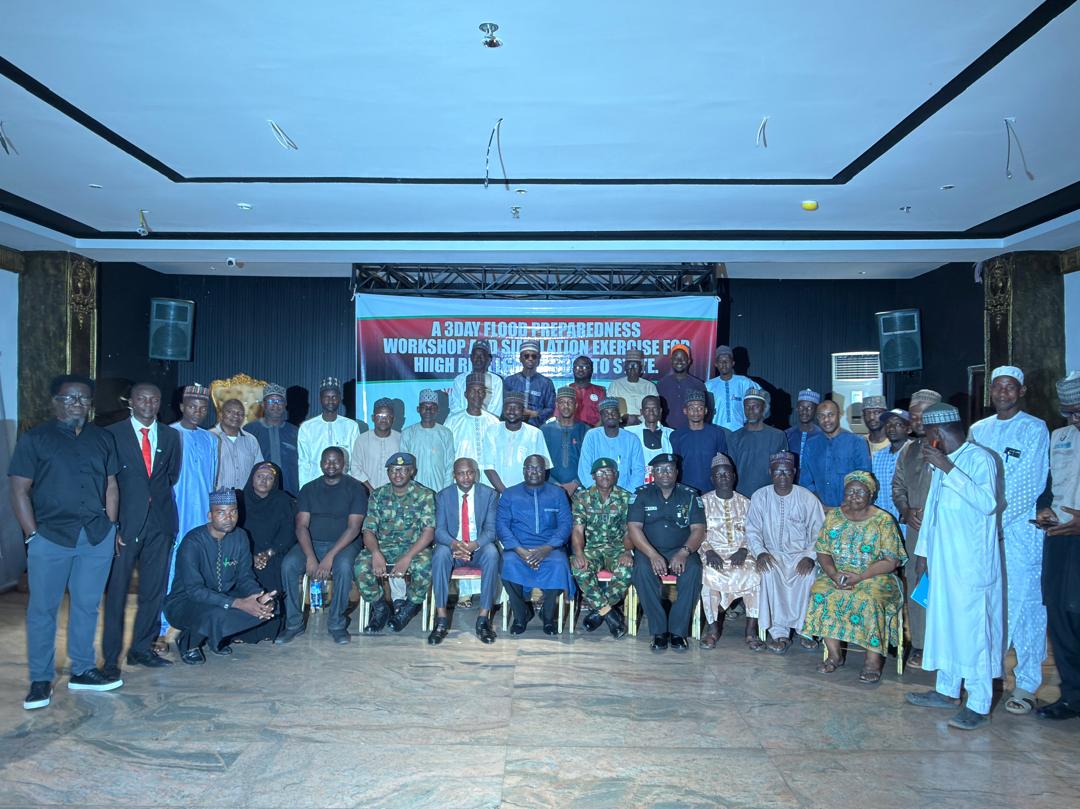

Sokoto State Government in collaboration with partners have adopted a multi-hazard approach and strengthened preparedness mechanisms to address flood risks across the state.
The Executive Secretary of the Sokoto State Emergency Management Agency (SOSEMA), Prof. Abubakar Junaidu, disclosed this on Thursday at the end of three-day workshop on emergency preparedness systems ahead of the 2026 Flood season.


Junaidu reaffirmed the commitment of the state government to strengthening emergency preparedness and building resilient systems capable of protecting lives and livelihoods before disasters occur.
He emphasized that preparedness, effective coordination, and timely early warning are critical to reducing the impact of emergencies and called on all stakeholders to sustain collaboration in safeguarding vulnerable communities across the state.
In his remarks, United Nations Children’s Fund (UNICEF), Chief of Field Office, Mr Michael Juma, commended the government of Sokoto state for prioritizing preparedness and highlighted the importance of investing in coordinated planning, early action, and strong partnerships to reduce humanitarian impacts.
Jumah encouraged participants to use the workshop gains as an opportunity to develop practical and actionable preparedness measures that will strengthen the state’s capacity to anticipate, prepare for, and respond effectively to emergencies.
” UNICEF remains committed to supporting government-led efforts to build resilient communities, strengthen national and state preparedness systems, and ensure that vulnerable populations are better protected before, during, and after emergencies,” Kuma said.
In his presentation, UNICEF’s Emergency Specialist, Mr Olayinka Afolabi, led participants on practical processes approaches on emergency handlings, preparedness and other strategies.
Afolabi emphasised the importance of updated risk analysis, strengthened early warning systems, clearly defined sector responsibilities, coordinated assessment and response mechanisms, logistics preparedness, and simulation exercises.
He stressed that effective preparedness depends on timely, accurate, and actionable information reaching at-risk communities early enough to enable protective action before disasters escalate.
Mr Tukur Abubakar, from the National Emergency Management Agency (NEMA), provided technical insights on strengthening inter-sector coordination, national preparedness arrangements, and effective collaboration among responding agencies during emergencies.
Abubakar also led participants into a multi-sector simulation exercise that tested existing emergency plans, coordination structures, communication systems, and decision-making processes under a realistic flood emergency scenario.
The workshop was aimed at strengthening flood preparedness, early warning systems, coordination mechanisms, and emergency response arrangements ahead of the 2026 flood season.
The workshop was supported by UNICEF and experts jointly assess disaster risks, review preparedness measures, and strengthen readiness for potential emergencies during the exercise.
It was envisaged that lessons identified during the exercise will inform concrete follow-up actions to further strengthen emergency preparedness and response capacity across Sokoto state.
Participants comprised representatives of government ministries, emergency management institutions, security agencies, humanitarian partners, civil society organisations and community representatives.
and technical experts to jointly assess disaster risks, review preparedness measures, and strengthen readiness for potential emergencies.
eiterated proactive measures to avert
Strengthening Flood Preparedness and Emergency Preparedness Systems in Sokoto State Ahead of the 2026 Flood Season
The program is supported by Unicef
Sokoto State has concluded a three-day Emergency Preparedness Workshop aimed at strengthening flood preparedness, early warning systems, coordination mechanisms, and emergency response arrangements ahead of the 2026 flood season.
Held from 29 June to 1 July 2026, the workshop brought together
The workshop adopted a multi-hazard approach, addressing flood risks alongside other potential emergencies such as disease outbreaks, displacement, and conflict-related shocks.
Declaring the workshop open, the Executive Secretary of the Sokoto State Emergency Management Agency (SOSEMA), Professor Abubakar Junaidu, reaffirmed the commitment of the Sokoto State Government to strengthening emergency preparedness and building resilient systems capable of protecting lives and livelihoods before disasters occur.
He emphasized that preparedness, effective coordination, and timely early warning are critical to reducing the impact of emergencies and called on all stakeholders to sustain collaboration in safeguarding vulnerable communities across the state.
The workshop also benefited from the participation of representatives of the
Speaking on behalf of UNICEF, Michael Juma, Chief of Field Office, commended the Government of Sokoto State for prioritizing preparedness and highlighted the importance of investing in coordinated planning, early action, and strong partnerships to reduce humanitarian impacts.
He encouraged participants to use the workshop as an opportunity to develop practical and actionable preparedness measures that will strengthen the state’s capacity to anticipate, prepare for, and respond effectively to emergencies.
2026 Flood: Sokoto Govt, Partners adopt multi-hazard approach to address risks
The Sokoto State Government, in collaboration with partners, has adopted a multi-hazard approach and strengthened preparedness mechanisms to address flood risks across the state.
The Executive Secretary of the Sokoto State Emergency Management Agency (SOSEMA), Prof. Abubakar Junaidu, disclosed this on Thursday at the end of a three-day workshop on emergency preparedness systems ahead of the 2026 flood season.
Junaidu reaffirmed the state government’s commitment to strengthening emergency preparedness and building resilient systems capable of protecting lives and livelihoods before disasters occur.
He emphasized that preparedness, effective coordination, and timely early warning are critical to reducing the impact of emergencies. He called on all stakeholders to sustain collaboration in safeguarding vulnerable communities across the state.
In his remarks, the United Nations Children’s Fund (UNICEF) Chief of Field Office, Mr Michael Juma, commended the Sokoto State Government for prioritizing preparedness.
Juma highlighted the importance of investing in coordinated planning, early action, and strong partnerships to reduce humanitarian impacts.
He encouraged participants to use the workshop as an opportunity to develop practical and actionable preparedness measures that will strengthen the state’s capacity to anticipate, prepare for, and respond effectively to emergencies.
“UNICEF remains committed to supporting government-led efforts to build resilient communities, strengthen national and state preparedness systems, and ensure that vulnerable populations are better protected before, during, and after emergencies,” Juma said.
In his presentation, UNICEF Emergency Specialist, Mr Olayinka Afolabi, led participants through practical processes and approaches to emergency handling, preparedness, and related strategies.
Afolabi emphasized the importance of updated risk analysis, strengthened early warning systems, clearly defined sector responsibilities, coordinated assessment and response mechanisms, logistics preparedness, and simulation exercises.
He stressed that effective preparedness depends on timely, accurate, and actionable information reaching at-risk communities early enough to enable protective action before disasters escalate.
Mr Tukur Abubakar of the National Emergency Management Agency (NEMA) provided technical insights on strengthening inter-sector coordination, national preparedness arrangements, and effective collaboration among responding agencies during emergencies.
Abubakar also led participants in a multi-sector simulation exercise that tested existing emergency plans, coordination structures, communication systems, and decision-making processes under a realistic flood emergency scenario.
The workshop was aimed at strengthening flood preparedness, early warning systems, coordination mechanisms, and emergency response arrangements ahead of the 2026 flood season.
It was supported by UNICEF and experts jointly assessed disaster risks, reviewed preparedness measures, and strengthened readiness for potential emergencies during the exercise.
It is envisaged that lessons identified during the exercise will inform concrete follow-up actions to further strengthen emergency preparedness and response capacity across Sokoto State.
Participants included representatives of government ministries, emergency management institutions, security agencies, humanitarian partners, civil society organizations, and community representatives.
About The Author
