



By Abdullahi Inuwa
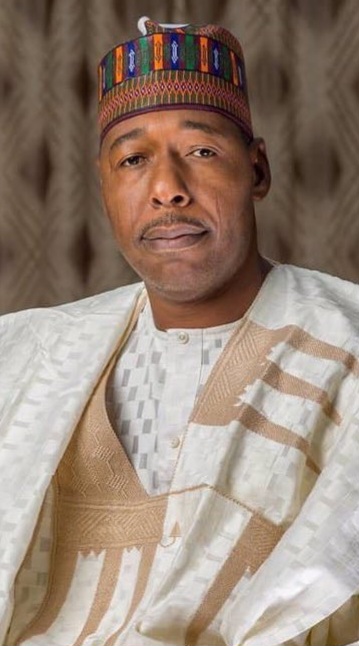
Borno State Governor, Professor Babagana Umara Zulum, has unveiled a fresh package of measures aimed at repositioning the state’s tertiary institutions, promising interventions in staff welfare, academic accreditation, manpower development and infrastructure.


Zulum made the commitment on Wednesday when he received the Forum of Heads of Tertiary Institutions in the state at the Council Chambers of the Government House, Maiduguri.
The meeting, which focused largely on the challenges confronting tertiary institutions, particularly staff welfare and institutional funding, provided an opportunity for the Governor to outline what could become a new phase in his administration’s education agenda.
Zulum said his government would continue to regard education as a strategic investment capable of rebuilding Borno’s human capital and preparing young people for meaningful participation in the state’s economic and social development.
According to him, the objective goes beyond simply keeping institutions running, stressing that Borno must develop universities, polytechnics and colleges capable of producing highly skilled professionals and intellectuals.
“Education is the bedrock for any meaningful development, and therefore investment in education will never be in vain,” the Governor said.
One of the immediate issues placed before the meeting was the accumulation of salary arrears and other outstanding benefits owed to workers in some tertiary institutions.
Zulum said he was prepared to address the concerns but insisted that the figures and claims must first be properly reviewed.
“I invited the heads of tertiary institutions to discuss one fundamental issue: the payment of salary arrears and the implementation of promotions and benefits for staff of tertiary institutions in the state. I want to pay, but I want you to review it very well and get back to me within the next one to two weeks,” he said.
The Governor also announced plans to review the salaries of workers at Ramat Polytechnic and the state-owned Colleges of Education, signalling a possible adjustment in staff welfare as part of efforts to improve productivity and morale.
Beyond salaries, Zulum said his administration would provide funding required for the accreditation of academic programmes, recruit academic personnel according to the needs of individual institutions and embark on construction, expansion and rehabilitation of infrastructure.
The Governor identified two institutions for particular attention — Abba Ashigar College of Business and Management Studies, Konduga, and the College of Legal and Islamic Studies.
He said his administration was determined to restore both institutions to positions where they could effectively fulfil their original mandates and contribute more significantly to the development of Borno’s workforce.
At the Abba Ashigar College of Business and Management Studies, Konduga, Zulum directed the Provost to consider the reintroduction of courses including Office Technology and Auditing.
The move, he explained, is intended to strengthen the institution’s relevance to the manpower requirements of Ministries, Departments and Agencies, as well as local government administration across the state.
The Governor’s emphasis on practical and employment-oriented programmes reflects a broader attempt to ensure that tertiary education translates into useful skills capable of improving public-sector efficiency and expanding employment opportunities.
Infrastructure also featured prominently in the Governor’s intervention plan.
Zulum pledged to rehabilitate staff quarters at Ramat Polytechnic, while the students’ hostel at the College of Nursing, Maiduguri, is to be remodelled and expanded to accommodate more students.
The planned hostel intervention is expected to address pressure on accommodation as enrolment increases, particularly in professional programmes where demand for admission continues to rise.
The heads of institutions, however, used the meeting to present their own list of challenges requiring government intervention.
Speaking on behalf of the Forum, the Vice Chancellor of Kashim Ibrahim University, Professor Babagana Gutti, commended Zulum for what he described as significant progress in the education sector.
Gutti highlighted developments at the primary and secondary levels, as well as the establishment of additional federal and state tertiary institutions, as evidence of growing attention to education under the current administration.
But he stressed that expansion in the number of institutions must be matched with adequate funding to ensure that the schools can effectively deliver on their mandates.
The Vice Chancellor appealed for increased financial support, improved staff salaries and the recruitment of additional academic and non-academic personnel.
He also called for the construction of staff quarters in institutions where accommodation is lacking and the rehabilitation of existing quarters.
Another request was the provision of buses for tertiary institutions to ease transportation difficulties faced by students.
The demand for improved transportation comes amid concerns over the rising cost of movement, with institutional buses expected to provide a more affordable alternative for students travelling to and from campuses.
The Governor’s meeting with the heads of tertiary institutions therefore represents more than a routine engagement between government and academic administrators.
It brings together two major priorities — improving the welfare of those who teach and manage institutions, while simultaneously upgrading the physical and academic environment in which students learn.
For an administration that has consistently placed human capital development at the centre of its rebuilding strategy, the latest commitments indicate an attempt to consolidate earlier investments by strengthening the institutions expected to produce Borno’s next generation of professionals.
Zulum also stressed the need for institutional leaders to provide accurate assessments of their needs, particularly regarding financial obligations and staffing, before government takes further action.
The meeting was attended by the Secretary to the State Government, Acting Head of Service, Acting Chief of Staff, commissioners, special advisers, heads of government agencies, permanent secretaries and other senior government officials.
With the Governor directing institutional leaders to return with reviewed figures within one to two weeks, attention will now turn to the next stage — translating the promises made at the Government House into concrete interventions across Borno’s tertiary education system.
Abdullahi Inuwa Social Commentator ainuwa303@gmail.com
About The Author
