



By Ibrahim Abubakar Jombali
Kebbi, Nigeria’s Land of Equity is lucky. Its luck is more than ordinary. Indeed, on 29th May, 2023, fortune smiled brightly at Kebbi when God gave it a Governor that was a teacher, a real teacher.


Experience has shown that some professions merely provide occupations but there are some that ultimately become identities.
A soldier may retire from the barracks. A lawyer may leave the courtroom. A politician may exit public office. But a teacher never truly leaves the classroom. The chalk may be set aside, the blackboard erased and the school bell silenced, yet the teacher remains forever committed to the noble calling of shaping minds, nurturing dreams and building the future. A teacher will always inspire ! It is a natural fact beyond dispute.
That enduring truth finds perhaps its most compelling expression today in Kebbi State, where a teacher occupies Government House and takes the driver’s seat of governance and driving Kebbi with patriotism, commitment, dedication, passion, courage, resilience and honesty to the greatness.
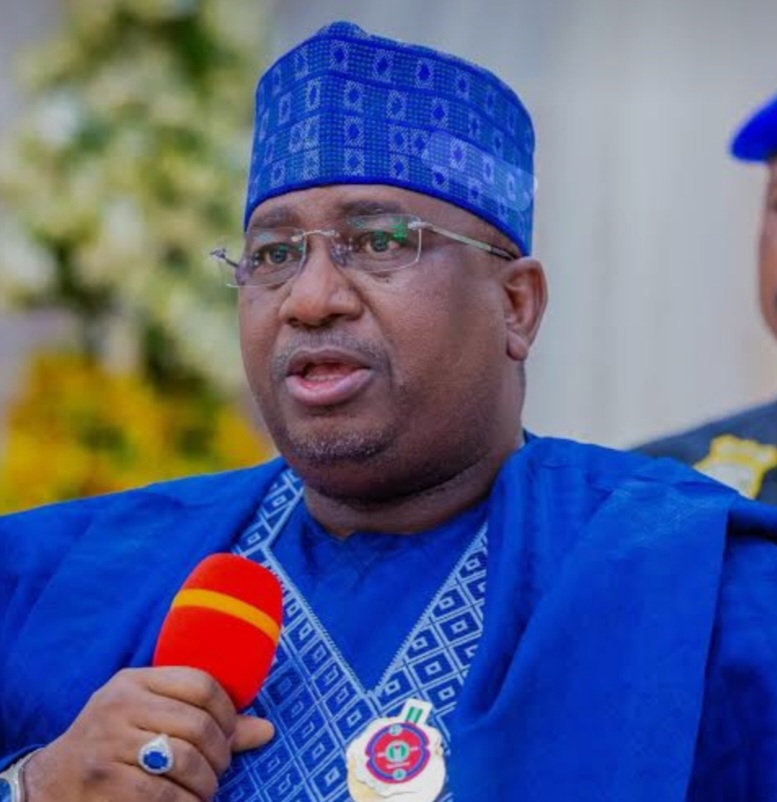
As the world marks World Teachers’ Day, celebrating the quiet architects of civilization and the custodians of knowledge, Kebbi has a unique reason to commemorate the occasion with pride and solid hope. For at the helm of its affairs stands Governor Comrade Dr. Nasir Idris, Kauran Gwandu—a man whose journey from the classroom to the highest office in the state embodies the transformative power of education itself.
His story is not merely that of a teacher who became governor. It is the story of a governor who never stopped being a teacher.
Long before the responsibilities of statecraft rested upon his shoulders, Nasir Idris understood the realities of the classroom. He knew the sacrifices teachers make daily, the frustrations they endure, the hopes they carry and the critical role they play in shaping society. He was not an observer of the profession; he was one of its most passionate advocates. He worked it. He practiced it. He promoted it. He therefore understood it too well.
Today, that experience resonates through the policies and priorities of his administration.
In many ways, Governor Idris has brought the classroom into Government House—not physically, but philosophically. The values that define a good teacher—patience, investment in human potential, commitment to long-term outcomes and faith in future generations—have become visible threads in his governance approach.
I think nowhere is this more evident than in the landmark decision to extend the retirement age of teachers from 60 to 65 years and their years of service from 35 to 40 years. Beyond its administrative significance, the policy represents a profound statement of respect for experience and institutional memory. It affirmed that the wisdom accumulated over decades in the classroom remains invaluable to society.
Yet the Governor’s commitment to teachers has not been confined to policy declarations alone.
Recognizing that the dignity of the profession is inseparable from the welfare of its practitioners, his administration has sustained efforts to improve remuneration, ensure prompt payment of salaries and entitlements, and strengthen the overall conditions of service for educators across the state.
In an era when many workers across the country continue to grapple with delayed payments and uncertainties, Kebbi has distinguished itself through fiscal discipline and a deliberate commitment to workers’ welfare. The implementation of the ₦75,000 minimum wage, alongside targeted improvements in teachers’ earnings and benefits, reflects a government that understands that quality education begins with motivated educators.
The restoration of headmaster and assistant headmaster allowances, the recruitment of additional teaching personnel and continuous professional development initiatives have further reinforced the administration’s determination to elevate the teaching profession and given teachers a huge sense of hope and belonging.
Small wonder that the Nigeria Union of Teachers in Kebbi has repeatedly acknowledged these interventions, citing improvements in remuneration, recruitment, teaching aids and school infrastructure as evidence of a government attentive to the needs of educators.
Remarkably, the most enduring monument to Governor Idris’ educational vision is not found in policy documents or government reports. It stands proudly in towns and villages, in urban centres and rural communities, across the length and breadth of Kebbi State.
It is found in renovated classrooms where children now learn with dignity. It is seen in newly furnished schools where hope has replaced neglect. It is reflected in the thousands of educational facilities rehabilitated, reconstructed and equipped under the administration’s ambitious drive to revive learning environments.
When Governor Idris assumed office, he identified the condition of educational infrastructure as one of the defining challenges confronting the state. Rather than merely acknowledge the problem, he embarked on an extensive programme of renewal.
The result has been one of the most comprehensive educational infrastructure interventions in Kebbi’s recent history, with more than 2,000 schools renovated, reconstructed or furnished and hundreds of new schools constructed to expand access to quality education.
These investments speak to a deeper understanding of education.
A teacher’s effectiveness cannot be separated from the environment in which teaching occurs. Great teachers deserve functional classrooms. Children deserve safe and inspiring spaces to learn. Communities deserve schools that nurture excellence and unlock potential.
Governor Idris understands this because he rightly considers education not as an abstract policy concept but as a living human enterprise.
Here is a teacher who knows that behind every classroom is a teacher carrying the weight of responsibility. Behind every desk sits a child whose dreams may one day shape the destiny of a nation. Behind every school gate stands a parent hoping that education will provide opportunities greater than those available to previous generations.
This human-centred perspective is arguably the greatest gift a teacher brings into public office, and Governor Nasir Idris did so with uncommon commitment.
For governance, at its finest, is itself a form of teaching—guiding society, shaping institutions and preparing future generations for challenges yet unseen.
There is therefore a profound symbolism in the sight of a teacher occupying Government House.It provides the clear prospect of building a bigger and better Kebbi. That is already happening in ways never seen before.
This is where Gove Nasir’s style is unique in many ways than one. It reminds us that education remains the foundation upon which every enduring society is built. It demonstrates that the influence of a teacher extends far beyond examination halls and lesson notes. Teachers do not merely produce graduates; they produce leaders, innovators, professionals and nation-builders.
And occasionally, specially, produce governors.
On this World Teachers’ Day, the story of Governor Nasir Idris offers a powerful lesson of its own. It is a testament to the dignity of the teaching profession and a reminder that those who dedicate their lives to shaping others can themselves become instruments of broader societal transformation.
The celebration of teachers, therefore, must go beyond ceremonial speeches and annual tributes. It must inspire a renewed commitment to investing in education, supporting educators and recognising their indispensable role in national development.
For the teachers of Kebbi State, the past few years have provided tangible reasons for optimism—enhanced welfare, extended years of service, renewed infrastructure, expanded recruitment and stronger institutional support.
Challenges undoubtedly remain, as they do everywhere. Yet the trajectory is unmistakable. There are plans to change the narrative and there is the political will and energy to practicalise it. Thus, that is why the image of Governor Nasir Idris on this occasion carries such significance. Idris is not merely a governor who once stood before a classroom, he is a governor whose heart never left it. He is permanently conscious of the fact that the classroom gave him purpose. Public service gave him a larger canvas. Today, he continues to write beautiful stories in which education occupies central chapters.
As Kebbi joins the global community in celebrating World Teachers’Day, it does so under the leadership of a man who understands, perhaps better than most, that the destiny of every society is ultimately determined by those who teach its children.
To every teacher across Kebbi State and Nigeria, this day belongs to you.
For nations are not built in conference rooms or political rallies alone. They are built quietly in classrooms, lesson by lesson, dream by dream, generation by generation. Day after day!
In Kebbi, the teacher in Government House has intentionally chosen to make that noble mission a defining part of his legacy. He is doing so sincerely, committedly, courageously and without the slightest apology.
Happy World Teachers’ Day Kebbi and Nigeria!
Ibrahim Abubakar Jombali
Special Adviser on Public Enlightenment and Orientation to the Executive Governor of Kebbi State.
About The Author
