


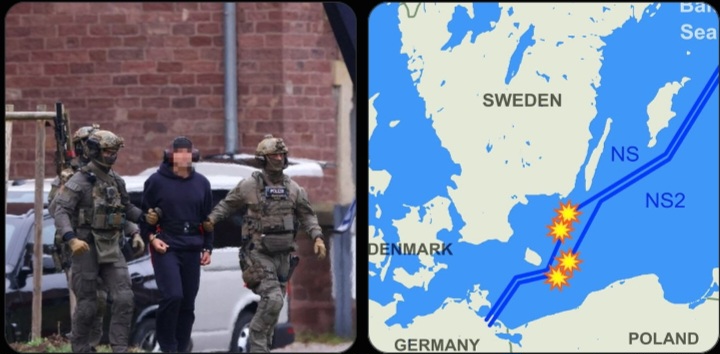

Berlin–Moscow Relations Under Scrutiny as Reports of Renewed Trade and Arrests Linked to Pipeline Sabotage Fuel Political Debate
Germany’s relations with Russia could face a new political turning point as discussions about future economic ties and investigations into the 2022 Nord Stream pipeline explosions continue to attract international attention.


The Nord Stream explosions, which damaged critical natural gas pipelines connecting Russia and Germany beneath the Baltic Sea in September 2022, dealt a major blow to Europe’s energy security and further strained relations between Moscow and Western governments.
The incident triggered years of investigations, diplomatic tensions and competing allegations over responsibility for the sabotage.
Reports concerning the arrest of individuals linked to the investigation, including former Ukrainian officials, have renewed debate over the possible involvement of Ukrainian nationals in the operation. However, the specific identities of those arrested, the allegations against them and the status of the investigation require confirmation from reliable official sources.
The developments have also fuelled speculation about whether Germany could eventually reconsider aspects of its economic relationship with Russia, particularly in energy and trade.
A Potential Shift in European Politics
Germany was previously one of Russia’s most important European trading partners, with its industrial sector heavily dependent on Russian natural gas before Moscow’s full-scale invasion of Ukraine in February 2022.
The war fundamentally changed that relationship, prompting Berlin to reduce its dependence on Russian energy and strengthen cooperation with European allies.
Any move towards restoring significant trade ties with Moscow would therefore represent a major policy development, with implications for European energy markets, economic cooperation and the wider conflict involving Russia and Ukraine.
However, reports of renewed trade discussions should not automatically be interpreted as evidence that Germany has decided to restore its former economic relationship with Russia.
Ukraine Faces Renewed Scrutiny
The Nord Stream investigation has remained politically sensitive because of its potential implications for relations between Ukraine and its Western supporters.
If investigators establish the responsibility of individuals connected to the Ukrainian state, the findings could generate difficult questions about accountability, diplomatic trust and the conduct of covert operations during the war.
Nevertheless, allegations against individuals must be distinguished from proven responsibility by the Ukrainian government or President Volodymyr Zelenskyy’s administration.
There is also no verified basis in the information provided to conclude that Zelenskyy’s government has fallen.
What Happens Next?
The direction of Germany–Russia relations will depend on several factors, including the findings of the Nord Stream investigation, developments in the war in Ukraine, European Union policy and decisions by the German government.
For now, the pipeline explosions remain a defining episode in Europe’s recent energy and security crisis.
Whether the latest developments lead to a genuine rapprochement between Berlin and Moscow or deepen existing divisions remains an open question.
Source:@rkmtimes
About The Author
