



By Abdullahi Alhassan, Kaduna
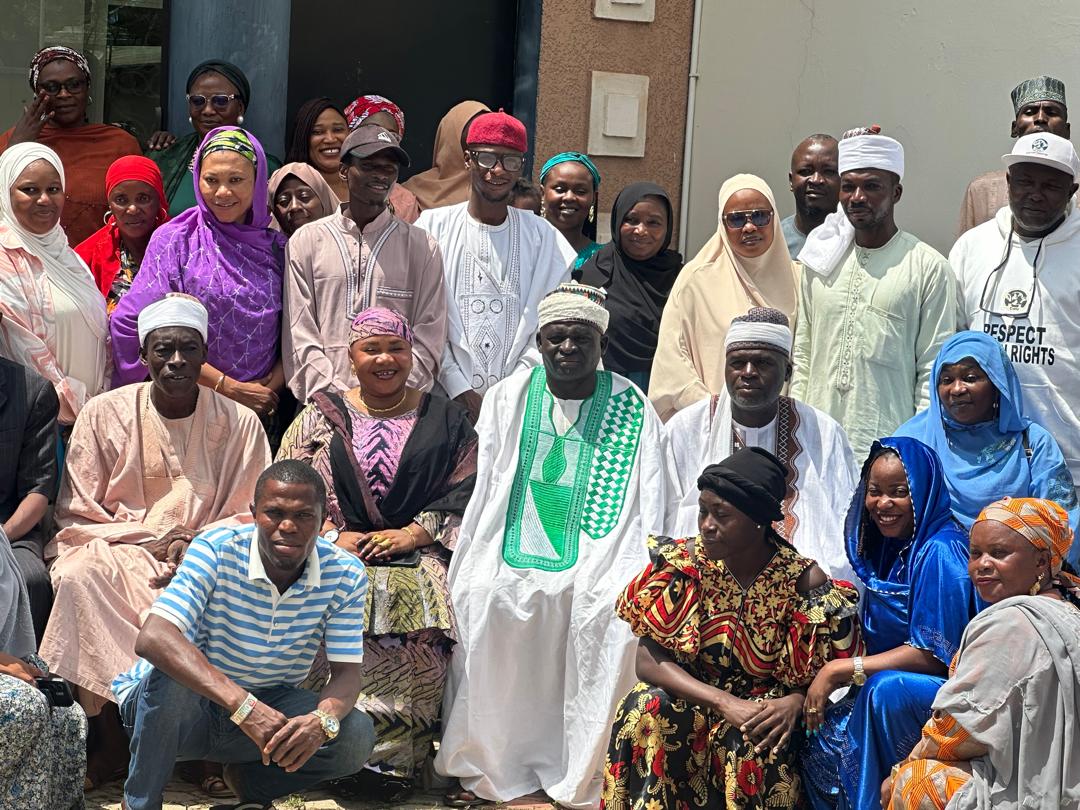
Sixty-five women and community leaders from across Kaduna State have been trained as community paralegal navigators to help residents access justice early and stop disputes from turning violent, under a new programme backed by the German Embassy in Abuja.


The two-day workshop, organised by the Interfaith Mediation Centre, IMC, Kaduna, brought together participants from the state’s three senatorial zones. It was held under the project “Strengthening Women Interfaith Leadership, Human Rights Protection for Transitional Justice, and Promoting Democratic Stability in Kaduna State.”
Organisers say the goal is simple: put trusted voices in communities who can explain the law, guide victims, and refer cases before they escalate.
Speaking at the opening, IMC Co-Executive Director, Mr Samson Auta, said the training was designed to promote peace, interfaith understanding and social harmony at the grassroots.
“This initiative equips community and religious leaders with essential legal knowledge and practical skills to serve as paralegal navigators,” Auta said. “They will learn how to guide survivors of human rights violations through the appropriate legal, institutional and transitional justice processes.”
He added that the partnership with the German Embassy in Abuja is focused on strengthening local capacity and improving protection for vulnerable members of society.
In many Kaduna communities, land disputes, family matters, resource conflicts and human rights violations often fester because people do not know where to go or cannot afford lawyers.
That gap, trainers told participants, is where community paralegals come in. They are not lawyers, but they can serve as a bridge between residents and the formal justice system by providing basic legal information, explaining rights and responsibilities, and referring cases to qualified professionals.
“Early intervention is key,” facilitators explained. “When someone has access to a person who can listen, provide basic legal information and direct them to the right service, many disputes can be resolved before they escalate into violence.”
The role is especially critical for women, young people, persons with disabilities and other groups that face extra barriers to justice.
A Senior Magistrate in the Kaduna State Judiciary, Her Worship Maryam Abbas, took participants through the limits and responsibilities of the role.
Abbas described legal navigation support as help that enables people to understand and access justice without full legal representation.
“Community paralegals are trusted individuals who serve as a bridge between communities and the law,” she said. She listed traditional rulers, religious leaders, teachers, youth leaders, women leaders and retired civil servants with basic legal knowledge as people well placed for the role.
She urged them to educate residents on fundamental rights under Chapter IV of the 1999 Constitution, including the right to dignity, fair hearing and personal liberty.
Abbas also gave practical guidance: document complaints, guide victims to appropriate institutions, and make referrals when necessary. For sensitive cases such as sexual violence, she said safety comes first. Victims should be referred to health facilities and relevant authorities. Cases of theft and robbery should go to the police. Land matters should be directed to customary courts and the Kaduna State Geographic Information Service.
She warned participants against overstepping. “Community paralegals are not lawyers. They must not sign legal documents, draft deeds or represent people in court. Do not promise outcomes or claim you can influence judgments,” she cautioned.
However, she said paralegals can mediate minor disputes such as small debt disagreements and boundary conflicts where appropriate. Complex cases should be referred to the Ministry of Justice and the National Human Rights Commission.
For many of the women at the workshop, the training filled a gap they face daily in their communities.
Malama Khadijah Sa’ad of the Centre for Christian and Muslim Relations in Kaduna thanked IMC and the German Embassy for the programme.
“The knowledge we have gained will help us better understand our responsibilities and provide appropriate guidance to people facing legal and human-rights challenges in our communities,” she said.
Other participants called for more of such programmes, saying strengthening women’s capacity to understand legal processes is key to protecting human rights and promoting peaceful dispute resolution.
IMC says the training is expected to achieve three things: deepen understanding of basic legal rights, improve early identification of conflicts, and increase women’s participation in peacebuilding.
By placing paralegal navigators in communities, the centre hopes to reduce the number of disputes that spiral into violence and to ensure vulnerable people know where to turn.
With support from the German Embassy, the project will continue to work with religious and traditional institutions to embed legal navigation support within existing community structures.
As Abbas put it to the new paralegals: “You are the first point of contact. The way you guide people in those first hours can determine whether a matter ends in dialogue or in court, and whether peace holds.”
About The Author
