



By Abdullahi Inuwa
MAIDUGURI — In what is increasingly being hailed as one of Africa’s most ambitious post-conflict recovery programmes, Borno State Governor, Prof. Babagana Umara Zulum, has transformed the narrative of displacement into one of hope, rebuilding and dignity by closing 22 official Internally Displaced Persons (IDP) camps and successfully resettling more than two million displaced persons across the state.


The remarkable resettlement drive has not only returned thousands of families to their ancestral communities but has also revived once-abandoned towns devastated by over a decade of Boko Haram and ISWAP insurgency.
Since assuming office in 2019, Governor Zulum has made the restoration of normalcy one of the defining pillars of his administration, choosing long-term reconstruction over prolonged dependence on humanitarian camps. His strategy has focused on rebuilding communities, restoring livelihoods and creating conditions that encourage displaced families to voluntarily return home.
The programme has already seen more than 2,000 households from formal IDP camps resettled, while an estimated two million displaced residents have either returned to their ancestral communities or relocated to newly reconstructed settlements across Borno State.
For thousands of families, the journey home has represented far more than physical relocation. It has restored hope after years of uncertainty, allowing parents to rebuild their homes, farmers to reclaim abandoned farmlands, traders to reopen businesses, and children to return to classrooms after years of disruption.
Communities once deserted by violence are steadily coming back to life. Markets that had remained silent for years are bustling with commercial activities, healthcare centres have resumed operations, schools have reopened, and farming has returned to many previously inaccessible communities.
Unlike conventional humanitarian interventions that focus primarily on emergency relief, the Zulum administration has adopted a comprehensive recovery model centred on reconstruction, economic revival and community resilience.
Beyond transporting displaced persons back to their communities, the state government has embarked on extensive reconstruction projects, including the construction of permanent housing, rehabilitation of schools and hospitals, restoration of water facilities, rebuilding of roads, electrification projects, and the revival of local markets.
Agriculture has remained central to the governor’s recovery agenda.
Recognising that economic independence is essential for lasting peace, the Borno State Government has consistently distributed improved seeds, fertilisers, farming equipment and other agricultural inputs to thousands of returning farmers. Fishing, livestock production and small-scale enterprises have also received support to reduce dependence on humanitarian assistance and stimulate local economies.
Observers say the approach has significantly improved food production while restoring livelihoods in many rural communities affected by the insurgency.
Governor Zulum has repeatedly argued that while humanitarian assistance remains important, permanent dependence on displacement camps cannot provide a lasting solution to the humanitarian crisis created by insurgency.
According to the governor, restoring dignity begins by enabling displaced citizens to safely return home, rebuild their communities and regain economic independence.
Security remains the backbone of the resettlement programme.
Before any community is reopened, the Borno State Government works closely with the Nigerian Armed Forces, security agencies, traditional rulers and local community leaders to conduct detailed security assessments aimed at ensuring the safety of returning residents.
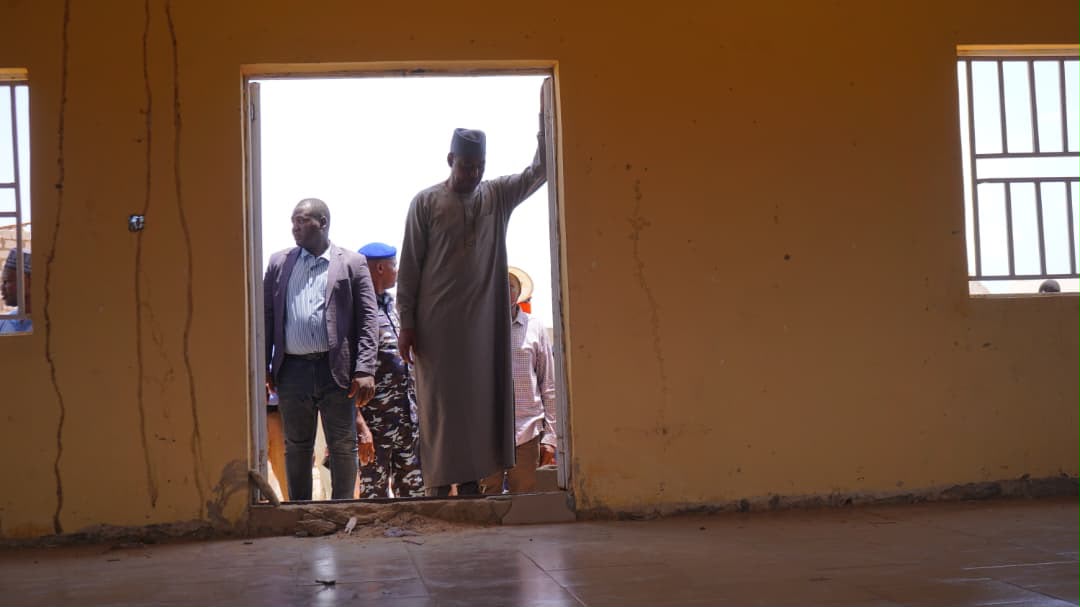
The governor himself is widely recognised for his frequent visits to frontline communities, often travelling to remote and recently liberated areas to assess security conditions, inspect ongoing reconstruction projects and interact directly with displaced families.
These regular field visits have earned him national recognition as one of Nigeria’s most hands-on governors in addressing both humanitarian and security challenges.
Despite the impressive achievements, the administration acknowledges that challenges remain.
Some communities still experience isolated attacks by insurgents, while humanitarian organisations continue to advocate sustained investments in education, healthcare, security and livelihood programmes to consolidate the gains already recorded.
Analysts note that the true measure of successful resettlement goes beyond the number of families returning home. It depends on whether communities remain secure, children stay in school, healthcare services remain functional and local economies continue to recover.
Nevertheless, Borno’s progress stands in sharp contrast to the darkest years of the insurgency, when entire local government areas were deserted and millions were forced into displacement camps.
Over the past seven years, Governor Zulum has successfully closed 22 official IDP camps, particularly within Maiduguri and its surrounding communities, while facilitating the return of about two million displaced persons to their ancestral homes or locations of their choice.
Among the communities that have witnessed successful resettlement are Malam Fatori, Kukawa, Cross Kasuwa, Baga, Ajiri, Darajamal, Mayanti, Koibe, Goniri, Banki, Kirawa and Wala, alongside several other towns now gradually rebuilding after years of devastation.
For many residents, the sounds of children returning to school, farmers cultivating once-abandoned fields and traders reopening markets have become powerful symbols of Borno’s resilience.
As reconstruction continues across the state, Governor Zulum’s resettlement initiative is increasingly being viewed as a landmark model of post-insurgency recovery—one that seeks not merely to close displacement camps, but to restore dignity, revive communities and secure a lasting future for millions of people whose lives were disrupted by years of violent conflict.
Abdullahi Inuwa Social Commentator ainuwa303@gmail.com
About The Author
