



By Abdullahi Alhassan
Nigeria has recorded progress in tackling illicit financial flows and recovering stolen assets, but the gains are yet to translate into stronger institutions, public confidence or improved access to information, the Civil Society Legislative Advocacy Centre, CISLAC, has said.


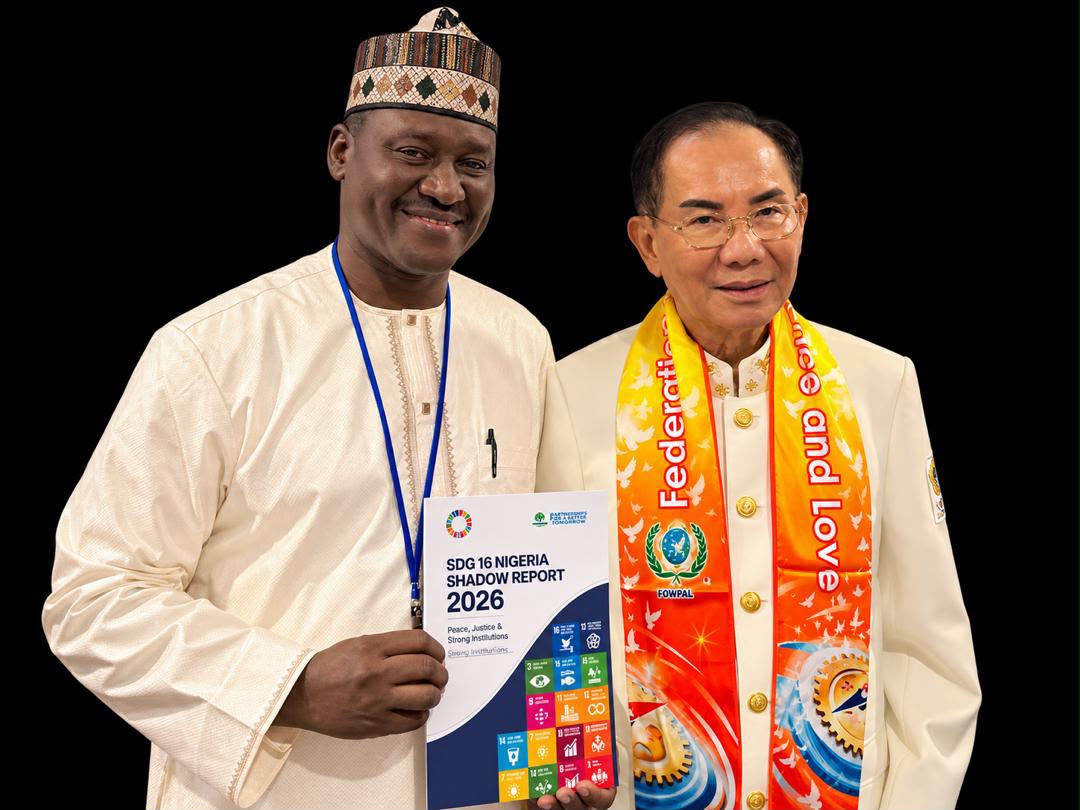
Speaking at the launch of the 9th Nigeria SDG 16 Shadow Report on the sidelines of the UN General Assembly in New York on Tuesday, CISLAC Executive Director, Auwal Ibrahim Musa Rafsanjani, said the country is struggling to move from having laws on paper to having institutions that actually work for citizens.
Covering the period from July 2025 to August 2026, the report provides an independent assessment of Nigeria’s progress on Sustainable Development Goal 16, which focuses on peace, justice and strong institutions.
Rafsanjani told the gathering of diplomats, civil society actors and members of the press that the picture for Nigeria is “mixed.”
“While Nigeria has made legislative and policy advances, implementation and enforcement remain weak, inconsistent and, in some cases, undermined by political interference,” he said.
He noted that although there have been important enforcement actions around anti-money laundering and asset recovery, the process lacks transparency.
“We also continue to witness asset recoveries without sufficient transparency about the process and, importantly, what happens to recovered assets afterwards,” Rafsanjani stated. “Without effective post-recovery tracking and public accountability, recovered assets can become vulnerable to mismanagement and the cycle of corruption can be repeated.”
The CISLAC boss raised alarm over what he described as the erosion of institutional integrity. He singled out the judiciary, security agencies and electoral bodies as pillars of democracy now facing serious credibility problems.
“Allegations involving senior judicial figures, concerns around electoral processes and weaknesses in the vetting of political appointees all underscore the need for stronger safeguards and greater institutional accountability,” he said.
Another major concern highlighted in the report is the rising commercialisation of kidnapping for ransom. Rafsanjani said the trend goes beyond security and is now a governance and human rights crisis.
“When citizens cannot live, work or travel without fear, the foundations of peaceful and inclusive societies are weakened,” he said. “This is not simply a security challenge. It has profound implications for governance, economic development, human rights and the rule of law.”
The report also pointed to persistent issues around political corruption, asset declaration and unexplained wealth, which Rafsanjani said raise fundamental questions about how public resources are managed.
With just four years to the 2030 deadline for the Sustainable Development Goals, CISLAC warned that Nigeria’s biggest challenge is implementation.
“The country does not lack laws, policies or institutions. The greater challenge is ensuring that these frameworks work effectively, consistently and in the public interest,” Rafsanjani said.
He described the 9th Shadow Report as both “a mirror and a roadmap” reflecting where Nigeria stands and pointing to the reforms needed to move forward.
To address the gaps, CISLAC called on the Nigerian government, civil society, development partners and the international community to back commitments with concrete action.
This, according to Rafsanjani, means strengthening institutions, protecting civic space, improving transparency, ensuring access to information, safeguarding public resources and upholding the rule of law.
“In closing, let me emphasise that national development cannot be sustained without justice, accountability and strong institutions,” he said.
“If Nigeria is to achieve the promise of the Sustainable Development Goals and truly leave no one behind, we must move from commitments to implementation and from institutions on paper to institutions that work for the people.”
About The Author
