



By:Abdullahi Inuwa
Education has remained one of the strongest pillars of the administration of Governor Mai Mala Buni, whose government has consistently treated human capital development as the most strategic investment for securing the future of Yobe State.


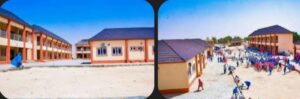
Since assuming office, Governor Buni has pursued an ambitious agenda aimed at transforming the education sector through massive investments in infrastructure, institutional expansion, technical and vocational training, science education, and access to quality learning opportunities. The result has been one of the most comprehensive educational development programmes in the history of the state.
At the heart of this transformation is the administration’s belief that sustainable development can only be achieved through a well-educated, skilled, and innovative population capable of driving economic growth and social progress.
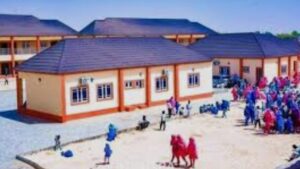
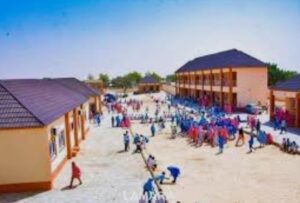
One of the most celebrated achievements of the administration is the construction of seven Mega Schools and seven Model Schools strategically located across Yobe State. Situated in Damaturu, Potiskum, Gashua, Nguru, Geidam, Dapchi, and Buni Yadi, these institutions represent a new standard for public education in the state.
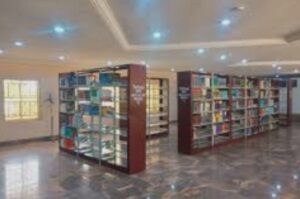
Designed to meet global learning standards, the schools are equipped with modern classrooms, fully furnished laboratories, digital learning facilities, libraries, and information and communication technology (ICT) centres. The facilities provide students with a conducive environment that promotes academic excellence and prepares them to compete in an increasingly knowledge-based global economy.
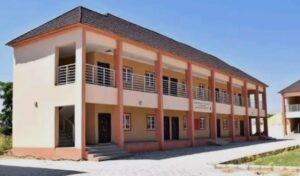
Education stakeholders have described the Mega and Model Schools initiative as one of the most transformative interventions in the state’s educational history, providing access to quality education while reducing disparities between urban and rural communities.
Beyond basic and secondary education, the administration has significantly expanded tertiary education and professional training opportunities. Recognizing the critical role of higher education in economic development, Governor Buni has invested heavily in institutions that produce the skilled workforce required for modern governance, healthcare, science, and technology.
Among these achievements is the establishment of the temporary site of the College of Integrated Sciences in Damaturu, which has broadened educational opportunities for students pursuing careers in scientific and technical disciplines.
The administration also undertook the construction of multiple academic and administrative facilities at the College of Nursing and Midwifery, Damaturu, strengthening the state’s capacity to train healthcare professionals and address workforce shortages within the health sector.
Another milestone project is the establishment of the Clinical Section of the Medical College at the Yobe State University Teaching Hospital (YSUTH). This investment has significantly enhanced medical education and clinical training opportunities within the state, reducing dependence on institutions outside Yobe while strengthening local healthcare delivery systems.
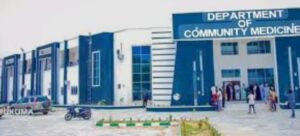
At Yobe State University, the administration has made substantial investments aimed at transforming the institution into a centre of academic excellence, innovation, and research.
A notable project is the construction of the Biotechnology Research and Training Centre (BioRTC), which has expanded opportunities for scientific research and advanced studies. Additional investments in teaching facilities, laboratories, lecture halls, and learning infrastructure have further improved the academic environment and strengthened the university’s capacity to compete with leading institutions across the country.
The administration has also placed strong emphasis on technical and vocational education as a critical tool for addressing unemployment and promoting economic empowerment among young people.
At Mai Idriss Alooma Polytechnic, Geidam, major infrastructure projects have been completed, including the construction of a modern Administrative Block and other academic facilities designed to improve learning and institutional efficiency.
Similarly, significant investments have been made at the College of Administration, Management and Technology (CAMTECH), Potiskum, where additional facilities have been developed to strengthen technical education, practical skills acquisition, and workforce development.
New educational infrastructure at Arikime School, Potiskum, has further expanded access to quality education while improving learning outcomes for students in the area.
Governor Buni’s administration has also demonstrated a strong commitment to promoting girl-child education and gender inclusion. Recognizing that educating girls is one of the most powerful tools for societal transformation, the government established the Government Girls Day Science and Technical College, Gashua, and the Government Girls Senior Day Secondary School, Nguru.
These institutions provide greater opportunities for female students to pursue science, technology, engineering, and mathematics (STEM) education while helping to bridge gender gaps in access to quality learning.
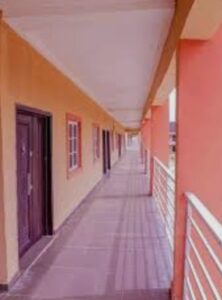
Education experts have noted that these investments are empowering young women with the skills and knowledge needed to contribute meaningfully to economic and social development while promoting educational equity across Yobe State.
The administration has also embarked on extensive rehabilitation and reconstruction of existing educational facilities to improve learning conditions and expand access to quality education.
Major projects include the reconstruction of Government Secondary Schools in Bara, Bularafa, and Zadawa, as well as the rehabilitation of Buni Yadi Government Day Secondary School.
Additional investments include the construction of a 50-bed capacity hostel at Government Secondary School, Yusufari, which has improved accommodation and welfare for students. The establishment of Government Day Secondary School, Dapchi, has also expanded educational opportunities in the area.
Teacher education has equally received significant attention through the reconstruction and upgrading of the College of Education and Legal Studies, Nguru. The improvements are aimed at strengthening teacher training and producing qualified educators capable of supporting educational advancement throughout the state.
Beyond conventional education, the administration upgraded the Dazigau National Youth Service Corps (NYSC) Orientation Camp in Nangere. The improved facilities have enhanced the welfare and experience of corps members serving in Yobe while strengthening the state’s contribution to national integration and youth development.
Another landmark intervention is the construction of the Buni Gari International School, a project designed to provide globally competitive educational opportunities and raise academic standards in underserved communities.
For many residents, these projects represent far more than buildings and infrastructure. They symbolize a deliberate and long-term strategy to create a generation of educated, skilled, innovative, and productive citizens capable of driving Yobe State’s future prosperity.
By investing in schools, universities, technical institutions, healthcare training facilities, and educational access for girls and underserved communities, Governor Mai Mala Buni has positioned education at the centre of Yobe’s development agenda.
Today, the impact of these interventions is increasingly visible across the state. More students have access to quality learning environments, educational institutions are expanding their capacities, and young people are acquiring the knowledge and skills needed to compete in a rapidly changing world.
As Yobe continues its journey toward sustainable development, many observers regard the administration’s education reforms as one of its most enduring legacies—a foundation built not merely with bricks and mortar, but with a vision to empower future generations and secure lasting prosperity through knowledge.
Indeed, through sustained commitment, strategic investment, and a clear focus on human capital development, Governor Mai Mala Buni has launched what many describe as an education revolution, laying the groundwork for a brighter and more prosperous future for Yobe State and its people.
Abdullahi Inuwa Social Commentator ainuwa303@gmail.com
About The Author
