



By: Abdullahi Inuwa
Road and transport infrastructure development has emerged as one of the most enduring hallmarks of the administration of Governor Mai Mala Buni, with unprecedented investments transforming Yobe State’s physical landscape and laying the foundation for long-term economic growth.



Over the past seven years, the Buni administration has embarked on one of the most ambitious road construction, rehabilitation, and urban renewal programmes in the state’s history, extending strategic projects across all three senatorial districts and the 17 local government areas.
At the heart of this transformation is the ongoing construction of the iconic Damaturu Flyover and Underpass Bridge, a landmark project widely regarded as a symbol of the modernization of Yobe’s capital city. The project reflects the administration’s vision of creating a modern, resilient, and economically vibrant urban centre capable of meeting future development demands.
Complementing this flagship project are several major road developments, including the dualization and reconstruction of the 26-kilometre Damaturu–Kalallawa Road, the construction of the 11-kilometre Damaturu–Gambir Road, the expansion of Potiskum Road from the 530 Filling Station to the Pilgrim area, the reconstruction of the Waziri Ibrahim Bayan Kotu Bypass, and a new 6-kilometre corridor linking the Gujba Road Housing Estate to Potiskum Road near the Yobe State University Teaching Hospital.

Within Damaturu metropolis, the administration has carried out extensive urban road construction in key residential and commercial districts such as the Government Reserved Area (GRA), Afghanistan, Mallamattari, Zanna Zakariya Quarters, Commissioners’ Quarters, and other strategic locations. These projects have improved mobility, eased traffic congestion, and enhanced the aesthetic appeal of the state capital.
Beyond Damaturu, the road revolution has spread across the state, connecting communities and stimulating economic activities in previously underserved areas. Major township and inter-community roads have been constructed or rehabilitated in Dapchi, Bayamari, Kariyari, Jajimaji, Garin Guna, Karasuwa, Galu, Geidam, Bukarti, Machina, Babban Gida, Nangere, Yusufari, Yunusari, Nguru, Potiskum, Gujba, Gulani, Fika, Jakusko, and Gashua.
Among the notable projects are the 34-kilometre Jajere–Danchuwa Road, the 17-kilometre Ngelzarma–Mashio Road, the 12-kilometre Damagum–Gubana Road, the 16-kilometre Nguru–Balanguwa Road, the 18-kilometre Garin Bingel–Danchuwa Road, the 10-kilometre Chumbosko–Tagali Road, the 7-kilometre Potiskum–Degubi Road, the 5-kilometre Potiskum–Ngojin Road, and the 5-kilometre Fadawa–Daya Road.
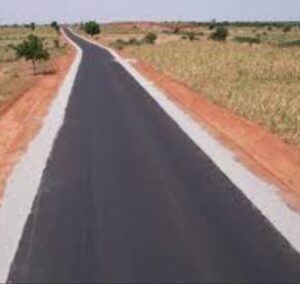
Recognizing the critical role of agriculture in Yobe’s economy, the administration also invested heavily in rural access roads designed to improve connectivity between farming communities and major markets. Strategic stone-base roads such as the 25-kilometre Fika–Maluri Road and the Dawasa–Kukuri Road have significantly reduced transportation challenges, lowered logistics costs, and improved access to agricultural value chains.
In addition, numerous township roads have been completed in Potiskum, Gashua, Nguru, Damagum, Yusufari, Yunusari, Geidam, Machina, Babban Gida, Dapchi, Buni Gari, Buni Yadi, Bara, and several other communities, further improving urban mobility and enhancing socio-economic development.
The administration has also strengthened climate resilience and year-round accessibility through the construction of critical bridges and culverts along key corridors, particularly the Geidam–Bukarti and Buni–Gulani routes, ensuring uninterrupted movement during seasonal weather conditions.
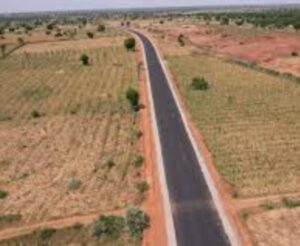
Observers note that the impact of these projects extends far beyond asphalt and concrete. The roads have become strategic economic corridors that facilitate commerce, improve access to healthcare and education, support agricultural production, create employment opportunities, and promote social integration among communities.
For many residents, the road projects have translated into shorter travel times, improved business opportunities, easier access to essential services, and stronger links between rural and urban centres.
As Yobe continues its development journey, Governor Buni’s infrastructure agenda is increasingly being viewed as a cornerstone of the state’s transformation. Through a deliberate and inclusive approach to road and transport development, the administration has not only connected communities but has also built pathways for economic prosperity, regional integration, and sustainable development.
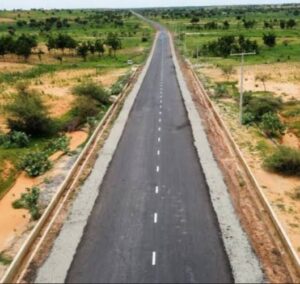
With projects spanning every corner of the state, the Buni administration’s road revolution is redefining mobility and positioning Yobe for a future of greater opportunity and growth.
Abdullahi Inuwa Social Commentator ainuwa303@gmail.com
About The Author
