



By: Abdullahi Inuwa
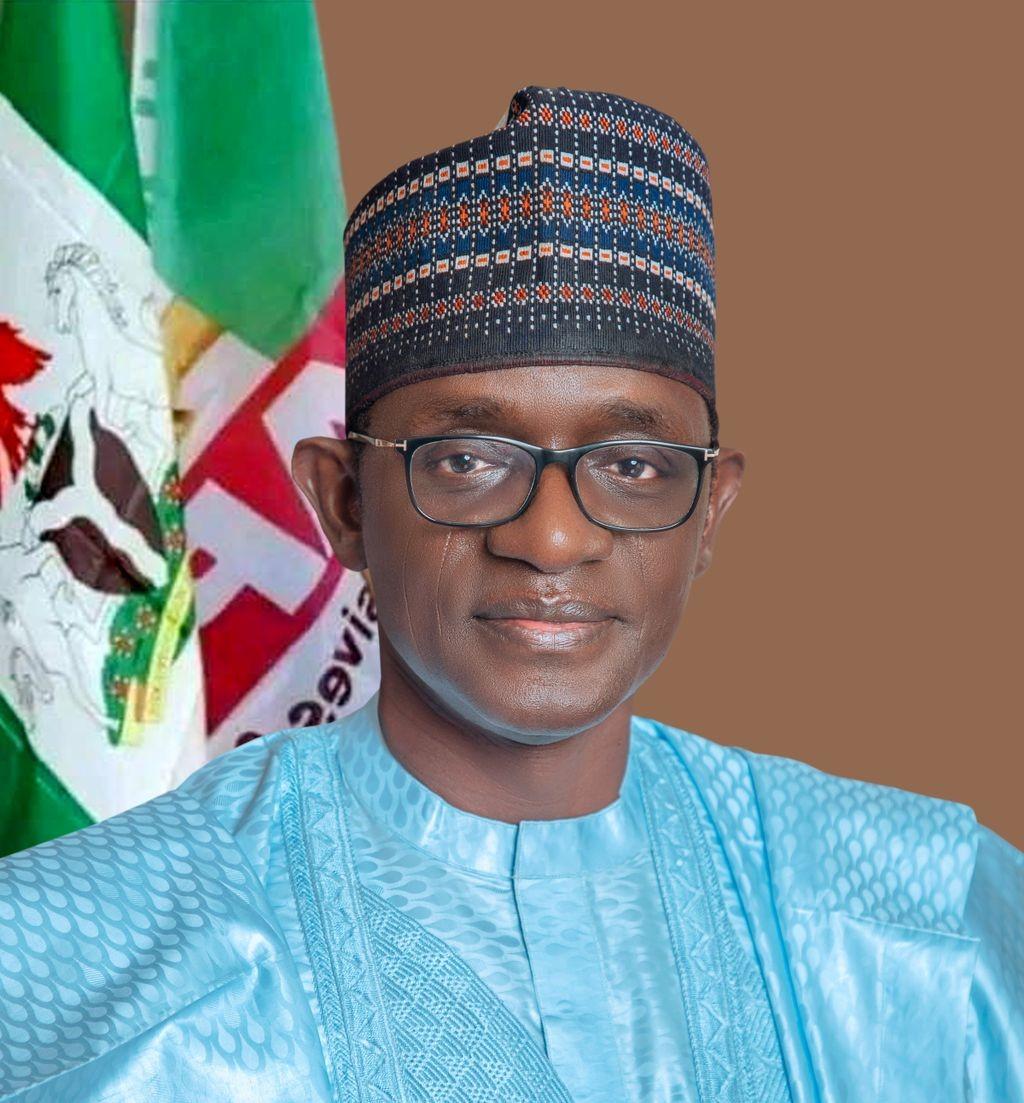
By investing billions of naira in mechanised farming, rural infrastructure and farmer empowerment, Governor Mai Mala Buni is betting that agriculture—not oil—holds the key to Yobe State’s economic future. With food prices soaring across Nigeria and concerns over food security deepening, the state is pursuing one of its most ambitious agricultural expansion programmes in recent years.


The latest demonstration of that commitment came in mid-July when the Yobe State Executive Council approved a massive ₦73.3 billion package for infrastructure and public service projects. Agriculture emerged as the biggest winner, with an unprecedented ₦28.53 billion earmarked for the 2026 Mega Agricultural Empowerment Programme.
The decision has reinforced the administration’s message that agriculture is no longer just another government programme but the centrepiece of Yobe’s long-term economic development strategy.
Commissioner for Home Affairs, Information and Culture, Abdullahi Bego, said the funds would be deployed to procure modern tractors, harvesters, farm implements, improved seedlings, fertilisers and other critical inputs needed to increase food production across the state’s 17 local government areas.
According to him, the latest intervention builds on similar large-scale agricultural investments executed over the past two years, reflecting a deliberate policy of sustaining support for farmers rather than treating agriculture as a seasonal activity.
That consistency is becoming one of the defining features of the Buni administration.
In 2024, the state rolled out a ₦15.3 billion Mega Agricultural Empowerment Programme that directly benefited more than 5,300 farmers spread across Yobe’s 178 political wards. The programme provided tractors, farming equipment, fertilisers and improved inputs aimed at boosting productivity and encouraging commercial farming.
Rather than slowing down, the government expanded the initiative in 2025 with another agricultural package worth over ₦4 billion, reinforcing support for farmers through additional mechanisation and input distribution.
The administration also launched a $2.525 million non-interest loan scheme in January 2025 to strengthen community farming. The initiative supported 101 farming communities and cooperatives, while creating 4,825 dedicated opportunities for young people to participate in agriculture, an effort aimed at reducing unemployment and attracting the next generation into agribusiness.
Observers say the strategy goes beyond increasing harvests. It seeks to modernise agriculture, improve rural incomes and transform farming into a profitable enterprise capable of driving economic growth.
Unlike traditional interventions that often end with distributing fertilisers or seedlings, the Buni administration is focusing on every stage of the agricultural value chain—from cultivation and harvesting to storage, transportation and marketing.
To achieve this, the government is investing in critical infrastructure that will make it easier for farmers to move their produce from rural communities to urban markets.
Among the projects receiving government attention are modern grain markets, commercial trading centres and motor parks designed to facilitate the movement of agricultural commodities.
The Buni-Yadi Modern Motor Park and Grain Market, together with the commercial layouts under development in Buni-Gari, are expected to serve as major aggregation and distribution centres for farm produce.
These facilities are projected to reduce post-harvest losses, improve storage capacity and provide farmers with better access to buyers across Nigeria.
For many smallholder farmers, one of the greatest challenges has never been producing crops but getting them to markets before they spoil. By investing in transportation and marketing infrastructure, the government hopes to remove one of the biggest obstacles limiting agricultural profitability.
The reforms are also extending beyond crop production.
Women and small-scale entrepreneurs in rural communities are increasingly becoming beneficiaries of empowerment initiatives coordinated through the Ministry of Wealth Creation. Distribution of grinding machines and other livelihood support packages is helping households establish additional sources of income while strengthening local economies.
This inclusive approach is gradually ensuring that the benefits of agricultural development reach not only large-scale farmers but also women, youths and vulnerable groups who depend on agriculture for survival.
The impact of these sustained investments has not gone unnoticed.
The All Farmers Association of Nigeria (AFAN) recently honoured Governor Buni with its Agricultural Empowerment Governor Award, citing the administration’s unprecedented investment in farming and its commitment to grassroots agricultural development.
The recognition reflects growing national attention on Yobe’s evolving agricultural model.
For decades, Yobe has possessed enormous agricultural potential. The state boasts vast expanses of fertile land suitable for cultivating sesame, millet, sorghum, gum arabic and several other food and cash crops. It also has a strong livestock sector that contributes significantly to household incomes across rural communities.
Yet much of this potential remained underutilised because of inadequate mechanisation, poor infrastructure, limited financing and weak market access.
The current administration appears determined to reverse that trend.
By investing heavily in mechanised farming, expanding access to finance, improving transportation networks and strengthening agricultural markets, the government is laying the foundation for increased food production and a more resilient rural economy.
The reforms also come at a time when Nigeria is grappling with rising food inflation and growing concerns over food availability. Analysts believe states that prioritise agriculture through sustained investment will be better positioned to cushion the effects of food shortages while creating employment opportunities for their growing populations.
For Yobe, the stakes extend beyond farming alone. Agriculture remains the largest employer in the state and the backbone of its rural economy. Every investment in mechanisation, irrigation, storage facilities and farmer support has the potential to create jobs, stimulate local businesses and improve household incomes.
If successfully sustained, Governor Buni’s multi-billion-naira agricultural reforms could transform Yobe from a predominantly agrarian state into one of northern Nigeria’s leading centres of food production and agricultural commerce.
In an era where food security has become both an economic and national security concern, Yobe’s bold agricultural investments are emerging as more than a government policy—they are a long-term strategy to secure livelihoods, fight poverty and position the state as a major contributor to Nigeria’s quest for self-sufficiency in food production.
Abdullahi Inuwa Social Commentator ainuwa303@gmail.com
About The Author
