



By: Abdullahi Inuwa
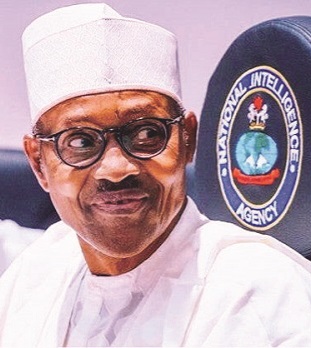
Late former President Muhammadu Buhari once offered a rare glimpse into his personal philosophy on wealth, public service and accountability, declaring that he had no companies and was not driven by material possessions.


“I don’t have companies. I don’t attach much to materialism, especially materialism that was at the expense of the development of the country,” Buhari said.
The former president added: “I have a clear conscience, I feel I can face God with confidence.”
The remarks reflected Buhari’s longstanding presentation of himself as a leader more concerned with public responsibility than personal wealth.
Buhari, who served as Nigeria’s president from 2015 to 2023, spent much of his political career emphasizing discipline, accountability and the need for public officials to put national interest above personal gain.
His comments also touched on one of Nigeria’s most enduring political debates — the relationship between public office and wealth accumulation.
For Buhari, material prosperity obtained at the expense of national development was not a measure of success.
Rather, he suggested that the true test of leadership was whether a public servant could leave office with a clear conscience and a record capable of standing before the ultimate moral judgment.
Buhari’s political career stretched across several decades. He first emerged as Nigeria’s military head of state in the 1980s before returning to democratic politics and winning the presidency in 2015.
His victory over then-incumbent President Goodluck Jonathan marked the first time in Nigeria’s Fourth Republic that an opposition candidate defeated a sitting president.
He was re-elected in 2019 and left office in May 2023.
His administration recorded major interventions in infrastructure, agriculture, social investment and other sectors, while also facing intense criticism over insecurity, economic hardship, unemployment and other challenges confronting Nigerians.
Those contrasting assessments continue to shape discussions about his legacy.
Yet, Buhari’s statement about materialism remains striking because it reveals how he wanted his personal record to be viewed.
Rather than pointing to wealth or business interests, he placed emphasis on conscience and accountability.
The former president’s reference to facing God with confidence also gave his words a deeply personal dimension.
It suggested that, beyond political arguments and public opinion, he viewed leadership as a responsibility for which he would ultimately give an account.
His position resonates with a wider demand among Nigerians for greater transparency from public officials and stronger safeguards against the misuse of public resources.
While Buhari’s presidency remains subject to different interpretations, his words provide a clear statement of the personal standard he said he sought to uphold.
“I have a clear conscience,” he declared.
For a former president whose public life generated both strong support and fierce criticism, the statement remains part of the conversation about the kind of legacy political leaders leave behind.
Ultimately, Buhari’s words placed the emphasis not on what a leader could accumulate, but on what he could defend with a clear conscience.
And in his own words, he believed he could “face God with confidence.”
Abdullahi Inuwa Social Commentator ainuwa303@gmail.com
About The Author
