



By Abdullahi Inuwa
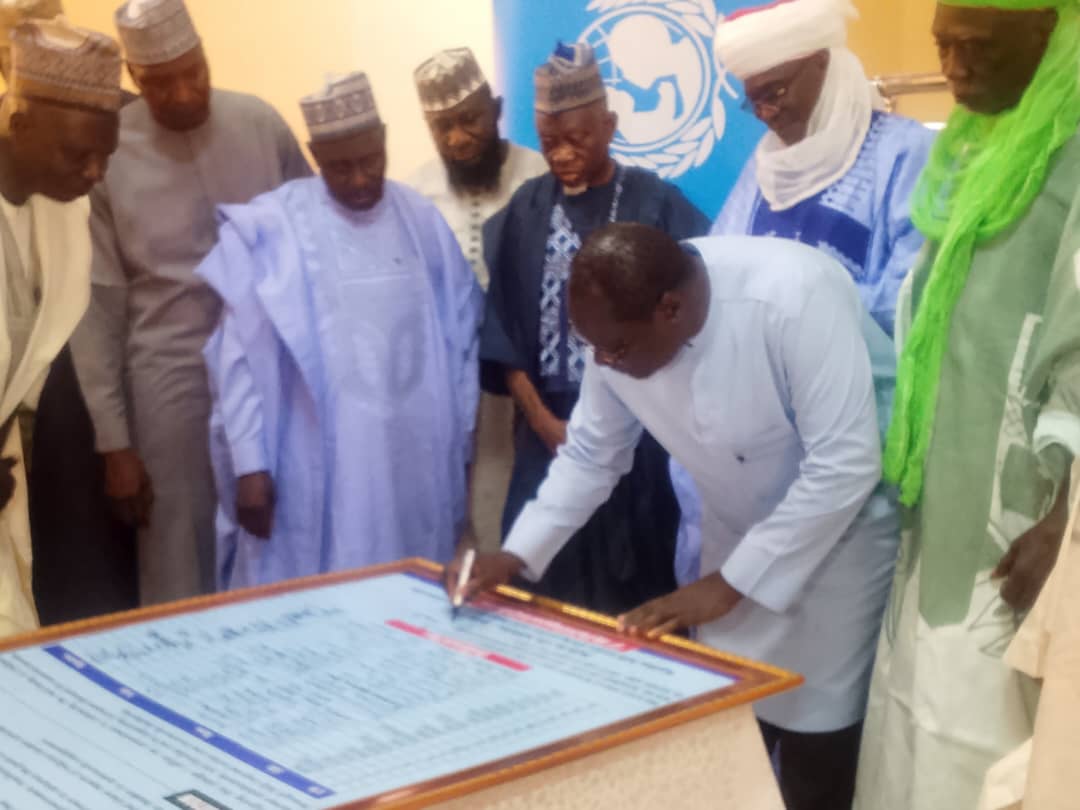
The National Orientation Agency (NOA), in collaboration with the Kebbi State Government and UNICEF, has organised a two-day workshop for traditional and religious leaders to strengthen community advocacy on the health and well-being of women and children.


The workshop, held at the New Secretariat in Birnin Kebbi, brought together stakeholders from the Ministry of Religious Affairs, Ministry of Health, NOA and development partners to promote healthy families and communities through faith-based engagement.
The programme was designed to harness the influence of religious and traditional leaders in promoting immunisation, proper nutrition, maternal and child healthcare, child protection and positive behavioural change across the state.
Speaking at the event, the Commissioner for Religious Affairs, Alhaji Sani Aliyu, commended NOA and its development partners for organising the workshop, describing the initiative as an important step towards building healthier communities.
He noted that sustained collaboration among government institutions, religious leaders and development partners was essential to ensuring that health messages reached households and communities effectively.
The Commissioner for Health, Alhaji Samaila Augie, said the programme also underscored the importance of brotherhood, unity and peaceful coexistence among citizens, irrespective of their religious, cultural or ethnic differences.
Augie stressed that God created mankind with diverse cultures, tribes and religions for a purpose, adding that the Kebbi State Government remained committed to ensuring that no citizen was left behind in its efforts to promote welfare and access to healthcare.
He said the government would continue to prioritise the well-being of residents and strengthen initiatives capable of improving the health and living conditions of families across the state.
The UNICEF representative from the Sokoto Field Office, Mr Michael Juma, urged religious leaders to use their positions of influence to disseminate accurate information on immunisation and encourage parents and caregivers to seek medical attention at the nearest health facilities whenever necessary.
Juma emphasised that faith leaders could play a critical role in overcoming misconceptions about healthcare services, particularly those affecting children and women.
He identified nutrition, social and behavioural change, child protection rights and data analysis as key areas requiring greater attention, noting that more work remained to be done to improve health outcomes in communities.
He reaffirmed UNICEF’s commitment to supporting initiatives aimed at protecting children, empowering women and improving the overall well-being of families in Kebbi State.
The Emir of Argungu, Alhaji Muhammad Samaila Mera, represented by the District Head of Gulma, Muhammad Bashar, appealed to religious leaders to adopt the term “child spacing” in their advocacy rather than “family planning,” expressing concern that the latter could discourage some followers from embracing the practice.
He urged the leaders to sensitise their communities on the importance of spacing births to safeguard the health of mothers and children while promoting responsible family care.
Earlier, the convener of the workshop and Kebbi State Director of NOA, Mallam Nasir Karofi, said the programme was organised to promote healthy families and communities by leveraging the influence of religion and faith without compromising the beliefs of adherents.
Karofi explained that religious leaders remained vital partners in public enlightenment, particularly in addressing misconceptions and encouraging communities to embrace beneficial health practices.
He said the workshop was expected to equip participants with the knowledge and communication skills needed to promote healthcare awareness, protect vulnerable groups and encourage healthier lifestyles across Kebbi State.
The initiative highlights the growing recognition of faith leaders as important partners in public health advocacy, particularly in communities where religious institutions play a central role in shaping attitudes, beliefs and everyday decisions.
About The Author
