



By Ahmed Liman Kingimi, Maiduguri
The United Nations has called for urgent increase in funding and stronger protection for humanitarian workers in Nigeria, warning that millions face worsening food insecurity, malnutrition and disease as the lean and rainy seasons peak.


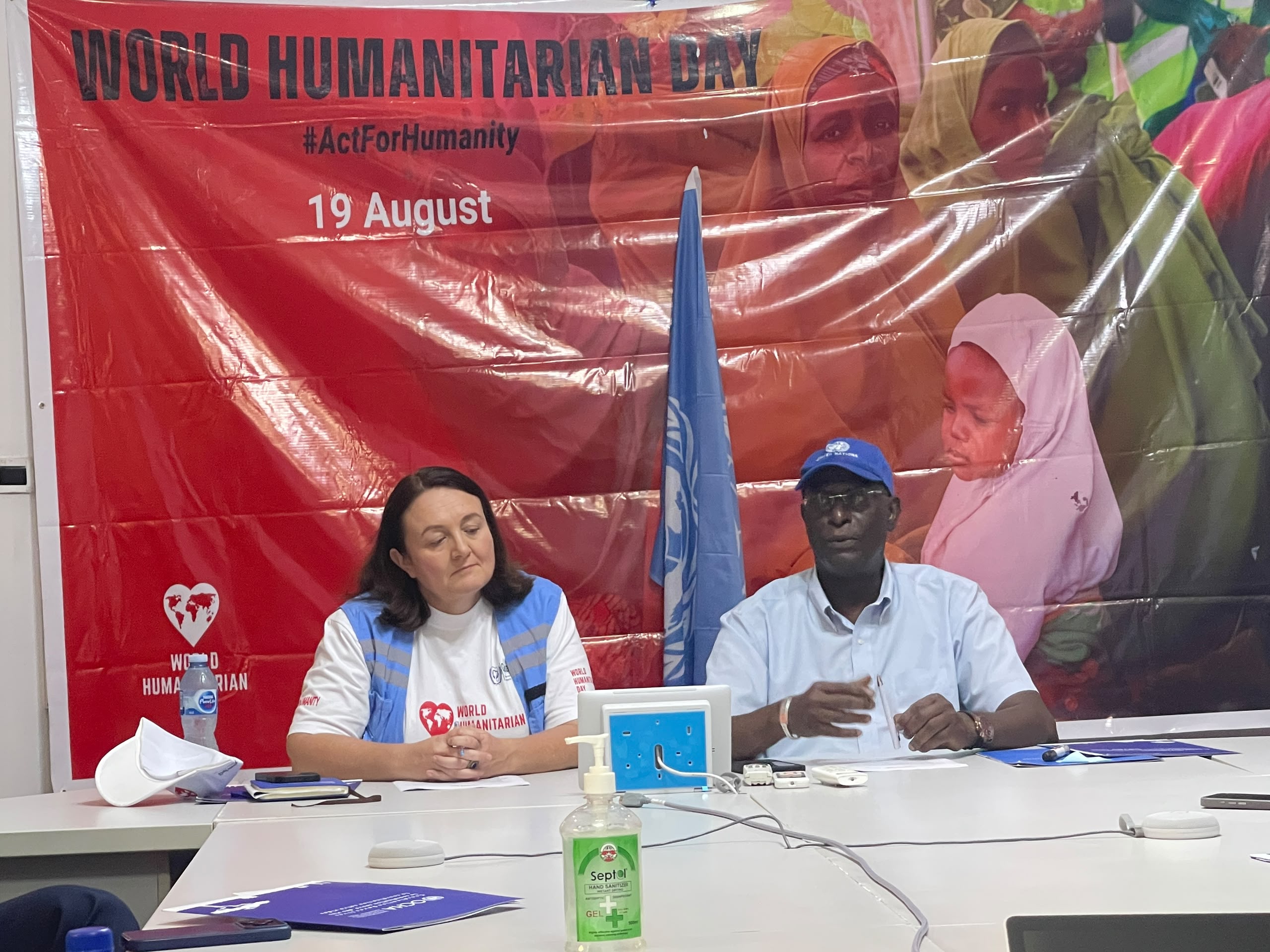
Speaking in Maiduguri to mark World Humanitarian Day, the UN Resident and Humanitarian Coordinator in Nigeria, Mohamed Malick Fall, said aid workers are delivering lifesaving assistance under “difficult and often dangerous conditions” across the country, particularly in the northeast.
“Today, at the treatment centres we visited, I met humanitarian workers who continue to serve communities with extraordinary courage, dedication and compassion,” Mr. Fall said after visiting nutrition and cholera treatment centres in Maiduguri alongside members of the UN and Humanitarian Country Teams.
“We call for greater protection for these brave personnel so that they can do their critical work in safety.”
The delegation met government health workers, caregivers and patients. Despite dwindling funding, the UN said humanitarian partners and government authorities reached almost 900,000 people in Nigeria’s northeast in the first half of 2026.
In Borno State, joint efforts have helped contain a cholera outbreak. According to Mr. Fall, more than 55,000 cholera patients have been treated, hygiene promotion services provided to over 1 million people, and more than 500 water points chlorinated to provide safe drinking water.
“This collective work has helped drive the cholera case fatality rate down below emergency levels,” he said.
On World Humanitarian Day, the UN also honoured aid workers killed while on duty. “Humanitarian workers are not targets. Hospitals, treatment centres, relief supplies, assistance convoys and civilian infrastructure must be protected. International Humanitarian Law must be respected by all parties, at all times,” Mr. Fall said.
Despite the response, the UN warned that resources remain far below what is needed. Through the Nigeria Humanitarian Fund and the Central Emergency Response Fund, $135.5 million has been distributed in 2026.
But Nigeria’s 2026 Humanitarian Needs and Response Plan still faces a $159 million funding gap for the rest of the year, putting hundreds of thousands at risk of missing lifesaving support.
“We are deeply grateful to donors… However, needs continue to rise faster than available resources. Current funding is only a fraction of what it was just a few years ago,” Mr. Fall said. “Additional international and domestic support is urgently required.”
The Humanitarian Coordinator also highlighted Nigeria’s transition to a more nationally led humanitarian system by 2027, calling for investment in national institutions and local organizations already on the frontlines.
“Behind every statistic is a family struggling to survive, a child battling malnutrition, a mother seeking treatment for cholera, or a community trying to rebuild after years of crisis,” he said. “On this World Humanitarian Day, let us #ActForHumanity and reaffirm our shared responsibility to protect those supporting the most vulnerable.”
About The Author
