



By Abdullahi Inuwa
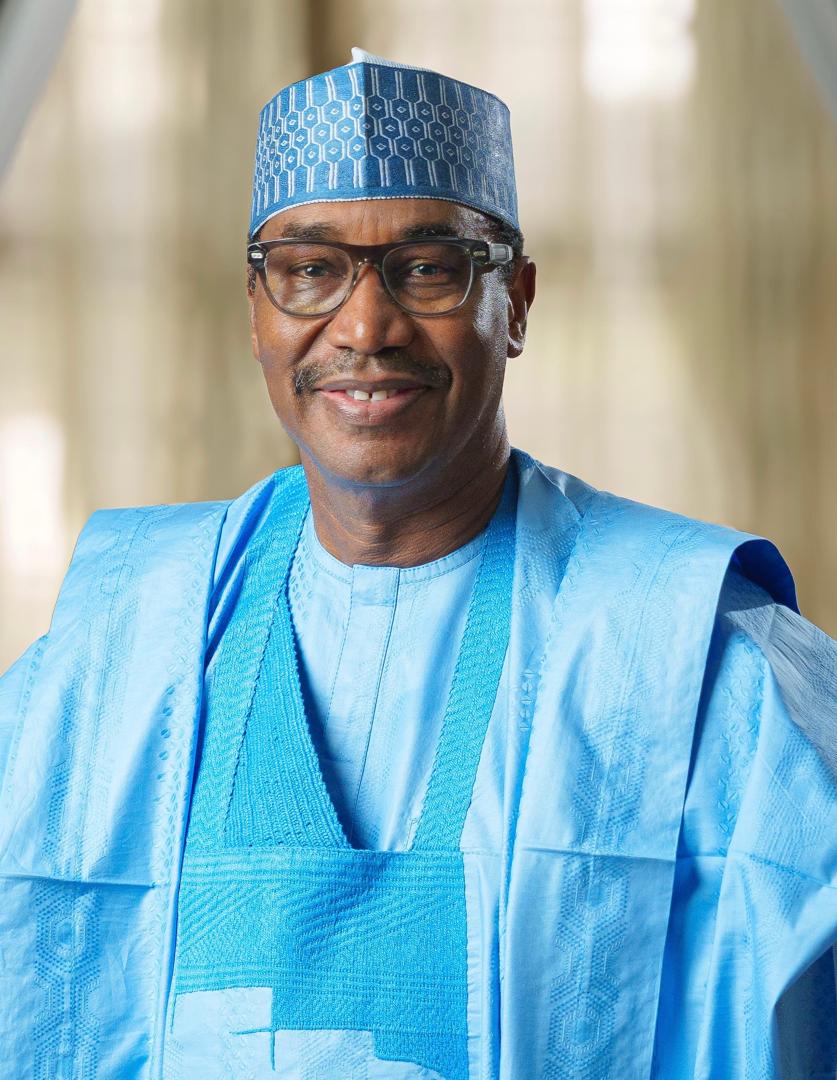
As Dr. Ibrahim Shehu Shema, CON, FNIM, clocks 69 on September 22, 2026, Katsina State has another opportunity to reflect on the career and legacy of a former governor whose public style was often defined by restraint, while his administration was marked by a long list of projects and programmes.


Shema, who governed Katsina State from 2007 to 2015, has never been known as a politician who loudly advertises his achievements. His preference has largely been to allow records, institutions and physical projects to tell the story.
That modesty is precisely why his birthday has, over the years, become an occasion for admirers and observers to revisit the eight years he spent at the helm of affairs in Katsina.
One recurring description of Shema from people familiar with his administration is that he was a quiet but methodical administrator. His approach was centred on translating public resources into infrastructure, education, healthcare, agriculture and social services.
A number of contemporary and retrospective accounts have documented the scale of projects undertaken during his tenure. Reports published over the years credit the administration with constructing or rehabilitating thousands of kilometres of roads, expanding schools and healthcare facilities, and investing heavily in human capital.
Education: Investing Beyond the Present
Education was one of the sectors where the Shema administration left a particularly visible imprint.
Contemporary accounts documented the construction of more than 200 secondary schools, alongside girls’ primary schools and Almajiri model schools. The administration also maintained free public primary and secondary education and supported examination fees for students in public schools.
Another major component was overseas and domestic sponsorship for students in professional and specialised disciplines. Previous reports put the number of beneficiaries at more than 800, with fields including medicine, pharmacy, nursing, dentistry and engineering among those supported.
The establishment of institutions and skills-development initiatives also formed part of the broader strategy to prepare young people for a changing economy.
Healthcare That Reached the Wards
Perhaps one of the most frequently cited aspects of Shema’s record is his investment in healthcare infrastructure.
Available accounts credit his administration with establishing clinics across the state’s political wards, expanding primary healthcare centres and constructing a 250-bed Orthopaedic and Specialist Hospital. The administration also introduced an ambulance service intended to improve emergency response across the 34 local government areas.
Free medical interventions for categories including women, children and some patients requiring specialised treatment were also reported as part of the administration’s healthcare policies.
The significance of such investments was not merely in the buildings themselves. The wider objective was to bring essential healthcare closer to communities that previously had to travel considerable distances for treatment.
Roads, Water and Urban Development
Infrastructure became another defining feature of the Shema years.
Reports from the period and later assessments have attributed more than 3,000 kilometres of roads to the administration, alongside road dualisation and urban development projects in several parts of the state. Katsina metropolis also witnessed the development of ring roads and other urban infrastructure.
The administration’s water interventions were similarly extensive. Previous reports have cited thousands of boreholes and more than 100 semi-urban water schemes, alongside investments in irrigation and agricultural infrastructure.
For a predominantly agrarian state, agriculture was treated as more than a seasonal activity. Farmers received support through tractors, fertiliser, irrigation facilities and agricultural projects.
The Discipline of Public Spending
Perhaps the most interesting aspect of the Shema story is not simply the number of projects associated with his administration, but the philosophy behind them.
Shema has previously explained his much-discussed reputation for being financially conservative in terms of his determination to direct public funds towards projects rather than distribute them as political patronage. In a 2023 interview reported by TheCable, he defended that approach, arguing that public resources had to be protected if government was to deliver meaningful development.
There were also contemporary efforts to document government projects and their costs. The Nation reported in 2013 that the administration published project brochures containing details of projects and expenditures, allowing the public to examine its record.
Such documentation remains relevant because political legacies are ultimately stronger when they can be measured against records rather than memories alone.
A Legacy Beyond Political Office
Shema left office on May 29, 2015, but his name has continued to feature in discussions about governance in Katsina.
That does not mean every assessment of his administration is identical. Political administrations are inevitably judged from different perspectives, and supporters, critics and independent observers may place different emphasis on achievements, shortcomings and priorities.
But there is one enduring feature of the Shema years that is difficult to overlook: the physical footprint.
Schools, roads, healthcare facilities, markets, housing projects, agricultural schemes and other public infrastructure associated with the period continue to form part of Katsina’s development landscape.
And perhaps that explains why the former governor’s birthday generates more than routine greetings.
At 69, Ibrahim Shehu Shema represents a chapter in Katsina’s political history that continues to invite discussion—not merely because of the office he once occupied, but because of the development choices made during his tenure.
For a man reputed for avoiding self-praise, there is an irony in the fact that his most persistent public introduction may be the projects that remain visible long after he left office.
On September 22, the tributes will come. The birthday messages will flow. But beyond the celebrations, Shema’s 69th birthday offers Katsina another moment to examine the evidence of an eight-year administration and ask what remains after political power has changed hands.
For Shema, perhaps the most fitting birthday message is one that matches the character attributed to him over the years: less noise, more records; less self-promotion, more evidence.
At 69, the former governor may prefer silence. But the story of his years in office continues to be told by the roads, schools, hospitals, institutions and other projects scattered across Katsina State.
Abdullahi Inuwa Social Commentator ainuwa303@gmail.com
About The Author
