



By: Abdullahi Inuwa
As Governor Babagana Umara Zulum marks seven years at the helm of affairs in Borno State, one area where his administration has earned widespread recognition is security. Governing a state that has endured more than a decade of insurgency, displacement and humanitarian crises, Zulum inherited enormous challenges. Yet, through strategic support for security agencies, community-based interventions and massive investments in rebuilding communities, his administration has helped transform Borno from a symbol of conflict into a beacon of resilience and recovery.


From his first days in office in 2019, Governor Zulum made it clear that security would remain the foundation upon which every other development agenda would rest. Understanding that peace and stability are prerequisites for economic growth, education, healthcare and infrastructure development, he adopted a multi-dimensional approach that combines military support, humanitarian assistance and community empowerment.
One of the hallmarks of Zulum’s security strategy has been his unwavering support for the Armed Forces and other security agencies operating in the state. The governor has consistently provided logistics, operational vehicles, communication gadgets, fuel supplies and welfare packages to troops fighting insurgents across Borno’s vast territory.
Over the years, the state government has donated hundreds of operational vehicles, motorcycles and security equipment to the military, police, Civilian Joint Task Force (CJTF), vigilante groups and other security outfits. These interventions have enhanced mobility, intelligence gathering and rapid response capabilities in vulnerable communities.
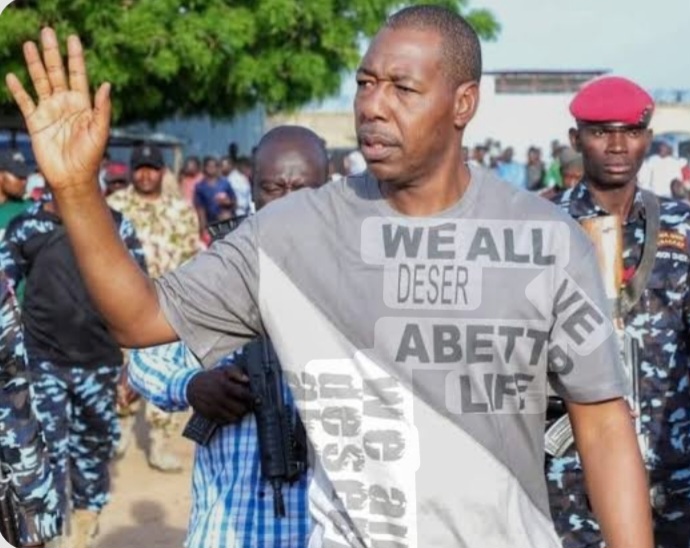
Beyond material support, Zulum has maintained close collaboration with military commanders and security chiefs. His frequent visits to frontline communities and military formations have demonstrated uncommon leadership and boosted the morale of troops risking their lives to protect citizens.
Perhaps one of the most remarkable aspects of Zulum’s leadership is his willingness to visit remote and previously inaccessible communities despite security threats. These visits have enabled him to assess challenges firsthand, engage residents directly and ensure that government interventions reach those most in need.
Security experts often point to the governor’s hands-on approach as a major factor in restoring public confidence and strengthening cooperation between communities and security agencies.
However, Governor Zulum understands that military operations alone cannot guarantee lasting peace. His administration has therefore invested heavily in addressing the root causes of insecurity by rebuilding livelihoods and restoring hope to communities devastated by conflict.
Across Borno State, thousands of homes destroyed by insurgency have been reconstructed under his administration. Entire communities that were once abandoned have been resettled with new housing estates, schools, healthcare facilities, markets and sources of clean water.
The governor’s resettlement programme has enabled hundreds of thousands of internally displaced persons (IDPs) to return to their ancestral homes and rebuild their lives. By restoring social and economic activities in liberated communities, the programme has significantly reduced dependence on humanitarian aid while promoting stability.
Agriculture, the mainstay of Borno’s economy, has also received significant attention. Through the distribution of farming inputs, irrigation support, tractors and financial assistance, the government has helped farmers return to their fields, thereby strengthening food security and creating employment opportunities for thousands of youths.
Recognising the role of youth unemployment in fueling insecurity, Zulum has launched numerous empowerment programmes aimed at providing alternative means of livelihood. Thousands of young people have benefited from vocational training, business grants and entrepreneurship schemes designed to reduce vulnerability to recruitment by criminal and extremist groups.
Education has also featured prominently in the governor’s peace-building agenda. Hundreds of schools destroyed during years of conflict have been rebuilt or renovated. New schools have been established in both urban and rural communities, ensuring that children affected by insurgency can access quality education.
Health infrastructure has witnessed similar improvements, with hospitals and primary healthcare centres reconstructed and equipped across the state. These investments have not only improved service delivery but also restored public confidence in government institutions.
Another critical component of Zulum’s security architecture is his support for community-based security initiatives. The administration has continued to strengthen collaboration with traditional rulers, community leaders, vigilante groups and the Civilian Joint Task Force, recognising their importance in intelligence gathering and local conflict resolution.
Through these partnerships, communities have become active stakeholders in maintaining peace and identifying emerging threats before they escalate into major security challenges.
The governor has equally championed rehabilitation and reintegration programmes aimed at encouraging former insurgents to abandon violence and embrace peaceful coexistence. While controversial in some quarters, these initiatives have contributed to reducing hostilities and promoting reconciliation in affected communities.
Today, many roads that were once inaccessible due to insecurity have reopened to traffic. Markets have resumed operations, schools are functioning, and businesses are gradually expanding across various parts of the state. Although challenges remain, the progress achieved under Zulum’s leadership is evident.
Security analysts note that Borno’s recovery journey offers valuable lessons for other conflict-affected regions. By combining kinetic and non-kinetic measures, strengthening institutions and prioritising the welfare of citizens, the state has demonstrated that sustainable peace requires more than military action alone.
As Governor Babagana Umara Zulum celebrates seven years in office, his administration’s efforts in supporting security agencies and building community resilience stand out as defining achievements. Through courage, commitment and strategic investments, he has helped create conditions for recovery and development in a state that once appeared overwhelmed by conflict.
For many residents, the story of Borno today is no longer solely one of insurgency and displacement. It is increasingly a story of resilience, reconstruction and renewed hope—an enduring legacy that continues to shape the state’s future seven years after Zulum assumed office.
Abdullahi Inuwa Social Commentator ainuwa303@gmail.com
About The Author
