



Muktar Alkali, Maiduguri
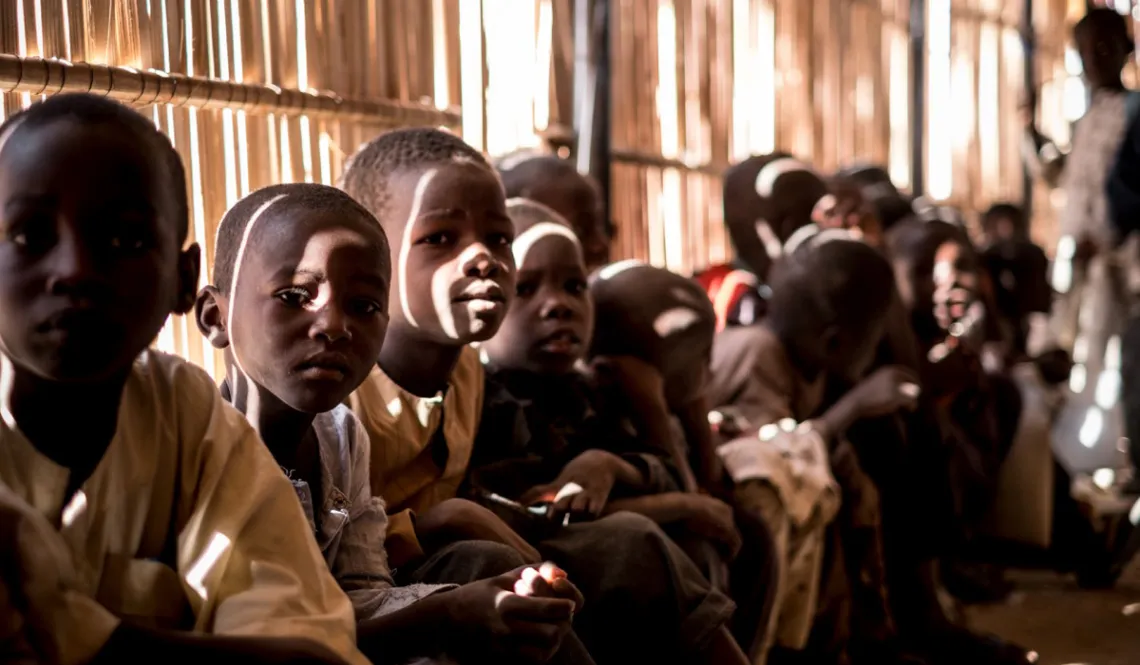
MAIDUGURI, Nigeria — In the heart of Borno State, the long shadow of the Boko Haram insurgency has altered the trajectory of basic education for over a decade. The crisis, which erupted with target attacks against secular education, devastated local infrastructure and forced an estimated 2.2 million children out of school at its peak, according to official state reports. More than 5,000 classroom structures across Borno were destroyed or severely damaged, transforming schools from sanctuaries of learning into targets of violent conflict. This destruction created an immediate operational collapse that spilled across the North-East and North-West regions, forming the core of what has become a profound national crisis.


Nationwide, Nigeria accounts for approximately one in every five out-of-school children globally, with total numbers estimated by UNICEF and international partners between 10.5 million and 18.3 million children aged 5 to 14. Northern states bear the overwhelming burden of these figures, hosting roughly two-thirds of the country’s un-enrolled youth population. Beyond Borno, states like Bauchi, Kebbi, Katsina, Kano, Sokoto, and Jigawa record some of the highest figures in the country, driven by a combination of security disruptions and deep-seated socio-economic barriers.
The root causes driving these numbers extend far beyond conflict alone. Deep household poverty remains a dominant driver, as low-income families struggle to pay for school materials, uniforms, and transportationeven within basic education frameworks declared free by the Universal Basic Education Act. In many rural farming and informal urban trading communities, immediate economic survival compels parents to direct children toward street hawking, domestic work, or agricultural labor instead of regular classroom attendance. Cultural practices and persistent gender disparities further compound the deficit, with female net primary attendance rates in parts of the North-East and North-West falling below 48 percent. Additionally, millions of pupils participate exclusively in non-formal traditional Almajiri or Qur’anic systems that lack core literacy, numeracy, and vocational training, leading education authorities to classify them as officially out-of-school.
Dr. Amina Bello, an Abuja-based education policy researcher, noted that the fallout of this deficit is both immediate and generational. “When millions of young minds are systematically excluded from basic literacy and structured skill acquisition, we are not merely missing academic benchmarks; we are compounding long-term economic vulnerability and expanding the pool of idle youth susceptible to criminal recruitment,” she observed.
To stem the decline, the federal government through the Universal Basic Education Commission allocates dedicated funding from the Consolidated Revenue Fund annually to build infrastructure and support state-level interventions.
In conflict zones, initiatives like the Safe Schools Declaration aim to rehabilitate damaged infrastructure, construct perimeter security around learning centers, and establish emergency response protocols. Simultaneously, international development partners including UNICEF, USAID, the World Bank, and the Foreign, Commonwealth & Development Office have deployed millions of dollars in targeted aid.
Their interventions focus on conditional cash transfers for vulnerable households, emergency learning centers in Internally Displaced Persons camps, teacher training, and integrating basic literacy subjects into non-formal religious schools.
At the sub-national level, affected states have initiated localized recovery measures. In Borno, ongoing reconstruction programs have rebuilt thousands of classrooms and established mega-schools designed to absorb displaced orphans.
States such as Kano, Kaduna, and Sokoto have enacted regulatory frameworks aimed at integrating secular subjects into Almajiri centers while expanding school feeding projects to boost daily attendance rates. However, state-level implementation continues to encounter severe bottlenecks, including delays in providing matching counterpart funds required to access federal UBE grants, alongside a growing population that continually outpaces new classroom construction.
The long-term consequences of failing to address this crisis threaten Nigeria’s broader economic stability. Uneducated youth face reduced earning potential as adults, entrenching generational poverty and reducing overall national productivity.
The socio-economic vacuum also heightens regional security risks, as unengaged youth remain vulnerable to recruitment by armed non-state groups and bandit networks.
Globally, Nigeria ranks among the nations with the largest out-of-school populations alongside countries such as Pakistan, Ethiopia, and Sudan. Nations that have successfully turned around similar education crises, such as India through its Sarva Shiksha Abhiyan initiative and Bangladesh through targeted stipends for female students, relied on strict enforcement of basic enrolment, universal free school meals, and aggressive social safety net expansion.
For Nigeria to replicate those outcomes, experts contend that governments at all levels must move beyond fragmented interventions toward sustained funding, improved counter-fund matching by states, comprehensive integration of traditional schooling systems, and uncompromised security across vulnerable communities.
About The Author
