


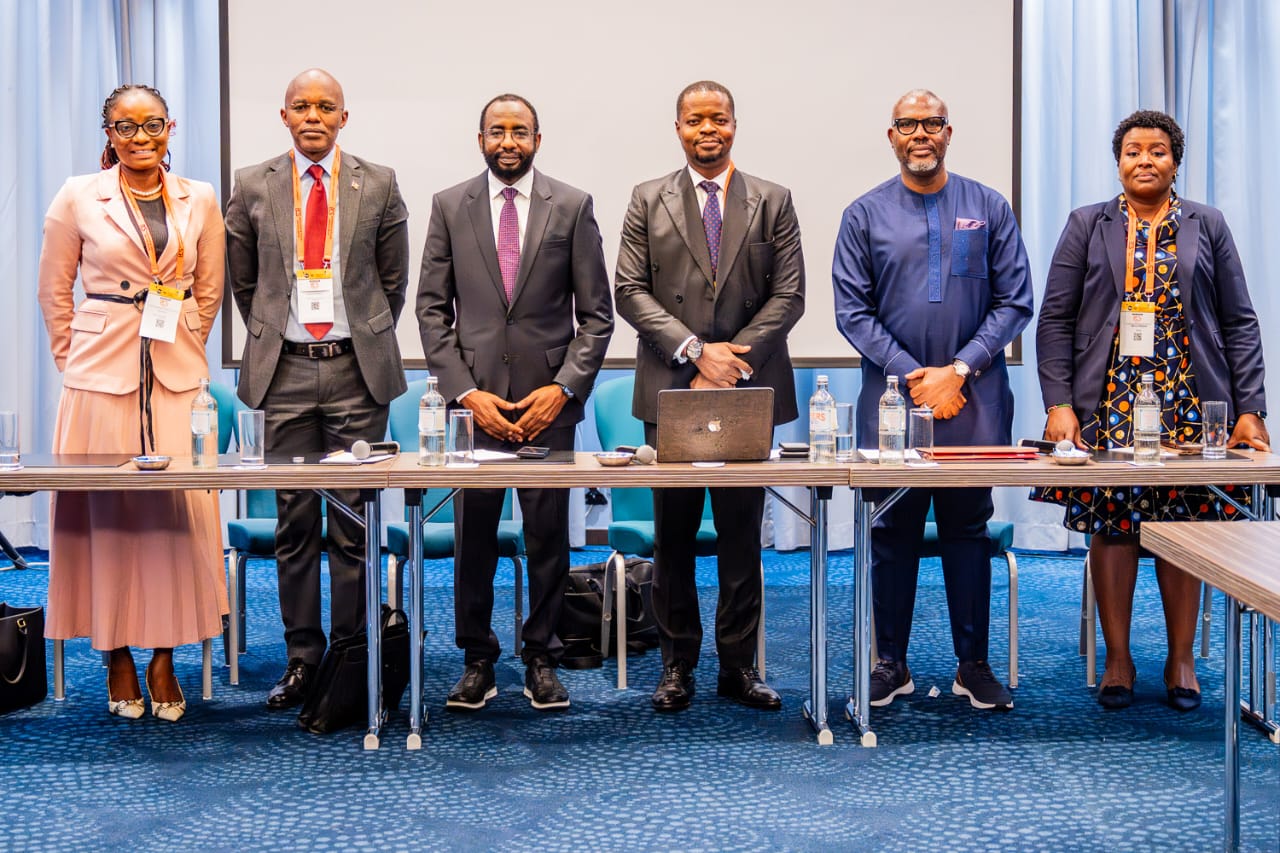
 and the Nigerian Association of Chambers of Commerce, Industry, Mines and)
By Muhammad Jalal
The National Information Technology Development Agency (NITDA) and the Nigerian Association of Chambers of Commerce, Industry, Mines and Agriculture (NACCIMA) have joined forces to accelerate Nigeria’s digital economy and help businesses, particularly Micro, Small and Medium Enterprises (MSMEs), harness technology for growth.


The strategic partnership was unveiled on the sidelines of GITEX Nigeria, where NITDA Director-General, Kashifu Inuwa, and his NACCIMA counterpart, Engr. Olusola Obadimu, signed a Memorandum of Understanding (MoU) designed to deepen digital adoption across the private sector.
The agreement is expected to strengthen innovation, expand access to digital tools and create new opportunities for Nigerian businesses to compete in an increasingly technology-driven global marketplace.
Speaking after the signing, the NACCIMA Director-General described the partnership as a major step towards repositioning the organised private sector through digital transformation.
He stressed that businesses could no longer afford to treat digitalisation as an option, noting that technology has become essential to survival, productivity and competitiveness.
According to him, NACCIMA, as the umbrella organisation representing Nigeria’s organised private sector, considers NITDA a strategic partner in achieving the country’s digital transformation objectives.
The MoU provides for cooperation in several areas, including the creation of a collaborative digital ecosystem platform, enterprise-level digital transformation for MSMEs, technology adoption, digital innovation and capacity development for businesses.
It will also support strategic collaboration towards the development and institutionalisation of the Digital Nigeria International Conference (DNICE) 2026 and future editions.
Beyond the immediate programmes, the partnership is expected to bring government agencies, businesses, technology firms, universities, investors and development partners closer together to create a stronger ecosystem for innovation and entrepreneurship.
Obadimu said implementation would begin without delay, assuring that the agreement would quickly translate from paper into practical initiatives capable of producing tangible benefits for Nigerians.
He added that the partnership could have a particularly significant impact on Nigeria’s youthful population, which continues to play a growing role in technology, innovation and digital entrepreneurship.
He urged stakeholders to provide young Nigerians with the skills, platforms and support required to take their ideas beyond the domestic market and compete internationally.
“Digitalisation is the way to go,” he said, stressing the need to equip young innovators to take advantage of opportunities in the global digital economy.
The latest collaboration complements NITDA’s mandate to promote technology innovation, digital literacy and the transformation of businesses and public institutions.
For NACCIMA, the partnership provides an avenue to leverage its extensive private-sector network to drive wider technology adoption among Nigerian enterprises.
With MSMEs accounting for a significant portion of economic activity and employment in Nigeria, both organisations are banking on the partnership to help businesses overcome digital barriers, improve productivity and unlock new markets.
The agreement therefore signals a fresh push to place technology at the centre of private-sector growth while advancing Nigeria’s ambition of building a more inclusive, innovative and globally competitive digital economy.
About The Author
