



By: Abdullahi Inuwa
“When I asked the people of Katsina State for the honour of leading them, I did not come with empty words. I came with a blueprint, a clear, deliberate vision for what this state could become.


And at the very heart of that blueprint was a conviction I have carried for many years: that the greatest investment any government can make is not in roads or buildings, but in the minds of its children.”
These powerful words from Governor Dikko Umaru Radda capture the philosophy driving one of the most ambitious educational transformations in Katsina State’s history.
In a country where infrastructure projects often dominate political discourse, Governor Radda has consistently argued that the true wealth of any society lies in its human capital. For him, education is not merely a sector of government; it is the foundation upon which economic prosperity, social stability, and sustainable development are built.
Since assuming office, the governor has placed education at the centre of his administration’s development agenda, channeling resources, political will, and institutional reforms toward rebuilding the sector and restoring confidence in public education.
The vision is simple yet profound: equip every child in Katsina with the knowledge, skills, and opportunities needed to compete in a rapidly changing world.
For decades, northern Nigeria has grappled with challenges ranging from inadequate school infrastructure and teacher shortages to poor enrolment rates and learning outcomes. Katsina State has not been immune to these difficulties. However, rather than viewing these challenges as obstacles, the Radda administration has treated them as opportunities for bold reforms.
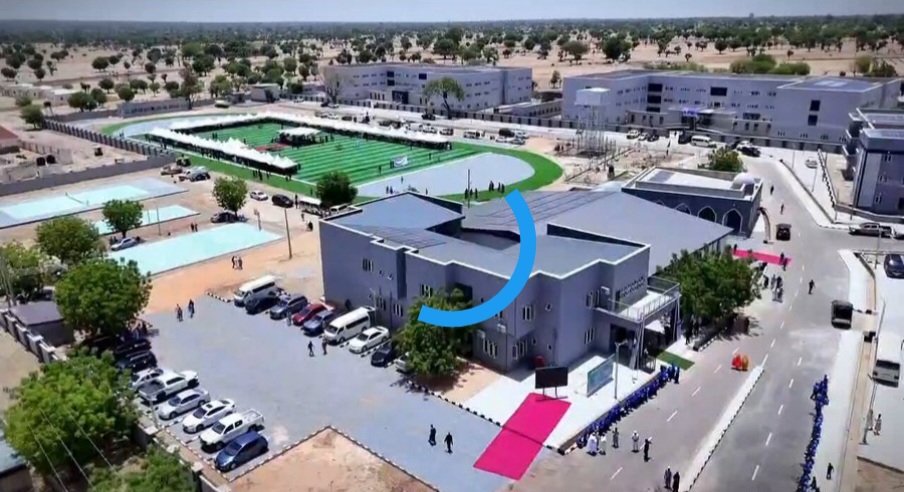
Across the state, efforts are underway to renovate dilapidated schools, construct new classrooms, provide learning materials, and improve the overall teaching and learning environment. The objective is not only to increase access to education but also to improve quality.
Education stakeholders say one of the defining features of the administration’s approach is its emphasis on long-term impact rather than short-term political gains. Investments are being directed toward strengthening foundational learning, teacher development, educational technology, and institutional capacity.
Governor Radda has repeatedly stressed that no society can achieve meaningful development without an educated population capable of driving innovation and productivity.
His administration’s commitment to education extends beyond physical infrastructure. Scholarships, support programmes for students, teacher recruitment initiatives, and efforts to enhance educational standards have become key pillars of government policy.
The governor believes that every child, regardless of background or economic circumstance, deserves access to quality education and the opportunity to fulfil their potential.
This commitment is particularly significant in a state where a youthful population represents both a challenge and an opportunity. With thousands of young people entering school-age brackets every year, investments in education today will determine the shape of Katsina’s future economy and workforce.
Development experts often point out that societies that invest heavily in education tend to experience stronger economic growth, lower poverty rates, and greater social cohesion. Governor Radda’s administration appears to be embracing this principle by prioritising policies aimed at building human capacity.
For many parents across the state, the renewed attention to education offers hope that future generations will enjoy opportunities that were previously out of reach.
Teachers, too, have welcomed efforts aimed at improving the sector, noting that quality education depends not only on buildings and equipment but also on motivated and well-trained educators.
Beyond the classroom, the governor’s educational vision is linked to broader goals of economic diversification and youth empowerment. By investing in learning, skills acquisition, and human development, the administration hopes to prepare young people for emerging opportunities in technology, entrepreneurship, agriculture, healthcare, and other critical sectors.
The strategy reflects an understanding that the future will belong to societies capable of producing knowledgeable, skilled, and innovative citizens.
Political observers note that while roads, bridges, and public buildings remain important symbols of development, investments in education often produce the most enduring legacy because they transform lives across generations.
A road may connect communities, but education connects people to opportunity. A building may stand for decades, but an educated child can influence society for a lifetime.
This is the essence of Governor Radda’s message.
His belief that the greatest investment lies in the minds of children represents more than a campaign promise—it is a governing philosophy that continues to shape policy decisions across Katsina State.
As the administration pushes forward with its educational reforms, many residents are hopeful that the state is laying the foundation for a future driven by knowledge, innovation, and human capital development.
For Governor Radda, the measure of success will not simply be the number of projects completed or budgets spent. It will be seen in the lives transformed, the dreams realised, and the opportunities created for the next generation.
If that vision succeeds, Katsina’s greatest monuments may not be found in concrete and steel, but in classrooms filled with inspired learners, empowered teachers, and young minds equipped to lead the state into a brighter future.
And in the years ahead, that investment in people may prove to be the most valuable legacy of all.
Abdullahi Inuwa Social Commentator ainuwa303@gmail.com
About The Author
