



By: Abdullahi Inuwa
In a region long scarred by insurgency, violence and mass displacement, Borno State is increasingly turning to an unconventional weapon in the fight against terrorism — rehabilitation and reintegration.


The state government says it has successfully reintegrated 9,680 repentant terrorists into society over the last five years, marking one of Nigeria’s most ambitious deradicalisation efforts since the Boko Haram insurgency erupted more than a decade ago.
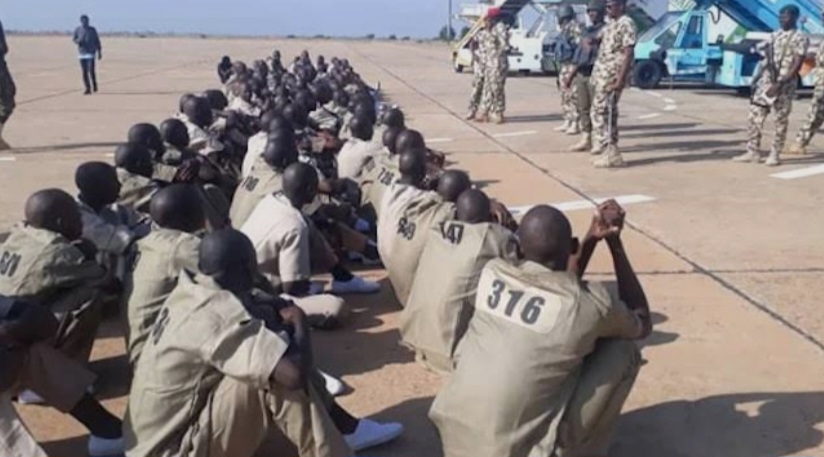
The disclosure was made on Friday in Maiduguri by Ishaq Abdullahi, Special Adviser on Security to Governor Babagana Umara Zulum, during a ceremony marking the graduation of 720 former insurgents who completed the state’s rehabilitation, deradicalisation and reintegration programme.
For a state that has endured years of bloodshed, the milestone represents more than a statistic. It signals a deliberate attempt by the Borno government to complement military operations with a strategy aimed at breaking the cycle of extremism and preventing former fighters from returning to the battlefield.
According to Abdullahi, the programme has steadily expanded since July 2021, providing former insurgents with counselling, psychological support, religious reorientation, vocational training and community engagement initiatives designed to prepare them for civilian life.
The latest batch of 720 graduates joins thousands of others who have passed through the programme and returned to communities across Borno and neighbouring states.
Security experts have long argued that military action alone cannot completely defeat insurgency. While troops can clear territories and dismantle terrorist camps, sustainable peace often requires addressing the social and ideological factors that fuel radicalisation.
Borno’s reintegration programme appears to be built around that philosophy.
Participants are exposed to intensive deradicalisation sessions led by religious scholars, mental health professionals and social workers. They are also equipped with practical skills intended to help them earn legitimate livelihoods after reintegration.
Government officials believe the approach reduces the likelihood of recidivism while encouraging other insurgents still hiding in the forests to surrender.
Governor Babagana Umara Zulum has consistently advocated a combination of military pressure, humanitarian intervention and reintegration as part of efforts to restore lasting peace to the North-East.
Since assuming office, Zulum has repeatedly stressed that not all insurgents share the same motivations. While hardened terrorists must face justice, he has argued that those who voluntarily surrender and renounce violence should be given opportunities to rebuild their lives under strict monitoring and supervision.
His administration has invested heavily in reconstruction projects, resettlement programmes and livelihood support for communities devastated by years of conflict.
Observers say the reintegration initiative forms a crucial component of that broader recovery agenda.
The governor’s strategy has also sought to encourage defections from terrorist ranks by demonstrating that surrender can lead to rehabilitation rather than perpetual exclusion from society.
Despite its achievements, the programme has not been without controversy.
Many victims of insurgency remain sceptical about reintegrating former fighters into communities that suffered attacks, killings and displacement.
Families who lost loved ones often question whether former insurgents can genuinely abandon extremist ideologies and become productive citizens.
The Borno government acknowledges these concerns but maintains that extensive screening, monitoring and counselling mechanisms are in place to ensure public safety.
Officials argue that rejecting repentant insurgents outright could create new security risks by pushing them back toward extremist networks.
Instead, they contend that structured rehabilitation offers a safer and more sustainable alternative.
Community sensitisation campaigns have therefore become an important part of the process, helping local residents understand the objectives of reintegration and encouraging reconciliation where possible.
Behind the figures are thousands of individual stories of transformation.
Many of those who surrendered reportedly joined insurgent groups under coercion, economic hardship or manipulation. Others were recruited at young ages and spent years in conflict zones with limited exposure to mainstream society.
Through rehabilitation programmes, participants are encouraged to confront their past actions, reject extremist narratives and embrace new identities as productive citizens.
Vocational training in agriculture, carpentry, tailoring, mechanics and other trades provides practical opportunities for economic independence.
Supporters of the initiative argue that such interventions address one of the root causes of insecurity — lack of opportunities for vulnerable populations.
By equipping former fighters with employable skills, authorities hope to reduce the temptation of returning to violent groups.
The reintegration of 9,680 former insurgents over five years has attracted attention from policymakers, security analysts and humanitarian organisations seeking long-term solutions to insurgency.
While challenges remain, the programme is increasingly viewed as a significant experiment in post-conflict recovery.
Experts caution that reintegration is a lengthy process whose success depends on sustained support, community acceptance and continuous monitoring. However, they note that every former fighter successfully transformed into a law-abiding citizen represents one less recruit for extremist organisations.
For Borno, a state that has borne the brunt of Nigeria’s insurgency crisis, the stakes could hardly be higher.
As another 720 graduates complete their journey from conflict to civilian life, the government hopes the programme will continue to weaken terrorist ranks while strengthening prospects for lasting peace.
Five years after launching the initiative, Borno’s message is clear: defeating insurgency is not only about winning battles on the battlefield—it is also about winning hearts, rebuilding lives and creating pathways away from violence.
And with nearly 10,000 former insurgents now reintegrated, the state believes it is making meaningful progress toward that goal.
Abdullahi Inuwa Social Commentator ainuwa303@gmail.com
About The Author
