


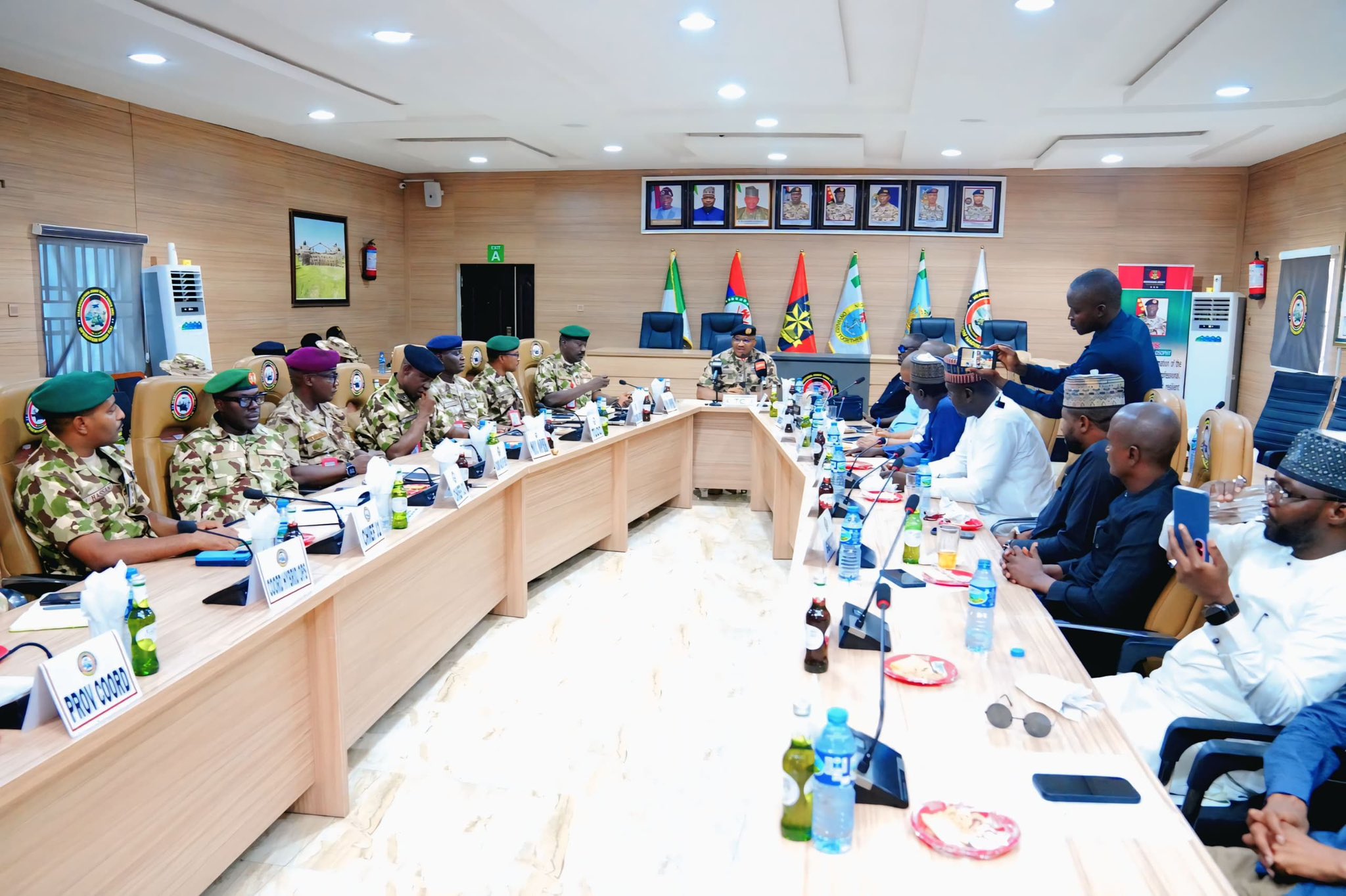

Maiduguri — Nigeria’s counter-terrorism drive recorded a major milestone as the Joint Investigation Centre at Giwa Barracks revealed it has concluded investigations into 1,450 terrorism-related cases, with over 500 suspects already transferred for trial—many ending in convictions.
Commander of the facility, Brig.-Gen. Yusuf Audu, disclosed the figures during a comprehensive briefing on Wednesday, underscoring the centre’s pivotal role in tackling insurgency in the North-East.


Designed as a unified interrogation and screening hub, the Giwa facility processes suspects arrested during military operations against Boko Haram and ISWAP. Audu explained that each case undergoes rigorous investigation, legal scrutiny, and classification into prosecution, rehabilitation, or reintegration tracks.
“Following investigations, a specialised casework team reviews findings and advises on legal direction. Suspects are then appropriately categorised,” he said.
He noted that the recent transfer of over 500 detainees for prosecution—with a high rate of convictions—signals improved synergy among Nigeria’s security and justice institutions.
The multi-agency centre brings together operatives from the Nigerian Army, Police, DSS, Civil Defence, Immigration, NDLEA, and Correctional Service, alongside legal officers from the Office of the Attorney-General of the Federation—creating what Audu described as a “holistic and credible” approach to terrorism cases.
Beyond investigations, the commander highlighted ongoing reforms in detainee welfare, including segregated housing, education support for children, and enhanced healthcare services, with special attention to communicable diseases.
He added that improved living conditions—such as regular meals, sanitation measures, and a solar-powered water system supported by the International Committee of the Red Cross—reflect growing adherence to humanitarian standards.
Audu also pointed to psychological and recreational programmes aimed at detainees’ well-being, as well as a family reconnection initiative enabling communication with relatives.
“All processes are guided by the Terrorism Prevention Act and subjected to judicial oversight, ensuring compliance with human rights standards,” he stated.
With thousands of cases processed and hundreds already facing justice, the Giwa facility is fast emerging as a cornerstone in Nigeria’s sustained crackdown on terrorism.
About The Author
