


By Abdullahi Alhassan, Kaduna
Over 70 Nigerian, African and international civil society organisations on Monday warned that a wave of restrictive bills before the National Assembly threatens to roll back democratic freedoms and hand sweeping control to the executive.


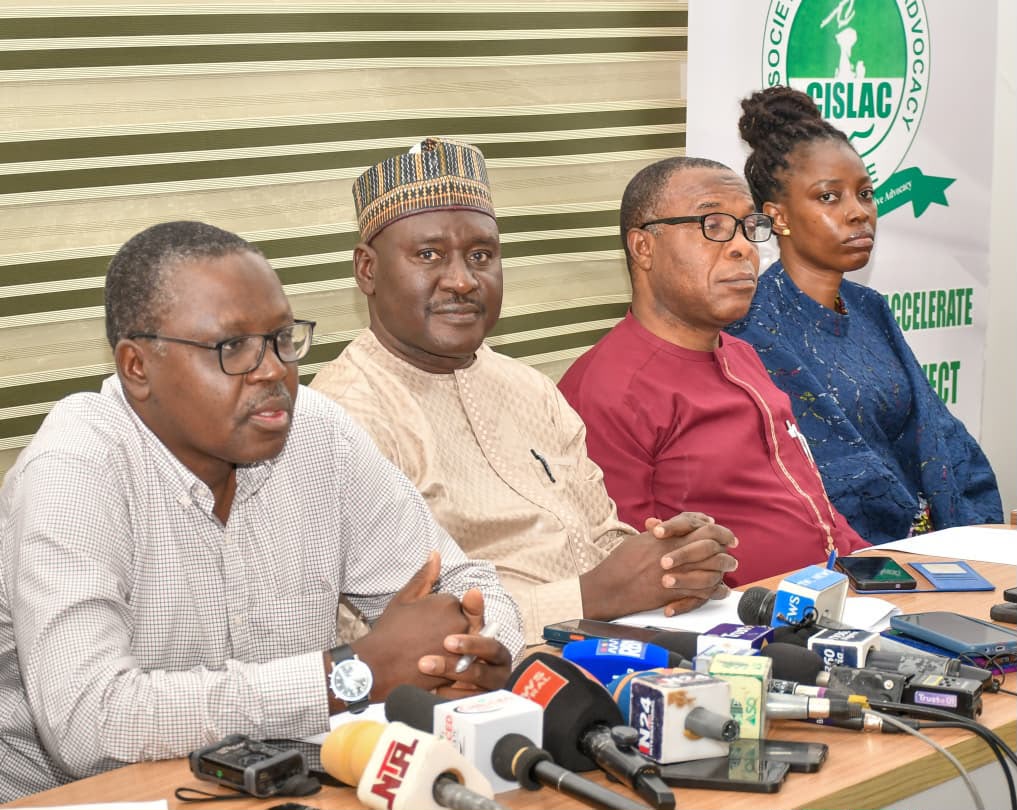
Speaking at a joint press conference in Abuja, the coalition said the proposals come at a time when civic space in Nigeria is experiencing its worst decline since 1999, and with the 2027 general elections drawing closer.
The groups said the legislation risks replacing open debate with fear and self-censorship. According to them, the bills are not isolated but part of a coordinated effort to tighten control over civil society, independent media and digital platforms.
Since President Bola Ahmed Tinubu assumed office in May 2023, the statement noted, authorities have leaned more heavily on restrictive laws, politically motivated prosecutions and intimidation against journalists, bloggers and rights defenders.
It cited the continuing trial of activist and publisher Omoyele Sowore, pressure on the Socio-Economic Rights and Accountability Project, and the use of the Cybercrimes Act against government critics. The Committee to Protect Journalists also documented 91 cases of journalists arrested, attacked or harassed across 13 states and the FCT in the first three years of the current administration.
The coalition’s main concern is the Foreign Aids (Regulation, Transparency and Disclosure) Bill, 2026, SB.1034. The groups said the bill would give government sweeping powers to monitor, sanction, suspend and even shut down NGOs and private entities receiving foreign assistance.
Under Sections 3 to 5, the bill proposes a new Foreign Aid Regulatory Commission with authority to register recipients, demand information, conduct audits and impose sanctions based on undefined “national policies and priorities.” The groups argued this duplicates the work of the CAC, EFCC and SCUML without proving that existing laws have failed.
Sections 6 to 8 make registration with FARC compulsory within 30 days and criminalise non-compliance, while Sections 9 to 11 require annual audits and force foreign-funded projects to align with government-set development priorities.
The organisations warned that this framework could be used to interfere with legitimate work on human rights monitoring, anti-corruption advocacy, legal aid, election observation and public interest litigation.
Sections 12 to 16 go further, prescribing heavy fines, jail terms and licence revocations. The bill also defines “foreign aid” so broadly, the coalition said, that it could capture almost all forms of international financial and technical support.
The groups also rejected proposals that would compel social media platforms to establish physical offices in Nigeria or face a ban. They described the plan as disproportionate and a tool that could be used to censor debate and restrict access to information.
Both the foreign aid bill and the social media proposal, they argued, clash with Sections 39 and 40 of the 1999 Constitution, which guarantee freedom of expression, assembly and association, and with Section 22 on the role of the media.
Nigeria is also bound by the African Charter on Human and Peoples’ Rights and the International Covenant on Civil and Political Rights. The coalition said any restriction must meet tests of legality, necessity and proportionality, standards they insist the bills do not meet.
Citing UN and African Commission guidelines, the groups said states should facilitate, not control, associations. They added that blanket regulation of non-profits contradicts FATF Recommendation 8 and recent rulings by the African Court on Human and Peoples’ Rights and the European Court of Justice.
The organisations stressed that international support enables Nigerian groups to do work that strengthens democracy, including humanitarian aid and accountability campaigns, and should not be treated as foreign interference.
They asked the Senate President, Speaker and all lawmakers to immediately withdraw SB.1034, the social media office bill and any other proposal that unjustifiably restricts civic freedoms. They also demanded proper consultations with journalists, rights defenders and development partners, and a public reaffirmation of constitutional and human rights commitments.
“The National Assembly now faces a defining constitutional choice,” the coalition said. “It can enact laws that expand executive control and shrink civic space, or it can uphold the Constitution and Nigeria’s obligations to its people.”
Signatories to the statement include SERAP, Amnesty International Nigeria, BudgIT, CISLAC, Wole Soyinka Centre for Investigative Journalism, Yiaga Africa, ActionAid Nigeria, HEDA Resource Centre and dozens of other groups working on governance, media, gender and human rights across Nigeria.
About The Author
