



By Abdullahi Alhassan, Kaduna
Traditional rulers, religious leaders, government officials and civil society groups from across Northern Nigeria met in Kaduna on August 5, 2026, and agreed that insecurity remains the single greatest obstacle to development in the region.


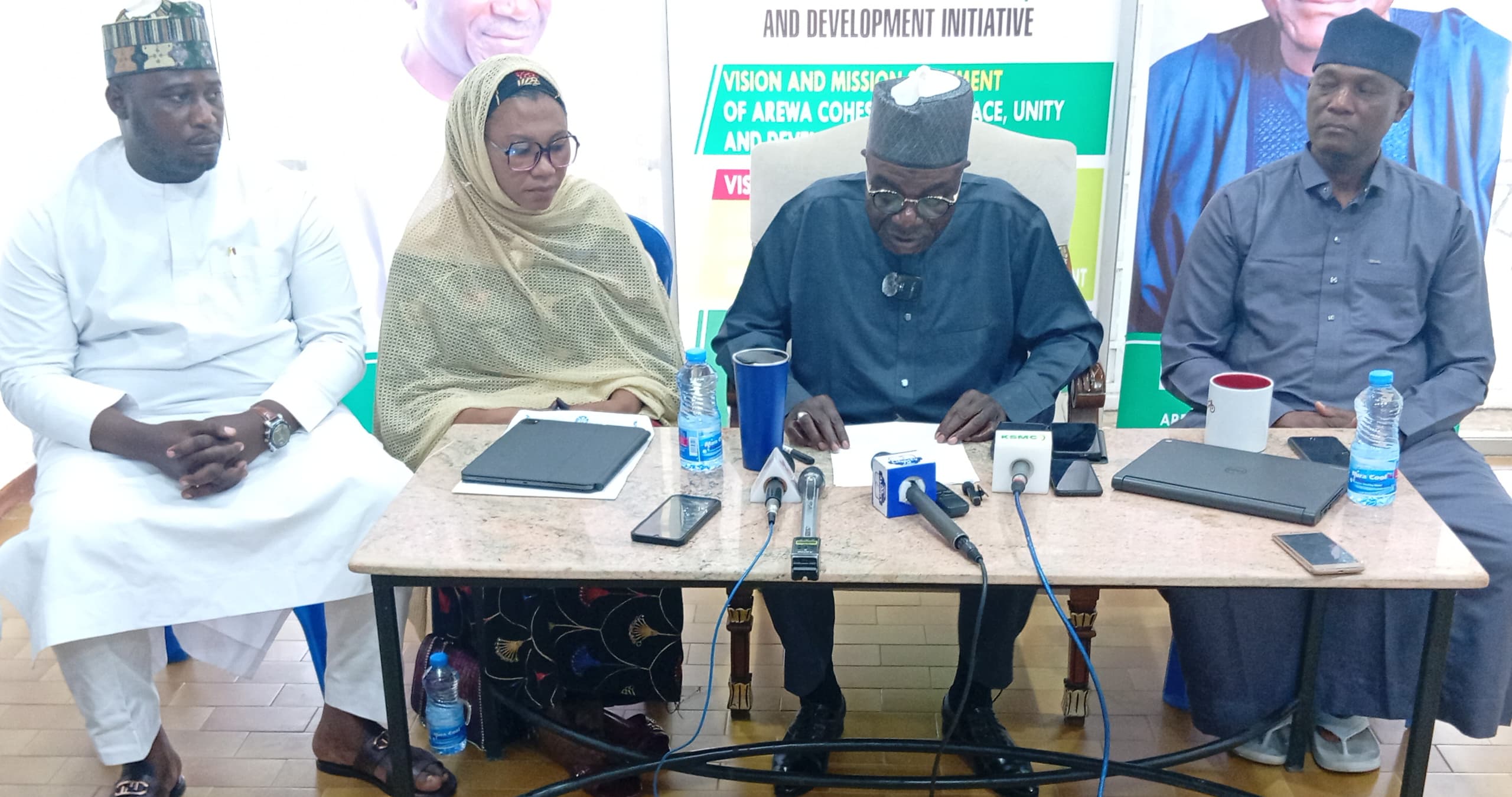
At the Arewa Awareness Summit on Unity Against Insecurity held at the Banquet Hall, Arewa House, participants said lasting peace will require more than military force. They called for collective responsibility, inclusive governance and stronger institutions at all levels.
This is contained in a Communique which is read by the Dr Abdullahi Idris Director General of Arewa Cohesion for Peace initiative Unity and Development.
The summit observed that the region continues to battle a mix of threats that feed into one another. Delegates listed insurgency, banditry, kidnapping, communal conflicts, farmer-herder clashes, illegal mining, arms trafficking and organized criminal violence as key challenges facing communities today.
A major concern raised was the growing reach of armed groups across borders. Leaders noted that criminal networks are exploiting Nigeria’s porous boundaries with neighboring countries, a reality that makes reliance on military operations alone insufficient to contain the violence.
Speakers also traced the crisis to deeper structural problems. Weak governance, poverty, unemployment, inequality, environmental pressure, the proliferation of small arms and declining public trust in institutions were identified as major drivers fueling recruitment into criminal groups.
Participants were critical of past interventions. They said previous efforts recorded limited success because of poor inter-agency coordination, lack of community ownership and the politicization of peace initiatives that left local people out of the process.
The meeting stressed the role of grassroots institutions. Traditional rulers and religious leaders were described as indispensable for conflict prevention, reconciliation and mobilization. Women and youths were also singled out as strategic stakeholders whose full participation is necessary for sustainable peace and national development.
Two social issues drew particular attention. The Almajiri phenomenon was flagged as an urgent socio-economic and security challenge requiring education, welfare and policy reforms. Delegates further blamed leadership failure, corruption, elite complicity and widening inequality for the region’s insecurity and underdevelopment.
On solutions, the summit emphasized long-term prevention. Education was described as the most effective tool against violent extremism and poverty. Leaders also endorsed community policing, intelligence gathering and early warning systems, arguing they work best when communities, security agencies, women, youths and traditional institutions collaborate. The integration of Western and Islamic education was recommended to produce responsible and productive citizens.
The communique paid special attention to inclusion. Persons with disabilities were acknowledged as equally affected by insecurity and must be deliberately included in peacebuilding, policy design and future regional engagements. Delegates added that Northern Nigeria has enormous human capital that can transform the region if harnessed through quality education, responsible leadership and social inclusion.
From deliberations came 15 key resolutions. First, peacebuilding must combine security operations with good governance, justice, economic recovery and institutional reform. Governments at all levels were urged to institutionalize community-based early warning and early response mechanisms involving traditional rulers, religious leaders, women, youths, farmers and pastoralists.
The summit called for intelligence-driven, people-centered policing and closer collaboration between communities and security agencies. It demanded that the criminal justice system aggressively investigate and prosecute financiers, informants and political sponsors of crime. Youth empowerment through education, skills acquisition, entrepreneurship and jobs was named a central pillar of regional peace strategy, alongside comprehensive reforms for the Almajiri system.
Leaders also resolved that women must move beyond participation to become decision-makers and facilitators in peace processes. Persons with disabilities should be intentionally included in development planning and humanitarian work. Greater collaboration among Northern states on intelligence sharing, border security and regional development was recommended, along with a push for issue-based politics that elects competent and accountable leaders.
The summit urged stronger investment in education by integrating Western and Islamic systems to promote cohesion, and called for expanding regional peace initiatives into larger platforms that can deliver measurable solutions. Political leaders, traditional institutions, civil society, schools and development partners were tasked to work together to restore unity and rebuild public trust.
In its conclusion, the summit reaffirmed that securing Northern Nigeria is not the job of government and security agencies alone. It rests with every citizen, community and institution. Organizers expressed confidence that if the recommendations are faithfully implemented, they will restore peace, strengthen unity and secure a prosperous future for the region.
About The Author
