



By Abdullahi Inuwa
Governor Babagana Umara Zulum’s ambitious campaign to restore normalcy in Borno State is steadily reshaping the humanitarian landscape of Nigeria’s North-East, with the successful resettlement of more than 2,000 internally displaced persons (IDP) camp households and the return of millions of displaced residents to their ancestral communities.


Years after Boko Haram and ISWAP insurgents forced countless families to flee their homes, Borno is witnessing what many observers describe as one of Africa’s most significant post-conflict resettlement efforts. Under Zulum’s leadership, communities once deserted by violence are gradually coming back to life as schools reopen, healthcare services resume, markets flourish, and farming activities return.
Since assuming office in 2019, Zulum has made the closure of IDP camps and the restoration of dignity to displaced citizens a cornerstone of his administration. Rather than allowing thousands of families to remain indefinitely in overcrowded camps, the governor embarked on an aggressive programme aimed at rebuilding destroyed towns and creating conditions that encourage voluntary return.
The initiative has seen more than 2,000 camp households resettled in several local government areas, while millions of displaced people have either returned to their communities or begun rebuilding their lives in newly reconstructed settlements across the state.
The resettlement programme extends beyond transporting families back to their villages. It involves constructing permanent houses, rehabilitating schools and hospitals, restoring water facilities, rebuilding roads, supporting local markets, and providing security through close collaboration with the Nigerian military and other security agencies.
For many returning families, the journey home represents more than a change of location—it signifies the restoration of hope after years of uncertainty.
Entire communities that once lay in ruins are gradually recovering. Children who spent years growing up in displacement camps are returning to classrooms, while farmers are cultivating lands that had long been abandoned due to insecurity.
Agriculture remains central to Zulum’s recovery strategy. Recognising that economic independence is essential for lasting peace, the Borno State Government has consistently distributed improved seeds, fertilisers, farm implements and other agricultural inputs to thousands of returning farmers.
The approach is designed to reduce dependence on humanitarian assistance while enabling families to rebuild sustainable livelihoods through farming, fishing, livestock production and small-scale businesses.
In addition to livelihood support, the government has invested heavily in rebuilding critical infrastructure destroyed during years of insurgency. Hundreds of housing units have been constructed in resettled communities, while roads, electricity projects, healthcare centres and educational facilities are being rehabilitated to improve living conditions.
Observers note that the administration’s strategy differs from conventional humanitarian interventions that focus solely on emergency relief. Instead, Zulum has pursued a long-term recovery model centred on reconstruction, economic revival and community resilience.
The governor has repeatedly maintained that although humanitarian assistance remains necessary, permanent dependence on displacement camps cannot provide a lasting solution to the challenges created by insurgency.
His administration believes that restoring people’s dignity begins with helping them return home safely, rebuild their communities and regain control of their livelihoods.
Security, however, remains the backbone of the resettlement initiative.
The state government works closely with the Armed Forces, security agencies, traditional rulers and community leaders before approving the reopening of any settlement. Areas selected for resettlement are subjected to security assessments to minimise risks and ensure that returning residents can live without constant fear.
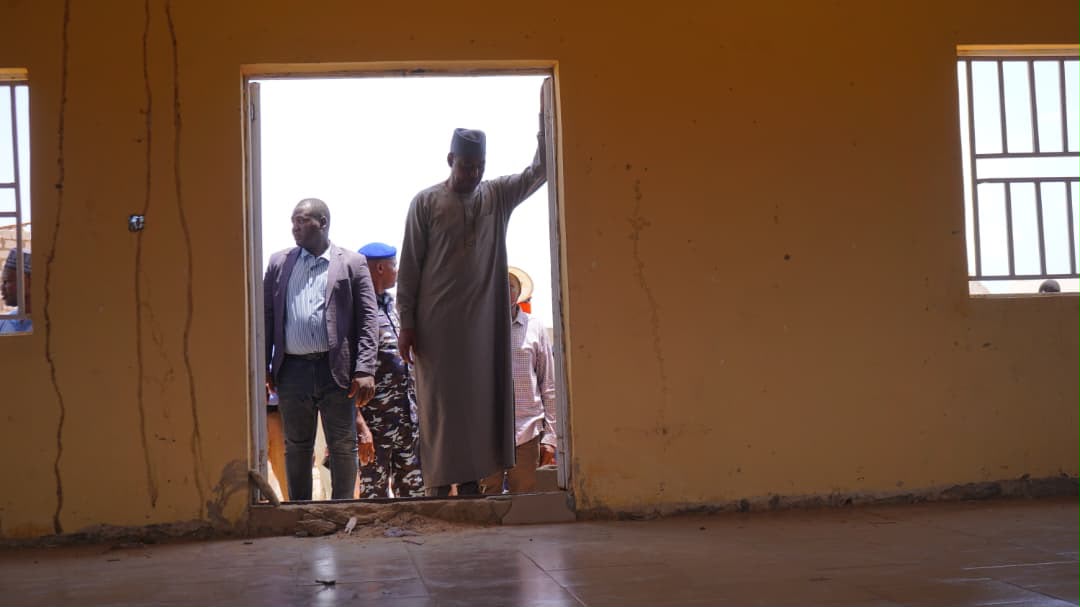
The governor himself has become known for his frequent visits to frontline communities, often travelling to remote locations to assess security conditions, inspect reconstruction projects and engage directly with displaced residents.
These visits have earned him widespread recognition as one of Nigeria’s most hands-on governors, particularly in managing the complex humanitarian and security challenges confronting Borno State.
Despite notable achievements, challenges remain. Some communities continue to experience sporadic attacks by insurgents, while humanitarian organisations have stressed the need for sustained investment in security, education, healthcare and livelihood opportunities to consolidate the gains already recorded.
Analysts argue that successful resettlement cannot be measured solely by the number of people returning home. Long-term success will depend on whether communities remain secure, children continue attending school, healthcare services remain accessible and local economies recover fully.
Nevertheless, many stakeholders acknowledge that Borno has made remarkable progress compared to the darkest years of the insurgency, when millions were forced to flee and entire local government areas were virtually emptied.
For thousands of families already back in their communities, life is gradually regaining its rhythm. Markets once silenced by conflict are bustling again, farmlands are being cultivated, and the sounds of children returning to school have replaced the fear that once defined daily life.
The transformation reflects not only a massive reconstruction effort but also the resilience of communities determined to rebuild after years of conflict.
As Borno continues its recovery journey, Governor Zulum’s resettlement programme is increasingly being viewed as a critical chapter in the state’s post-insurgency rebuilding process—one aimed not merely at closing displacement camps, but at restoring hope, dignity and a future for millions whose lives were disrupted by more than a decade of violence.
Abdullahi Inuwa Social Commentator ainuwa303@gmail.com
About The Author
