



By: Abdullahi Inuwa
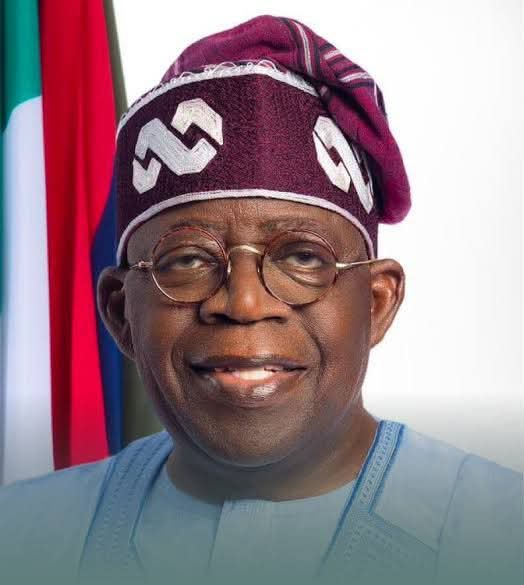
ABUJA — President Bola Tinubu has declared that Nigeria will no longer rely on oil as an end in itself, but will strategically deploy the country’s petroleum wealth to power a modern, diversified and sustainable economy.


The President also challenged oil and gas operators to respond to the incentives and regulatory reforms introduced by his administration with increased investment, higher production, stronger local content participation and full compliance with approved work programmes.
Tinubu spoke at the fifth anniversary of the Nigerian Upstream Petroleum Regulatory Commission (NUPRC) in Abuja, where he said the Federal Government had listened to concerns from investors over high operating costs, prolonged contracting procedures and uncertainties around fiscal terms.
Represented by Vice President Kashim Shettima, the President said the administration had consequently introduced a series of reforms aimed at restoring investor confidence and making Nigeria a more attractive destination for long-term capital.
The anniversary, held under the theme, “From Uncertainty to Stability: Unlocking the Next Phase of Investment,” brought together government officials, regulators, oil companies, host communities, labour unions and industry stakeholders.
Tinubu highlighted several measures introduced by his administration, including the 2024 tax incentives, directives aimed at reducing local content and petroleum contracting costs and timelines, the 2025 upstream petroleum operations cost-efficiency incentive order, Executive Order 9 on oil and gas revenue remittances, and the 2026 Deep Offshore Oil and Gas Projects Incentive Tax Remission Order.
According to him, the latest deep offshore incentive package could unlock as much as $50 billion in fresh investment, beginning with the Bonga Southwest project.
He said the reforms were designed to provide investors with clearer rules and greater certainty while ensuring that Nigeria derives maximum value from its petroleum resources.
“Five years ago, the PIA brought to an end two decades of waiting. It gave this industry clear routes, gave investors a predictable framework and gave our host communities, for the first time, a legal stake in the resources beneath their land,” Tinubu said.
The President noted that the country had also made progress in tackling crude oil theft and pipeline vandalism, attributing the improvement to collaboration among security agencies, operators, host communities and the NUPRC.
He said investors who previously considered other destinations were beginning to return to Nigeria, while the country had emerged as Africa’s leading destination for upstream investment for two consecutive years.
Tinubu further disclosed that more than 170 host communities were already funding schools, healthcare facilities and other development projects through community-led initiatives.
He said such developments were particularly significant because they could help strengthen peace in Nigeria’s oil-producing communities.
‘Oil Must Fund Broader Economy’
The President stressed that the ultimate objective of the administration was not to perpetuate Nigeria’s dependence on petroleum revenues.
Rather, he said, oil and gas must provide the energy, foreign exchange and investment needed to expand agriculture, manufacturing, technology, digital businesses and the creative economy.
“Our aim is to use our petroleum resources to build this wider economy rather than to depend on them. The PIA is a strong foundation, but the foundation is only the beginning,” he said.
Tinubu, however, warned that government incentives could not produce the desired results unless operators translated them into tangible investments and increased production.
He charged beneficiaries of the new policy environment to honour their commitments on work programmes, local content, environmental protection and host-community obligations.
The President equally tasked the NUPRC with maintaining transparent processes, predictable approval timelines and accountability in its regulatory responsibilities.
He said overlapping requirements among government agencies must be eliminated to reduce unnecessary delays, while assuring investors that his administration would continue to uphold the rule of law and sanctity of contracts.
NUPRC: $103bn Investment Pipeline
The NUPRC Chief Executive, Oritsemeyiwa Eyesan, said the Nigerian upstream sector was gradually moving away from the uncertainty that previously discouraged investors.
Eyesan said prolonged delays in reform had caused Nigeria to lose investment opportunities to countries including Guyana, Namibia, Brazil and the United States Gulf of Mexico.
She noted that several major discoveries, including Bonga Southwest, Zabazaba-Etan, Owowo, Preowei and Nsiko, had remained undeveloped for years.
According to her, the Petroleum Industry Act has changed the regulatory landscape, with NUPRC developing and gazetting 19 regulations covering areas such as licensing, royalties, measurement, gas flaring, decommissioning, host communities and fees.
She said the Commission had conducted several licensing exercises since the enactment of the PIA, including the 2020 Marginal Field Bid Round, 2022/2023 Mini-Bid Round, 2024 Licensing Round and 2025 Licensing Round.
“These rounds account for about $103 billion in investment spent and projected,” Eyesan said.
She added that the Commission had approved 120 field development plans since 2024, representing about $47.6 billion in capital, with the potential to add 1.74 million barrels of oil per day and 13.9 billion standard cubic feet of gas per day.
Among the projects is the $10.3 billion Zabazaba-Etan development in OPL 245, which had been stalled by disputes for more than two decades.
Eyesan also cited the $5 billion Bonga North project, which reached final investment decision in December 2024 and is expected to produce about 110,000 barrels per day at peak.
Oil, Gas Production Rising
She said Nigeria’s crude oil production had increased from an average of 1.44 million barrels per day in 2022 to 1.75 million barrels per day during the first seven months of 2026, with production reaching 1.84 million barrels per day in April.
Gas production, she added, also rose from 6.83 billion standard cubic feet per day to about 7.97 billion standard cubic feet per day.
Eyesan said NUPRC had further reduced the time required to approve the reactivation of shut-in wells from between two and six weeks to as little as two to four hours.
The Commission has also approved 37 new crude evacuation routes, she disclosed.
NUPRC Unveils ‘Age of Compliance’
Looking ahead, Eyesan announced that the Commission would introduce what she called an “age of compliance”, under which every oil and gas licensee and lessee would be assessed and their performance published.
She said the scorecards would cover work programme delivery, royalty and fee payments, domestic crude and gas supply obligations, measurement and data reporting, gas flaring, health and safety, environmental compliance, decommissioning obligations and host-community trust contributions.
According to her, the system would provide investors, financiers, host communities and members of the public with clearer information on companies meeting their obligations under the PIA.
Eyesan also said NUPRC itself would be subjected to greater accountability through service-level agreements with industry players, allowing operators to assess the regulator based on approval timelines, consistency and complaint resolution.
She said the Commission’s immediate priorities include restoring more than 788,000 barrels per day of shut-in production across 63 operators, advancing offshore projects worth between $30 billion and $50 billion to final investment decision and ensuring full compliance with domestic gas supply obligations.
With the reforms, the Federal Government hopes Nigeria’s oil and gas sector will become not merely a source of revenue, but a catalyst for industrial growth, job creation, energy security and long-term economic diversification.
About The Author
