



By Aliyu Bala Gerengi, Gombe
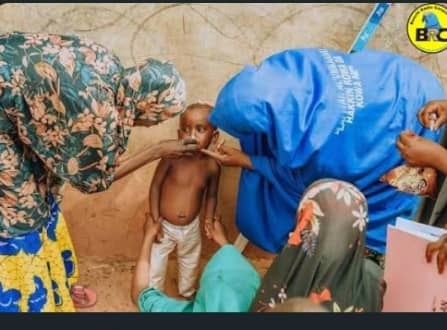
The Safety and Antimicrobial Resistance of Mass Administration of Azithromycin in Children project, SARMAAN, says it has reached nearly 17 million children across eleven northern states in 2026 as part of efforts to reduce under-five mortality in Nigeria.


The project provides azithromycin to children aged between one and fifty-nine months through house-to-house visits conducted by trained community drug distributors every six months.
In a statement issued to commemorate the 2026 Universal Children’s Day, SARMAAN disclosed that more than 45.9 million doses of the medicine had been administered since the programme commenced in 2024.
The statement added that over 91,000 community drug distributors and data clerks had been trained to support the implementation of the initiative.
The eleven participating states are Adamawa, Bauchi, Gombe, Jigawa, Kaduna, Kano, Katsina, Kebbi, Sokoto, Yobe and Zamfara.
According to the statement, SARMAAN activities have also been integrated into maternal and child health campaigns in Gombe and Jigawa, as well as polio immunisation campaigns in Bauchi, Katsina, Sokoto, Yobe and Zamfara to expand access to essential child-survival services.
It further disclosed that nine participating states had incorporated SARMAAN activities into their Annual Operational Plans, with government financial commitments reaching 122.9 million naira.
The Lead Investigator of the project, Professor Oliver Ezechi, said the initiative was generating local evidence on child mortality, medicine safety and antimicrobial resistance to guide sustainable government policies.
The statement noted that experiences from Niger, Mali and Sierra Leone had also demonstrated the potential of community-based azithromycin distribution to reduce child deaths when combined with other essential health interventions.
SARMAAN is therefore calling for stronger government ownership, sustainable domestic financing and the integration of its activities into Nigeria’s national child-survival policies.
The project is led by the Federal Ministry of Health and Social Welfare, while the Nigerian Institute of Medical Research oversees its research component.
End
About The Author
