


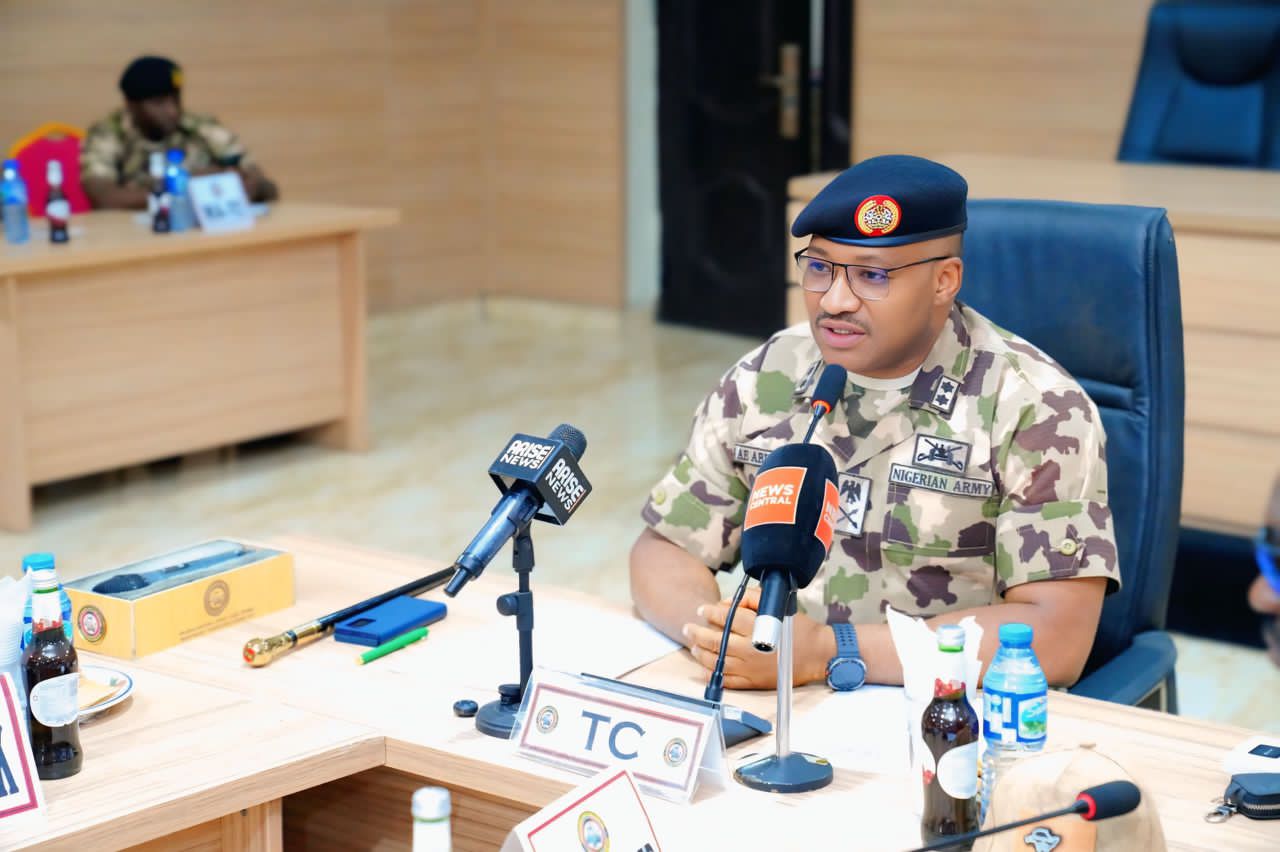

No fewer than 958 insurgents and their family members have surrendered to troops of Operation Hadin Kai across the North-East in 2026 amid sustained military offensives against terrorist groups operating in the region.
The Theatre Commander, North-East Joint Task Force, Operation Hadin Kai, Maj. Gen. Abdulsalam Abubakar, disclosed this while briefing journalists in Maiduguri, the Borno State capital.


According to the commander, the latest figure forms part of a broader wave of mass surrenders recorded since 2021, with a cumulative total of 152,864 insurgents and their relatives laying down arms over the past few years.
He revealed that the total number includes 20,815 active male fighters, 37,095 women, and 64,114 children.
Abubakar attributed the increasing surrender of insurgents to sustained military pressure, destruction of terrorist operational bases, and the success of non-kinetic approaches aimed at weakening extremist groups.
“The steady increase in surrenders is a direct result of sustained military pressure, degradation of terrorist capabilities, and effective non-kinetic measures,” the Theatre Commander said.
He explained that many of the repentant insurgents cited intense operational pressure from troops, collapse of their command structures, and worsening living conditions within insurgent camps as major reasons for surrendering.
According to him, troops have continued to dominate the theatre through coordinated land and air offensives targeting Boko Haram and ISWAP strongholds across the region.
The commander further disclosed that all surrendered insurgents and their family members undergo detailed screening and debriefing processes designed to generate intelligence for ongoing military operations.
He noted that information obtained during the debriefing of surrendered fighters has significantly improved operational planning and contributed to recent battlefield successes recorded by troops.
“Information obtained from the debriefing of these individuals has significantly enhanced our operational planning and contributed to recent successes in the theatre,” he stated.
Maj. Gen. Abubakar also highlighted the role of the Borno State Government’s deradicalisation and reintegration initiative, widely known as the “Borno Model,” in encouraging insurgents to abandon violence.
The programme, implemented in collaboration with local and international partners, provides rehabilitation and reintegration opportunities for repentant insurgents willing to return to civilian life.
According to the commander, the initiative has continued to serve as a major incentive for fighters seeking a safe exit from insurgent groups.
“This initiative, which emphasises dialogue and community engagement, has continued to serve as a catalyst for the ongoing surrender of insurgents and their families,” he said.
He added that collaboration among security agencies, community leaders, traditional institutions, and humanitarian organisations has helped build confidence among those willing to surrender.
Security analysts believe the rising number of surrenders reflects the growing pressure on terrorist groups in the North-East, especially following intensified military operations targeting major insurgent enclaves in Borno, Yobe, and Adamawa states.
However, the Theatre Commander warned that despite the encouraging development, the fight against insurgency was far from over.
He stressed the need for sustained military pressure alongside stabilisation and reintegration programmes to prevent former fighters from returning to violent activities.
“The fight is not over. We must sustain pressure on the remaining elements while strengthening stabilisation and reintegration efforts,” he warned.
Abubakar reaffirmed the commitment of troops under Operation Hadin Kai to restoring lasting peace and security across the North-East.
He also called for continued support and collaboration among government institutions, security agencies, local communities, and development partners to achieve enduring stability in the region.
The North-East has remained the epicentre of insurgency in Nigeria for over a decade, with thousands killed and millions displaced by attacks linked to Boko Haram and Islamic State West Africa Province (ISWAP).
Despite repeated offensives by the military, remnants of the groups continue to launch attacks on communities and security formations in parts of the region.
Nonetheless, military authorities insist that the increasing wave of surrenders and recent operational gains indicate that terrorist groups are gradually losing strength under sustained pressure from troops.
About The Author
