



By: Abdullahi Inuwa
The Commissioner of Police, Akwa Ibom State Command, CP Baba Mohammed Azare, has charged senior police officers to embrace mentorship as a core leadership responsibility, describing it as the foundation for building a professional, disciplined and future-ready Nigeria Police Force.


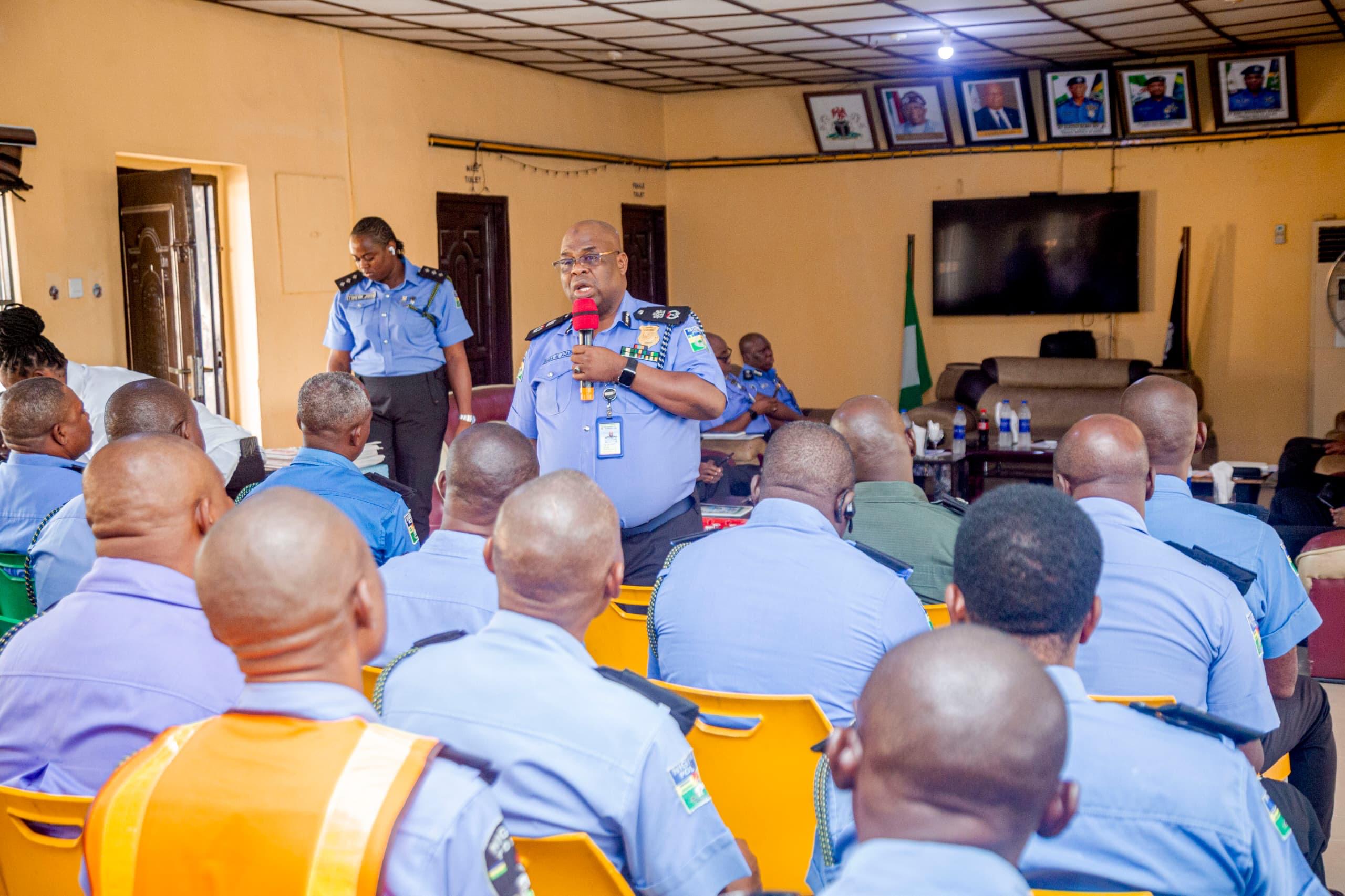
The police commissioner gave the charge while delivering a lecture titled “Mentorship in Policing: Building the Next Generation of Professional Police Leaders” during the Command’s End-of-the-Month Conference held at the Police Headquarters, Ikot Akpan Abia, Uyo.
Addressing officers from Area Commands, Divisions, Tactical Units, Departments and other formations across the state, CP Azare stressed that the future strength, effectiveness and credibility of the Nigeria Police Force depend largely on the quality of leaders being groomed today.
He described mentorship as one of the most powerful tools for institutional growth, noting that policing extends beyond law enforcement to nurturing disciplined, ethical and service-oriented officers capable of sustaining the Force’s values and vision.
According to him, every senior officer has a dual responsibility of not only leading personnel and achieving operational objectives but also deliberately coaching and preparing younger officers for future leadership positions.
“The Commissioners of Police, Assistant Inspectors General, Deputy Inspectors General and Inspectors General of tomorrow are among today’s junior officers,” he said, urging senior officers to intentionally invest in their professional development.
CP Azare underscored the need to transfer institutional knowledge, operational experience, investigative skills, intelligence-gathering techniques and ethical values to younger personnel, explaining that many critical policing competencies are acquired through practical guidance rather than classroom learning alone.
The commissioner further noted that effective mentorship promotes professionalism, discipline, accountability and respect for human rights, adding that officers who receive proper guidance are less likely to engage in misconduct, corruption, abuse of authority and other unethical practices capable of eroding public confidence in the Police.
Speaking on leadership succession, CP Azare maintained that the true measure of leadership is not merely the number of arrests made or crimes solved, but the quality of future leaders produced and the enduring values passed on to the next generation of officers.
He also reminded participants that modern policing demands transparency, accountability, respect for human dignity and strict adherence to the rule of law, urging senior officers to continuously instill these principles in younger personnel.
The lecture sparked robust discussions among participants, who acknowledged mentorship as a vital strategy for strengthening leadership capacity, promoting professionalism and ensuring seamless succession within the Nigeria Police Force.
In his closing remarks, the commissioner urged all senior officers to cultivate a culture of mentorship within their respective commands, stressing that the lasting legacy of any police leader lies not in the office occupied but in the leaders developed.
The conference formed part of the Akwa Ibom State Police Command’s ongoing efforts to promote professional excellence, ethical policing, leadership development and improved service delivery in line with the vision of the Inspector-General of Police for a modern, accountable and people-centred Nigeria Police Force.
About The Author
