



By Ahmed Liman Kingimi, Maiduguri
Bama, once a stronghold of Boko Haram insurgents for over 17 years in Nigeria’s Northeast, is experiencing a powerful resurgence. The town has transitioned from a zone of conflict to a thriving resettlement hub, with thousands of returnees reclaiming their homes and rebuilding lives amidst renewed social and economic stability.


This impressive turnaround is the result of sustained military efforts by the Nigerian Army, under Operation Hadin Kai, spearheaded by the 7th Division and the 21st Special Armored Brigade. Recent reports highlight a significant improvement in regional security, paving the way for community reintegration and development.
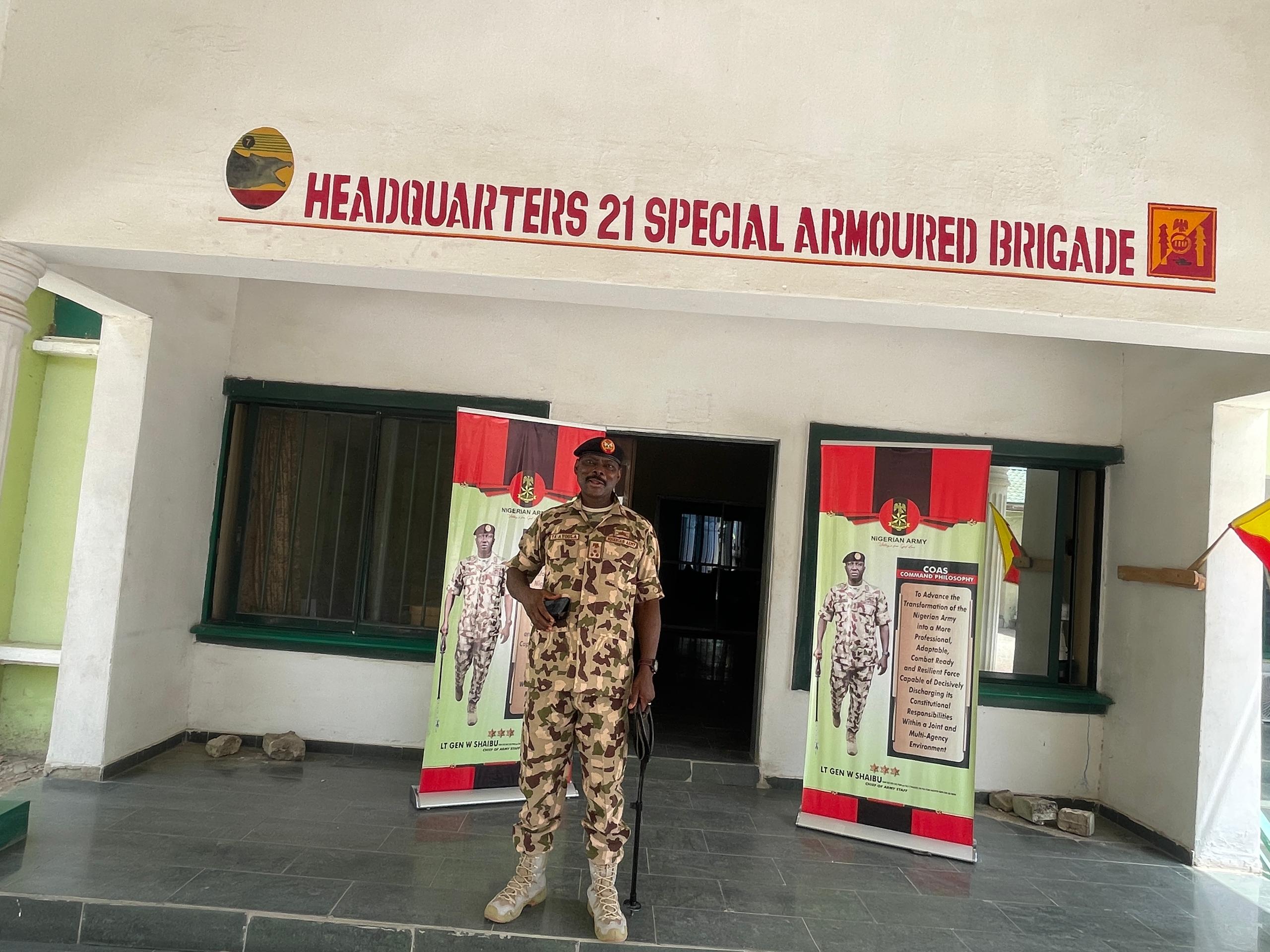
Over 2,000 communities within Bama Local Government Area have been successfully resettled as Nigerian forces continue their efforts to restore peace across the region. Brigadier General Tosin Ayoola, Commander of the 21st Special Armored Brigade, shared this milestone during a recent field visit alongside journalists, who observed firsthand the progress in security and humanitarian relief.
“The progress we see today reflects our relentless commitment to stabilization,” Ayoola stated. “Communities once under insurgent control are now returning to normal life. Displaced residents are reclaiming their ancestral lands, reviving farms, and resuming social and economic activities that were halted for years.”
This achievement is credited to a comprehensive approach combining military operations—such as clearing insurgent hideouts, patrolling vulnerable areas, and engaging with local communities—to rebuild public confidence and ensure safety. The Nigerian Army maintains a strong presence along major routes and in vulnerable settlements, preventing any resurgence of violence while supporting humanitarian and reconstruction efforts.
In addition to security measures, the military has intensified support for agriculture, recognizing it as key to sustainable recovery. Routine farming patrols, security escorts for farmers, herders, and traders—especially during peak planting seasons—have become vital in enabling safe access to farmlands and markets.
Ayoola emphasized that these initiatives are part of Operation Hadin Kai’s broader strategy to restore livelihoods and encourage the safe return of displaced populations. “We escort farmers, those gathering firewood, and others engaged in agricultural activities to reduce risks and facilitate uninterrupted economic activity,” he explained.
Joint patrols involve volunteers, community security groups, and support agencies, with enhanced intelligence-sharing through collaboration with the Nigerian Police and the Department of State Services. These efforts bolster early response capabilities and ensure security along rural roads, markets, and farming areas.
Beyond security, the military’s medical teams are providing basic healthcare to vulnerable groups, including the elderly in remote communities. These non-kinetic initiatives—combined with farming support and community outreach—are essential in restoring normalcy and fostering trust between civilians and security forces.
Ayoola expressed gratitude to senior military leaders—including General Officer Commanding 7 Division Brigadier General Ukechukwu Unachukwu, Theatre Commander Major General Abdulsalam Abubakar, and Army Chief Lieutenant General Waidi Shaibu—for their unwavering support, which has translated into tangible progress on the ground.
He also commended the resilience and cooperation of returning residents, urging continued collaboration to sustain peace and development. With farmlands once again vibrant and communities steadily rebuilding, Ayoola remains optimistic that the Northeast is on a firm path toward full recovery and lasting stability.
About The Author
