


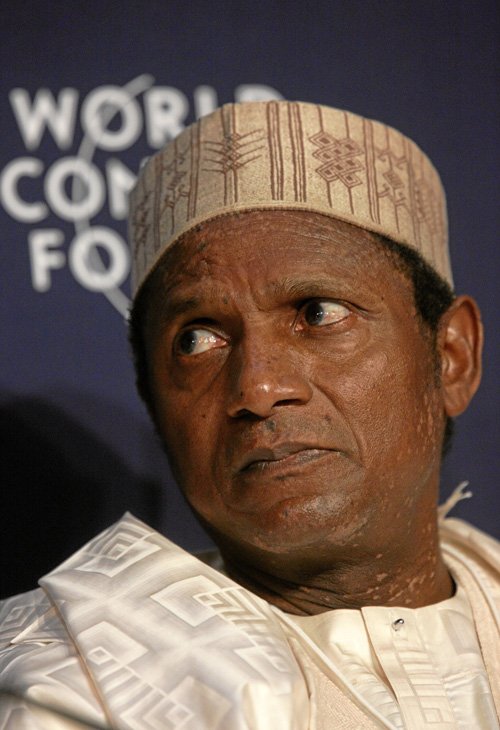

In the annals of Nigeria’s democratic journey, few leaders have left behind a legacy as quietly profound yet boldly unconventional as Umaru Musa Yar’Adua. Revered for his humility, integrity, and commitment to the rule of law, the late President carved a distinct path in governance—one that set him apart not just from his contemporaries, but from every leader before and after him.
At a time when power in Nigeria was often shielded by layers of constitutional protection, Yar’Adua did the unthinkable. He publicly called for the removal of immunity not only for himself but for all public office holders. It was a move that stunned political observers, unsettled entrenched interests, and endeared him to citizens yearning for accountability.


Presidential immunity, enshrined in Nigeria’s Constitution, protects sitting leaders from prosecution while in office. For many, it has been seen as a necessary safeguard for stability. But for Yar’Adua, it represented a loophole that could be abused—a barrier to transparency and justice. His call to scrap it was not merely symbolic; it was a statement of principle, rooted in his belief that leadership should be synonymous with responsibility, not privilege.
This rare stance reflected the broader philosophy that defined his presidency.
Yar’Adua came into power in 2007 under a cloud of electoral controversy, yet he acknowledged the flaws in the process that brought him to office—another unprecedented move. Rather than defend the system, he initiated electoral reforms, signaling a leader more interested in fixing Nigeria than preserving personal power.
His tenure, though tragically short, was marked by a deliberate effort to institutionalize good governance. From his Seven-Point Agenda aimed at economic and infrastructural development to his amnesty program in the Niger Delta, Yar’Adua consistently sought peaceful, lawful solutions to national challenges. But it was his insistence on accountability at the highest level that truly set him apart.
Critics at the time questioned whether removing immunity could expose leaders to politically motivated prosecutions. Supporters, however, saw it as a necessary sacrifice—one that could restore public trust in government. For Yar’Adua, the argument was simple: no one should be above the law, not even the President.
Years after his passing in 2010, that bold proposition still echoes in Nigeria’s political discourse. While successive administrations have yet to fully embrace the idea, Yar’Adua’s position remains a benchmark for ethical leadership—a reminder of what is possible when power is exercised with conscience.
Today, as Nigeria continues to grapple with issues of corruption, governance, and accountability, many look back at Yar’Adua’s presidency with a sense of nostalgia and what might have been. His quiet demeanor masked a courageous reformer—one willing to challenge the very system that elevated him.
In a nation often defined by loud politics and grand gestures, Yar’Adua’s legacy stands as a testament to the power of humility and principle.
He did not just govern; he inspired a different vision of leadership—one where integrity is not optional, and where even the highest office is not beyond scrutiny.
Indeed, in calling for the removal of immunity, Yar’Adua did more than make a political statement—he redefined what it meant to lead.
About The Author
