


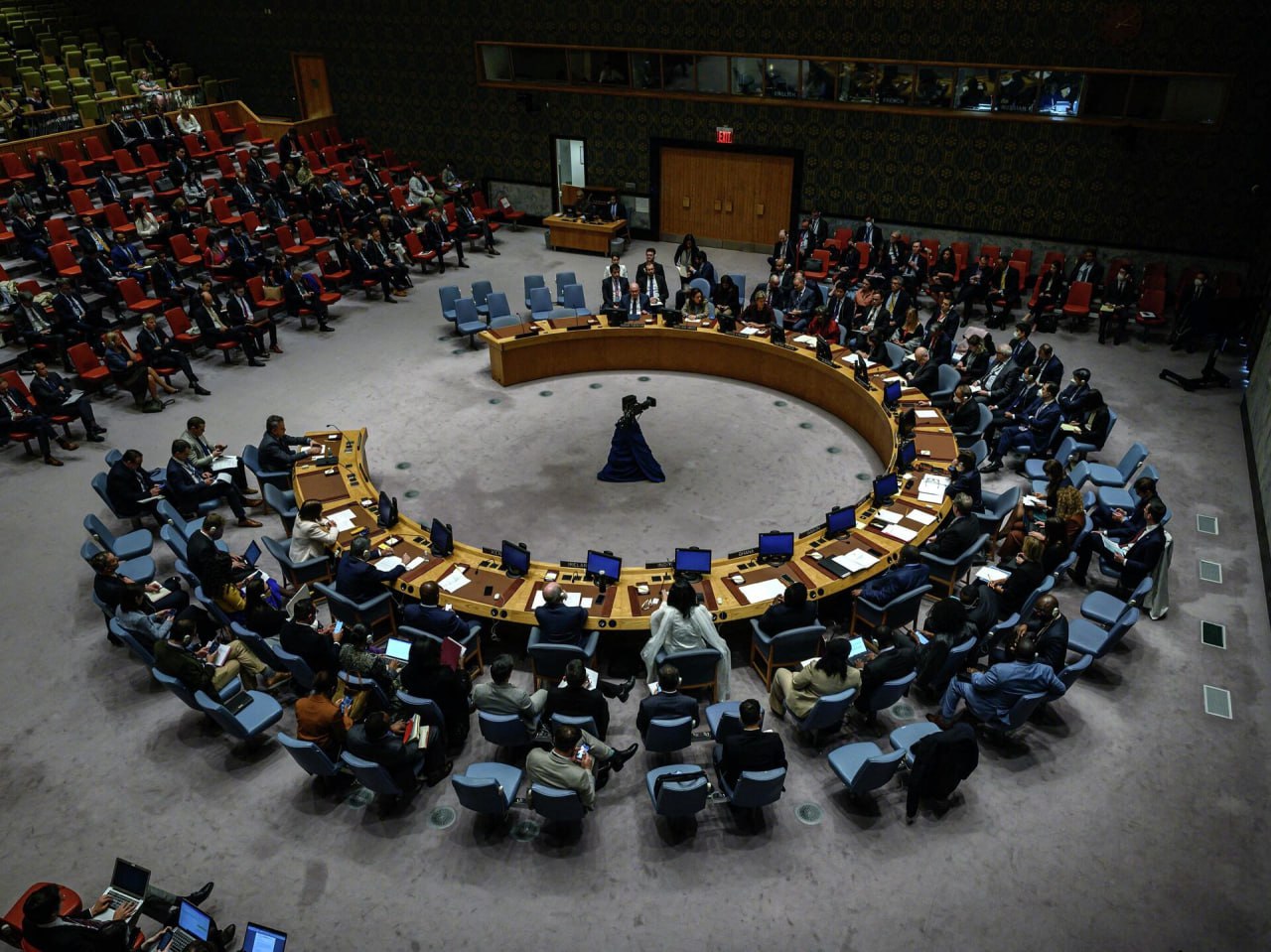

The United Nations Security Council has adopted a new resolution demanding that Iran immediately stop its missile and drone attacks on Gulf countries, in a vote that exposed deep divisions among global powers.
The resolution, introduced on behalf of Gulf states and backed by more than 130 countries, passed with 13 votes in favour, while Russia and China abstained from the vote.


The measure calls on Tehran to cease all attacks against neighbouring states, including Saudi Arabia, United Arab Emirates, Qatar, Bahrain, Kuwait and Oman, amid escalating military tensions across the Gulf region.
The resolution also warns against any Iranian actions that could threaten international shipping routes, particularly in the strategic Strait of Hormuz — a vital artery for global oil supplies.
However, the text has drawn criticism for failing to mention or condemn recent airstrikes carried out by the United States and Israel against Iranian targets, which Tehran says triggered its retaliatory attacks.
Both Moscow and Beijing defended their decision to abstain, arguing that the resolution was “unbalanced” because it ignored the initial strikes on Iran that helped spark the current conflict.
Russia’s ambassador to the UN said the text risked misleading the international community by creating the impression that Iran launched attacks without provocation.
Despite the abstentions, the resolution was adopted, reflecting what several diplomats described as broad international concern over the growing instability in the Gulf and its potential impact on global energy markets and maritime security.
Iran’s envoy to the UN rejected the decision, calling it a “blatant misuse” of the Security Council and accusing Western powers of using the body to advance political agendas.
The vote underscores the widening geopolitical rift within the United Nations as the Middle East conflict expands, with major powers divided over how to address the rapidly escalating confrontation.
Analysts warn that the dispute could further weaken the Security Council’s ability to act decisively, even as the conflict continues to threaten stability across the Gulf and beyond.
About The Author
