


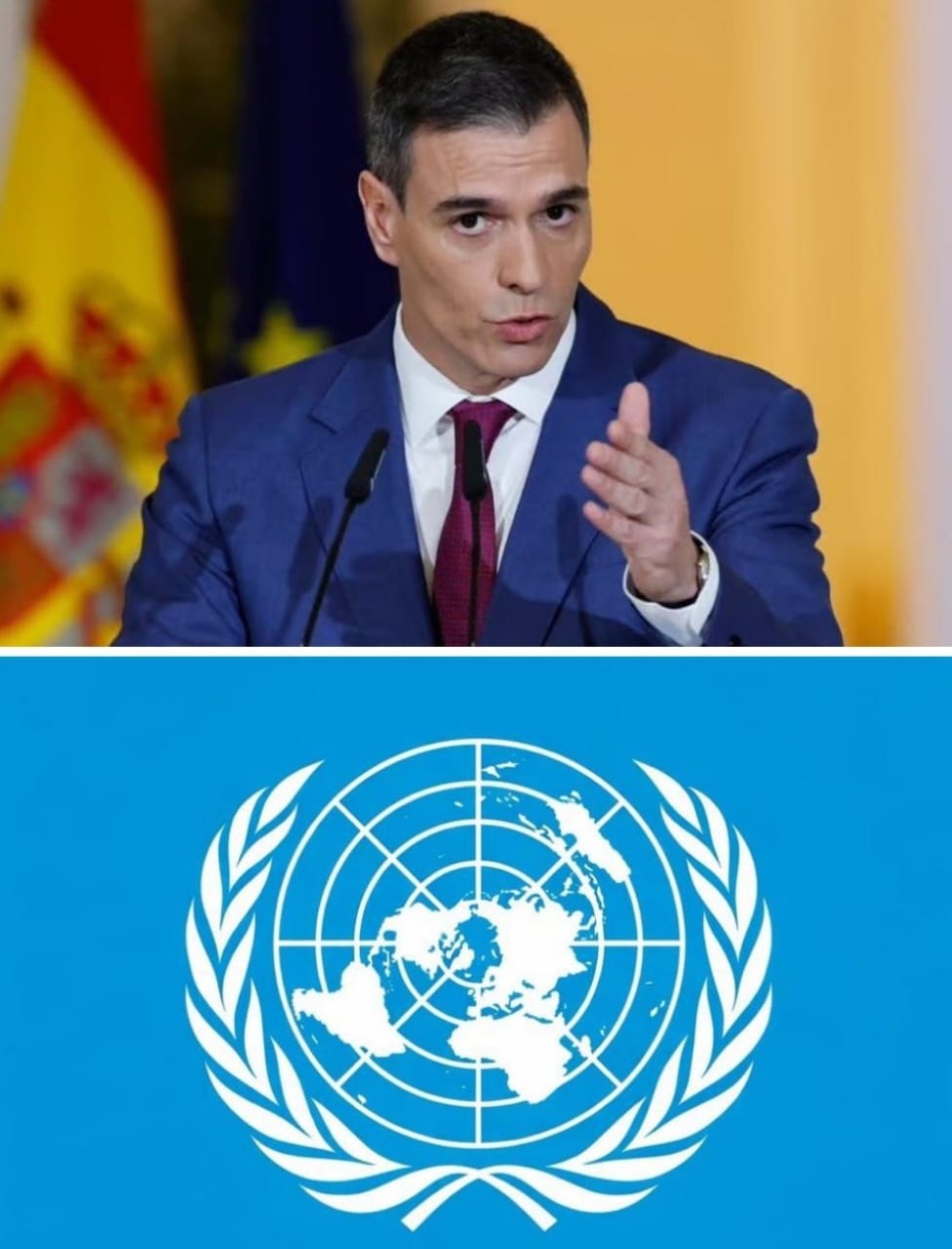

The Prime Minister of Spain, Pedro Sánchez, has called for sweeping reforms to the United Nations Security Council, urging the international community to abolish the veto power that allows a single country to block major global decisions.
In a strongly worded statement, Sánchez argued that the veto system has repeatedly paralysed the council’s ability to act during major conflicts and humanitarian crises.


“The veto that lets one country block peace, protects allies, and paralyses the United Nations must end,” the Spanish leader said, insisting that the global body needs structural reforms to remain credible in addressing modern security challenges.
The United Nations Security Council is composed of fifteen members, including five permanent members — the United States, United Kingdom, France, Russia and China — each of which holds the power to veto resolutions regardless of majority support.
Critics of the system have long argued that the veto power allows geopolitical interests to override international consensus, preventing decisive action during conflicts.
Sánchez pointed to repeated instances where resolutions concerning Israel were blocked, arguing that the mechanism has often been used to shield allies from international accountability.
According to the Spanish prime minister, the veto has transformed the council into a body that struggles to deliver justice or peace when global powers are divided.
“The council should be a court for the world, not a club where one country can block the will of the international community,” Sánchez said.
His remarks are likely to reignite a long-standing global debate over reforming the United Nations system, an issue that has faced resistance from the permanent members who benefit from the veto privilege.
Diplomatic observers note that removing veto power would require major amendments to the UN Charter — a process that would itself need approval from the same permanent members who hold the authority.
Still, Sánchez’s call reflects growing frustration among many nations that the current structure of the United Nations Security Council no longer reflects modern geopolitical realities or the expectations of the international community.
As global conflicts intensify and divisions among major powers deepen, the debate over whether the veto safeguards stability or fuels inaction is expected to remain at the centre of international diplomacy.
About The Author
