


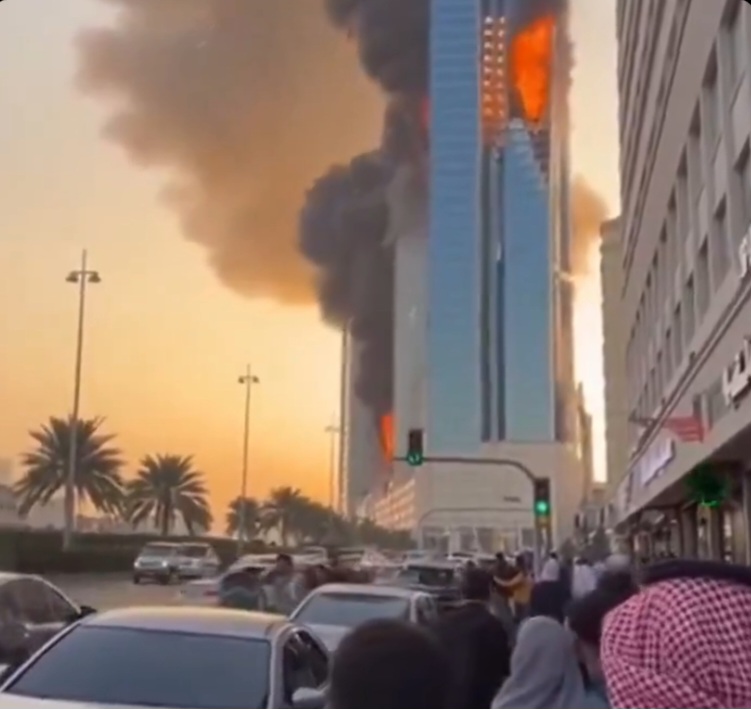

MANAMA, Kingdom of Bahrain — In a dramatic escalation of regional hostilities, a suspected Iranian drone strike slammed into a high-rise tower in Bahrain’s capital, sending flames and thick smoke billowing into the skyline of Manama late Saturday, officials and social media footage show.
The attack — part of a broad series of Iranian retaliatory strikes across the Gulf — marks one of the most striking symbols yet of how the Middle East has plunged into an unpredictable new phase of conflict.


Eyewitness video captured the moment an unmanned aerial vehicle struck the upper floors of the residential/office skyscraper in the Juffair district, a bustling neighbourhood that lies near the United States Navy’s Fifth Fleet headquarters. Civil defence teams rushed to contain fires and evacuate occupants, while authorities reported only minor injuries from smoke inhalation so far.
Bahrain’s Interior Ministry confirmed multiple buildings, including the tower hit by the drone, suffered damage — either directly from the strike or from debris from intercepted missiles — as the wave of hostilities rippled across the Gulf.
The attack came in the wake of a dramatic intensification of fighting that began after joint United States and Israeli forces struck Iran earlier this week, targeting key leadership and facilities in Tehran. In retaliation, Iranian forces launched coordinated drone and missile volleys at US military assets and allied installations throughout the Gulf states, hitting targets in Bahrain, the United Arab Emirates, Kuwait, Qatar, Saudi Arabia and beyond.
While Tehran insists its campaign is aimed at American military infrastructure, the impact has spilled over into civilian and commercial territory — striking residential towers, airports and hotel complexes. In Bahrain and other Gulf cities, residents and business owners alike now face an uncertain future amid fears that what was once a contained standoff has erupted into a broader conflict.
Analysts say Iran’s strategic patience and meticulous planning over years have culminated in a hard-hitting response that challenges the notion that American bases and their host countries can be shielded indefinitely in a sudden theatres of war.
The incident underscores a new era of Middle Eastern conflict — one where urban skylines and civilian infrastructure are no longer insulated from the crosshairs of strategic military calculus.
About The Author
