


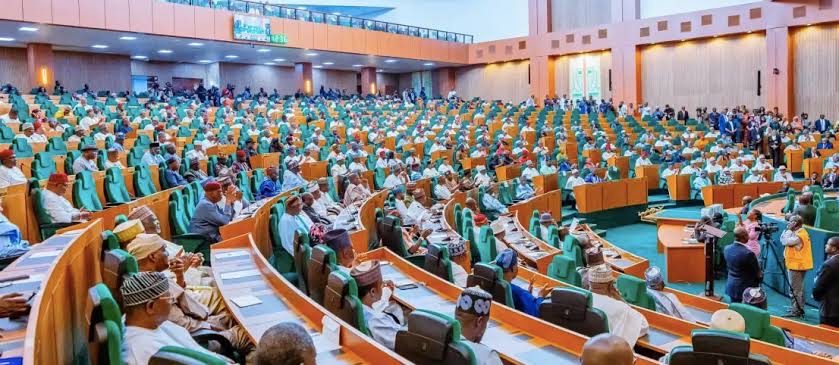

ABUJA — Drama erupted in the Green Chamber on Tuesday as some members of the House of Representatives staged a dramatic walkout in protest against moves to rescind the passage of the Electoral Act Amendment Bill earlier approved in December.
Tension flared shortly after plenary commenced when Hon. Francis Waive, Chairman of the House Committee on Rules and Business, moved a motion seeking to reverse the decision on the controversial bill, which had been passed on December 23, 2025.


The motion, insiders say, caught several lawmakers off guard and immediately ignited heated exchanges across party lines. Voices rose, desks were thumped, and what began as routine legislative proceedings quickly spiraled into a charged confrontation over the fate of the electoral reform.
Opposition lawmakers, visibly angered by the development, described the move as “procedurally suspicious” and “a dangerous precedent,” arguing that rescinding a duly passed bill without broad consultation undermines legislative integrity.
Within minutes of the motion being entertained, a bloc of lawmakers stood up and walked out of the chamber in protest, chanting solidarity slogans as they exited. The walkout briefly disrupted proceedings but plenary later resumed amid lingering tension.
Observers say the Electoral Act Amendment Bill has been one of the most contentious pieces of legislation before the current Assembly, with debates centering on proposed changes to election timelines, transmission of results, and internal party processes.
While supporters of the rescission insist the move is aimed at correcting “technical inconsistencies” discovered after passage, critics fear it could reopen political negotiations that had already been settled.
Political analysts warn that the unfolding drama could signal deeper cracks within the House as the 2027 electoral cycle gradually approaches. “Any attempt to revisit electoral reforms at this stage is bound to generate suspicion,” a legislative watcher in Abuja noted.
As of press time, House leadership had not issued a detailed statement clarifying the specific grounds for seeking to reverse the bill’s passage. However, sources within the chamber hinted that consultations were ongoing behind closed doors to calm frayed nerves.
The development adds another layer of uncertainty to Nigeria’s electoral reform process, raising fresh questions about consensus-building, legislative stability, and the political calculations shaping the nation’s democratic framework.
For now, the Green Chamber remains anything but green — as lawmakers brace for what could be a prolonged battle over the rules that will govern Nigeria’s next elections.
About The Author
