



By: Abdullahi Inuwa
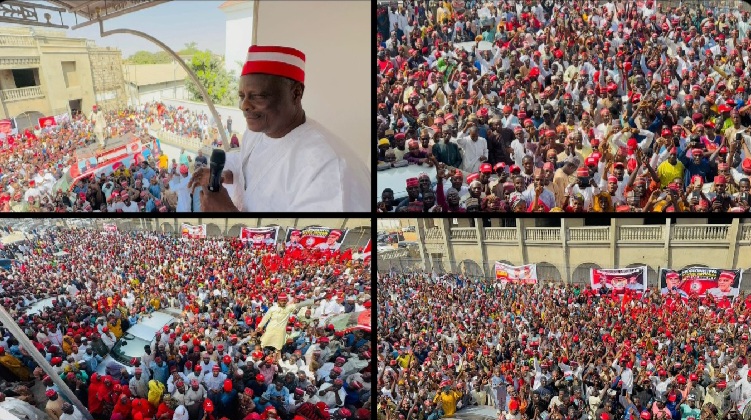
In Nigerian politics, few words travel as loudly as solidarity. So when Rabiu Musa Kwankwaso announced that the people of Nasarawa Local Government paid him a solidarity visit at his Kano residence, the message landed with unmistakable political weight.


On the surface, it was a courtesy call. Beneath it, however, lay a carefully layered political signal—one aimed at allies, rivals, and the wider opposition landscape.
Kwankwaso’s tone was calm but confident, almost defiant. By praising the visitors for their “unwavering courage and determination,” he acknowledged the turbulence rocking Nigeria’s opposition politics without spelling it out. The reference to “recent trials” was subtle, but clear enough: pressure exists, lines are being tested, and not everyone is standing firm.
What stood out was who he chose to spotlight. Not party chieftains. Not defectors-turned-kingmakers. But ordinary people. In Kwankwaso’s political grammar, that distinction matters. Kwankwasiyya has always thrived on the idea of a movement driven from below, not negotiated at the top. By framing loyalty as a sacrifice made “not for personal gain, but for collective progress,” he drew a sharp contrast with Nigeria’s familiar culture of political convenience.
Then came the ideological anchor. Reaffirming the “timeless ideals of Kwankwasiyya” was more than nostalgia—it was reassurance. In times of uncertainty, movements survive by reminding followers what they stand for. For Kwankwaso, that creed remains discipline, social justice, and mass mobilisation, symbolised by the red cap that has outlived multiple political cycles.
The closing line carried the strongest signal. “The journey continues, and victory is assured by the grace of God and the will of the people.” In Nigerian political language, that is not farewell—it is endurance. It suggests patience, belief in numbers, and confidence that today’s setbacks do not define tomorrow’s outcome.
Taken together, the post reads like a political checkpoint rather than a casual update. It tells supporters they are seen, tells rivals he is unshaken, and tells observers that Kwankwasiyya is not retreating into silence.
In an era of quick defections and shifting loyalties, Kwankwaso’s message was old-school but effective: hold the base, protect the brand, and let time do the arguing. The red caps, he insists, are still in the game—and the long march continues.
Abdullahi Inuwa
Social Commentator
ainuwa303@gmail.com
About The Author
